
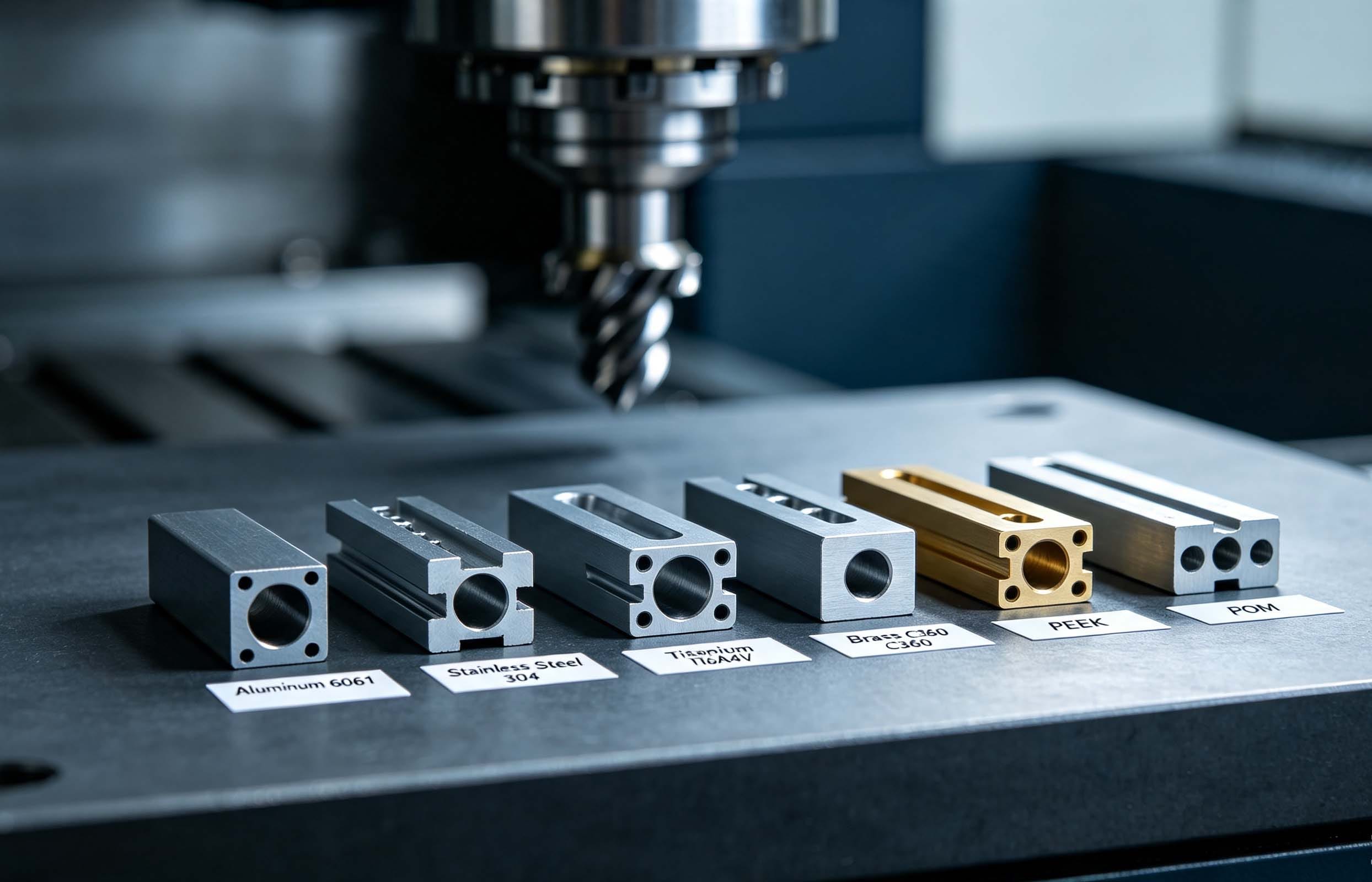
For engineers, material selection often determines the success of a part more than the machining process itself. Choosing the wrong material can result in underperformance, batch scrap, rework, or even safety incidents. This article walks through material selection logic across four dimensions: mechanical performance, machinability, cost, and compliance.
1. Start With the Real Operating Conditions, Not Assumptions
Before selecting a material, answer four questions:
- What load type will the part experience (static, fatigue, impact)?
- What is the operating environment (temperature range, humidity, chemical exposure)?
- Are there electrical or EMI shielding requirements?
- What are the appearance and surface finish requirements?
Many projects specify a material grade during the drawing review stage, but if operating conditions change later without updating the material spec, it becomes a common root cause of batch rework. Structural and process engineers should jointly review material suitability before the BOM is frozen.
2. Metal Material Comparison
Aluminum (6061-T6 / 7075-T6)
6061-T6 offers balanced mechanical properties, good weldability, and strong corrosion resistance after anodizing — a go-to choice for general structural parts. 7075-T6 approaches the strength of some alloy steels but has poor weldability and higher cost, typically reserved for aerospace load-bearing components. Machining efficiency for 6061 is typically 15–20% higher than 7075, which noticeably affects cost at volume.
Stainless Steel (303 / 304 / 316 / 17-4PH)
303 contains sulfur for the best machinability and suits structural parts without welding requirements. 304 has good corrosion resistance but work-hardens quickly, accelerating tool wear. 316 adds molybdenum for marine and chemical environments. 17-4PH is a precipitation-hardening stainless that achieves high strength through heat treatment, commonly used for valve bodies and precision shafts.
Titanium Alloy (Ti-6Al-4V)
Excellent strength-to-weight ratio and outstanding corrosion resistance, but low thermal conductivity causes tool adhesion and built-up edge during machining. Machining cost typically runs 3–5x that of 6061 aluminum, so its use should be carefully justified against actual requirements.
Copper Alloys (C110 Oxygen-Free Copper / H62 Brass)
Outstanding electrical and thermal conductivity. H62 offers good machinability and lower cost, suitable for connectors in non-high-conductivity applications. Oxygen-free copper offers higher purity for RF and thermal management components.
3. Engineering Plastics Comparison
- POM (Acetal): Excellent dimensional stability and self-lubricating properties, ideal for gears and bushings
- PEEK: Continuous service temperature up to 250°C with excellent chemical resistance — common in medical devices and semiconductor equipment, though material cost can exceed 10x that of POM
- PTFE: Extremely low friction coefficient but poor rigidity and creep resistance, unsuitable for precision-fit components
- PC (Polycarbonate): Good optical transparency and impact resistance, commonly used for viewing windows and protective covers
4. Procurement Perspective: Hidden Costs Beyond Material Price
Procurement decisions shouldn’t rest on unit material price alone. Also evaluate:
- Material utilization rate: Bar stock vs. plate stock machining produces significantly different scrap ratios, directly affecting per-unit cost
- Lead time volatility: Specialty materials like titanium or large-diameter 7075 bar often require extended procurement lead times — an additional 2-4 weeks during peak seasons
- Batch consistency: Mechanical properties can vary within tolerance between material heat/lot numbers. For fatigue-sensitive parts, request a Material Test Certificate (MTC)
5. Common Pitfalls
- Substituting 316 for 304 “to be safe” while ignoring the machinability penalty that drives up cost
- Defaulting to 7075 for strength without evaluating its stress corrosion cracking tendency
- Overlooking moisture absorption in plastic parts, causing dimensional drift in service
Material selection is fundamentally a joint optimization between engineering and cost. It’s worth discussing real machining experience with your fabrication partner early in the project — actual shop-floor efficiency for a given material can vary significantly by supplier, equipment, and tooling setup, beyond what a materials datasheet alone can tell you.