
PLASTIC CNC MACHINING MATERIALS
Plastic CNC Machining Materials
Tik Precision supports CNC machining for engineering plastics such as POM, PEEK, PTFE, ABS, Nylon, PC, PMMA, PEI, and PPS. Our team helps engineers and purchasing teams evaluate plastic material options based on strength, dimensional stability, wear resistance, insulation, chemical resistance, tolerance requirements, and application environment.
Material Types
POM · PEEK · PTFE · PI
Production Stage
Prototype to Low-Volume
Material Focus
Insulation · Wear Resistance · Stability
Engineering Review
Material · Tolerance · Application
PLASTIC MACHINING CAPABILITY
From Engineering Plastic Stock to Functional CNC Parts
Plastic CNC machining requires careful material selection, toolpath planning, heat control, and tolerance review. Tik Precision supports custom plastic parts from prototype samples to low-volume production for functional, insulating, wear-resistant, and lightweight applications.
Engineering plastic material review
CNC milling, turning and prototype support
Functional plastic components with tolerance control
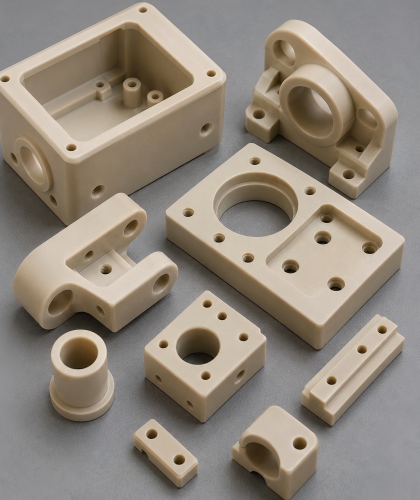
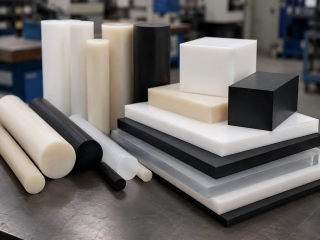
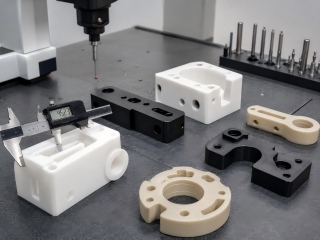
Engineering Plastics for Precision CNC Machined Parts
Plastic material selection affects dimensional stability, wear resistance, insulation, chemical resistance, weight, machining difficulty, and final part performance. Tik Precision works with common and high-performance engineering plastics for prototypes, fixtures, insulating parts, lightweight components, wear-resistant parts, and functional plastic assemblies.
Material Review
Review plastic grade, strength, stability, chemical resistance, insulation needs, and application environment before machining.
Tolerance Planning
Evaluate machining allowance, deformation risk, wall thickness, threads, holes, and dimensional stability before production.
Application Support
Support prototypes, fixtures, insulating parts, wear-resistant parts, lightweight components, and functional plastic parts.
Common Plastic CNC Machining Materials We Support
Select from commonly used engineering plastics for lightweight parts, insulation, wear resistance, chemical resistance, dimensional stability, transparent components, and functional prototypes.
Polyoxymethylene (Acetal)
Precision gears, bearings, automotive door locks/switches, zippers, pump bodies, valve parts
Best for: high‑temp bearings, insulators, thin‑film parts
Polyether Ether Ketone
Aerospace components, medical implants (spinal fusion devices), automotive lightweight parts, robot joints, semiconductor equipment
Best for: high‑temp bearings, insulators, thin‑film parts
Polytetrafluoroethylene
Non‑stick cookware coatings, seals, gaskets, corrosion‑resistant pipes/fittings, high‑frequency insulators
Best for: connectors, pump parts, sensors
Polyimide
Flexible printed circuit boards, aerospace insulation, high‑speed rail, wind power, microelectronics packaging, high‑temperature tapes and coatings
Best for: high‑temp bearings, insulators, thin‑film parts
Polyphenylene Sulfide
Automotive components (pump housings, sensors), electrical connectors, battery parts for EVs, aerospace structural parts
Best for: connectors, pump parts, sensors
Polyetherimide
Medical devices (autoclavable), aircraft interior parts, automotive high‑temperature connectors, electronic connectors
Best for: electrical/aircraft structural parts
How to Choose a Plastic Material for CNC Machining
The right plastic material depends on part function, tolerance requirements, wear conditions, insulation needs, chemical exposure, operating temperature, appearance requirements, and budget. Our team can review your drawing and recommend a practical plastic machining solution before production.
Need low friction?
Consider POM, PTFE, or Nylon depending on load and wear conditions.
Need high temperature resistance?
Consider PEEK, PEI, or PPS for demanding applications.
Need insulation?
Consider POM, PTFE, PEEK, PC, or other engineering plastics based on voltage and environment.
Need transparent parts?
Consider PC or PMMA depending on impact resistance, clarity, and machining requirements.
Plastic material selection should be confirmed with your drawing, tolerance requirements, wall thickness, operating temperature, chemical exposure, and application environment.
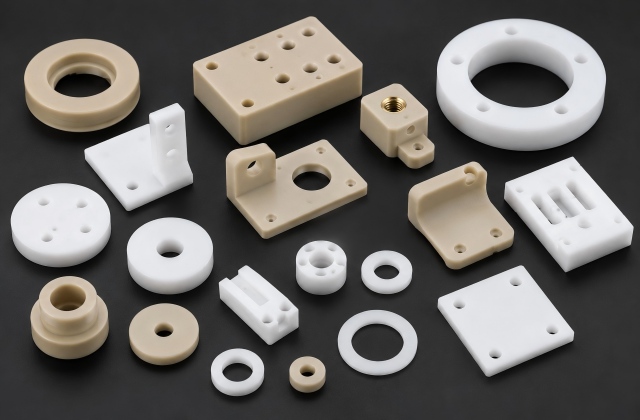
Functional Plastic Parts for CNC Machining Projects
CNC machined plastic parts are widely used in prototypes, fixtures, insulating components, lightweight structures, wear-resistant parts, and functional assemblies.
Insulating Components
Used for electrical insulation, spacing, isolation, and protective structures in industrial equipment.
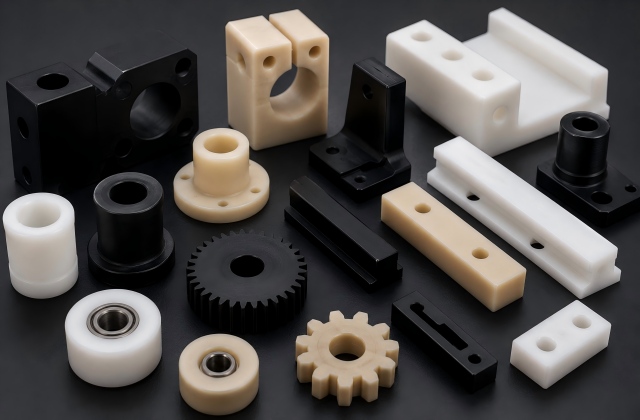
Wear-Resistant Parts
Suitable for bushings, rollers, guides, spacers, and sliding parts that require low friction or wear resistance.
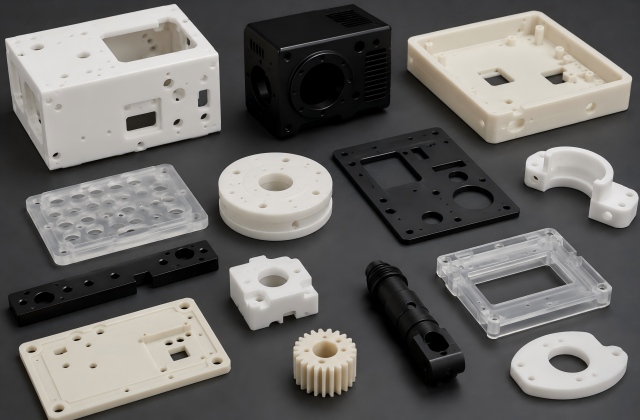
Prototype Housings
Used for functional prototypes, enclosures, panels, covers, and product development testing.
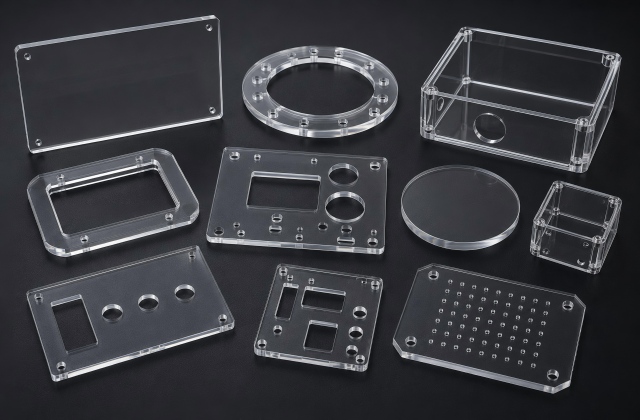
Transparent Plastic Parts
Suitable for acrylic or polycarbonate windows, covers, display panels, and visual components.
Plastic CNC Machining and Material Considerations
Plastic CNC machining requires attention to material softness, heat sensitivity, deformation risk, wall thickness, thread strength, burr control, and dimensional stability. Tik Precision reviews material behavior, machining method, tolerance requirements, and part geometry before production.
Low friction · Good dimensional stability · Wear-resistant parts
High-performance plastics · Heat resistance · Chemical resistance
Low friction · Chemical resistance · Seals and insulating parts
Transparent parts · Covers · Windows and panels
Need Help Selecting a Plastic Material?
Send us your CAD file, drawing, material grade, tolerance requirement, quantity, or application details. Our engineering team can help review plastic material suitability, machining feasibility, and dimensional control before production.