
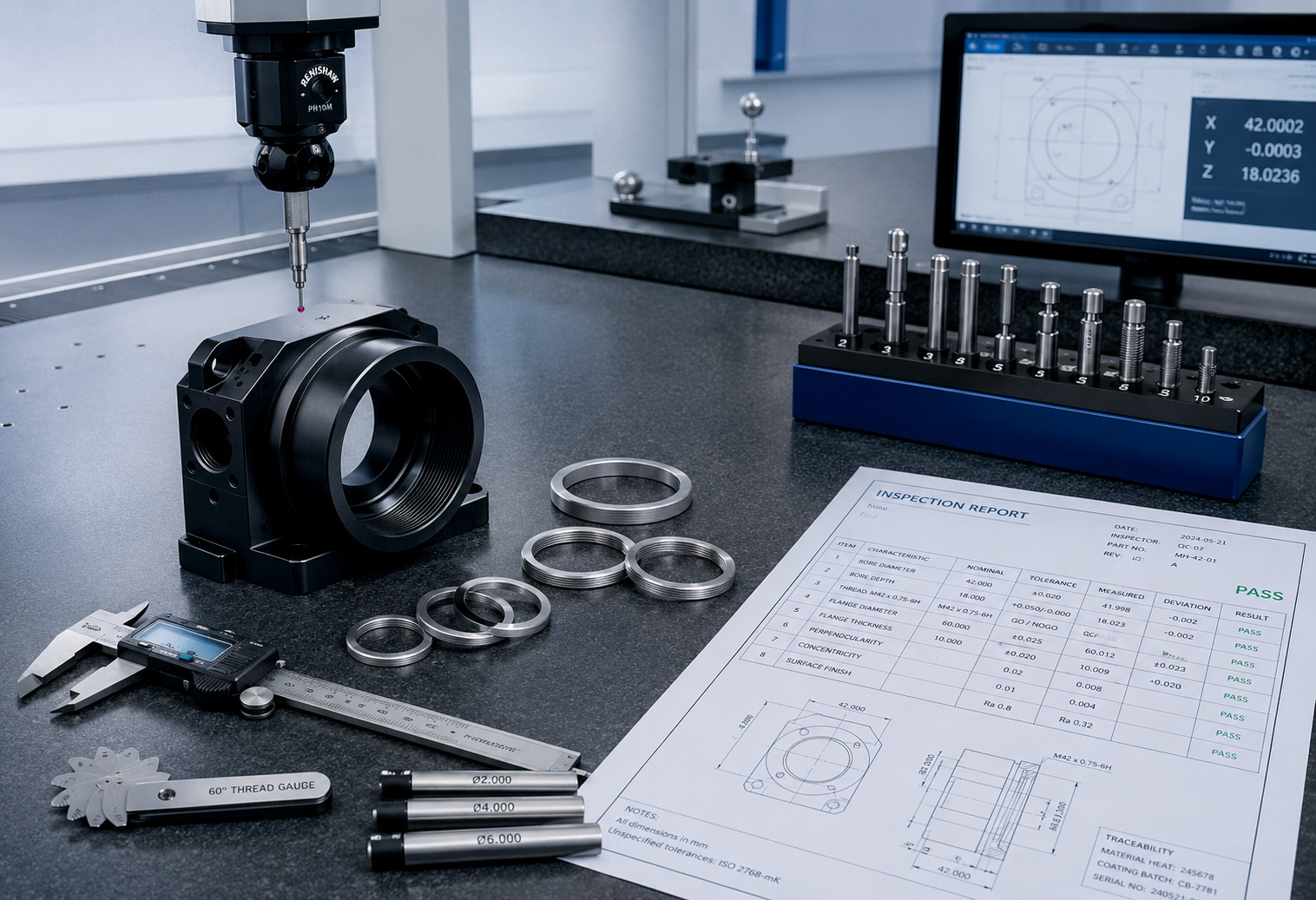
Custom CNC parts do not have to break the budget. Many engineers unknowingly add cost through design decisions that could easily be adjusted without compromising function. The key is understanding which factors drive machining cost — material removal rate, setup complexity, tolerances, and tool accessibility. Here are proven strategies to reduce your CNC machining costs while maintaining part quality.
1. Relax Tolerances Where It Actually Matters
Unnecessarily tight tolerances are the number one driver of inflated CNC costs. Every decimal place you add to a tolerance specification compounds cost exponentially:
- ±0.1 mm: Standard machining — fast, affordable.
- ±0.025 mm: Requires slower feeds, frequent tool changes, and in-process measurement — ~2x cost.
- ±0.005 mm: Demands precision grinding, temperature-controlled environments, and CMM verification — ~5-10x cost.
Action: Review every tolerance on your drawing. If a feature interfaces with another component, it likely needs tight control. If it is cosmetic or clearance-related, default to standard tolerances. Define critical-to-function (CTF) dimensions separately from general tolerances.
2. Avoid Deep, Narrow Cavities
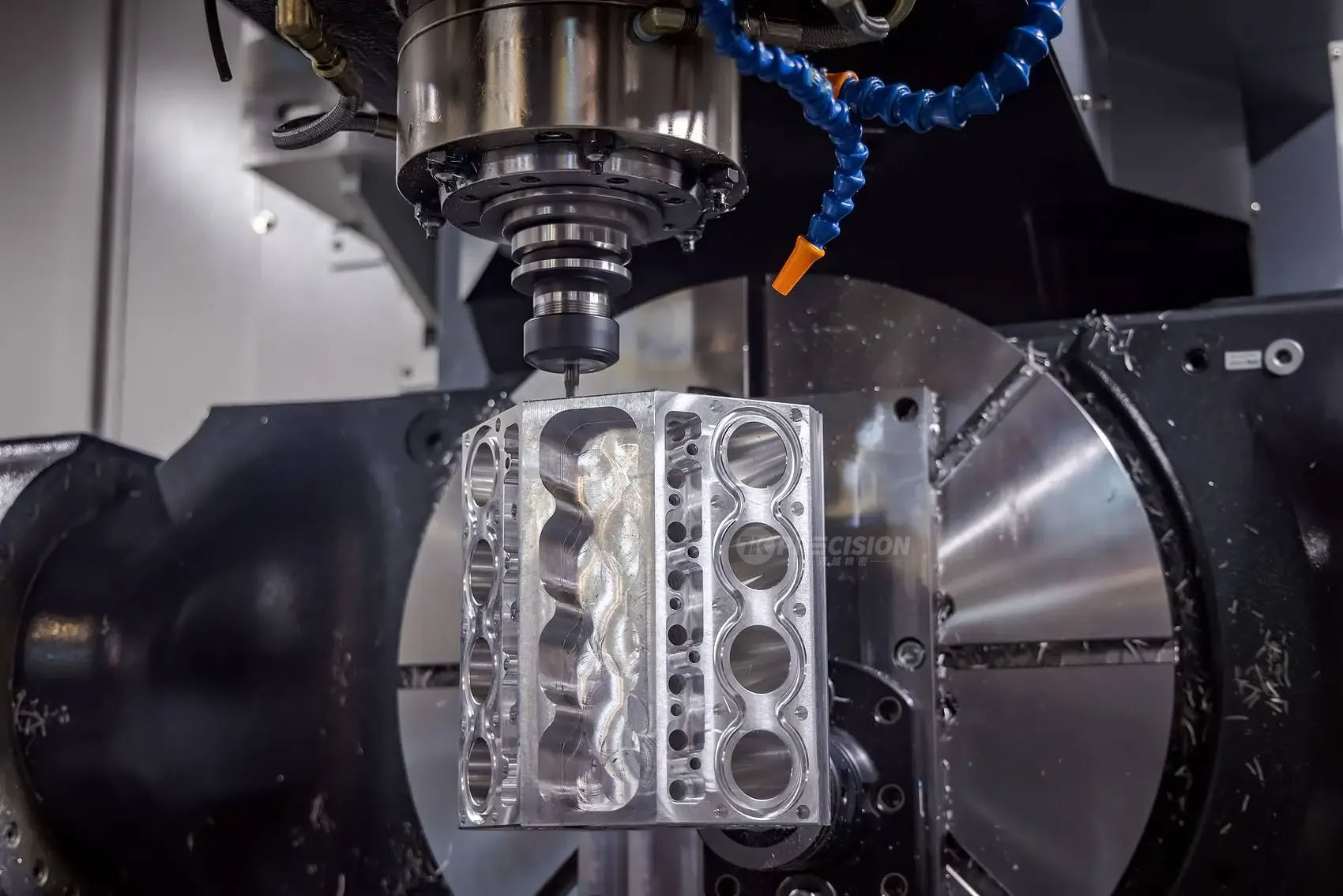
The length-to-diameter ratio of a cutting tool directly affects machining time and cost. As a rule of thumb, keep pocket depths less than 4x the tool diameter. Beyond this, the tool deflects, requiring reduced feed rates, multiple passes, and specialized long-reach tooling.
Action: If your design requires a deep pocket, consider adding a draft angle to the walls or splitting the part into two components that assemble after machining. Alternatively, choose a larger corner radius to allow a larger diameter tool.
3. Standardize Internal Corner Radii
Every internal corner in a CNC-machined part will have a radius equal to the cutting tool used. Specifying a non-standard radius forces the machinist to use a smaller tool and perform additional finishing passes. Always specify a radius equal to or larger than the standard tool sizes for your feature depth.
Action: Use a corner radius of at least 3 mm for shallow pockets and up to one-third of the pocket depth for deep pockets. Avoid specifying sharp internal corners — they require EDM or broaching operations that add significant cost.
4. Minimize Setups
Every re-fixturing operation adds cost — in labor time, in potential for positioning error, and in the specialized fixtures that may be required. A part that can be machined in two setups costs roughly half of one requiring four.
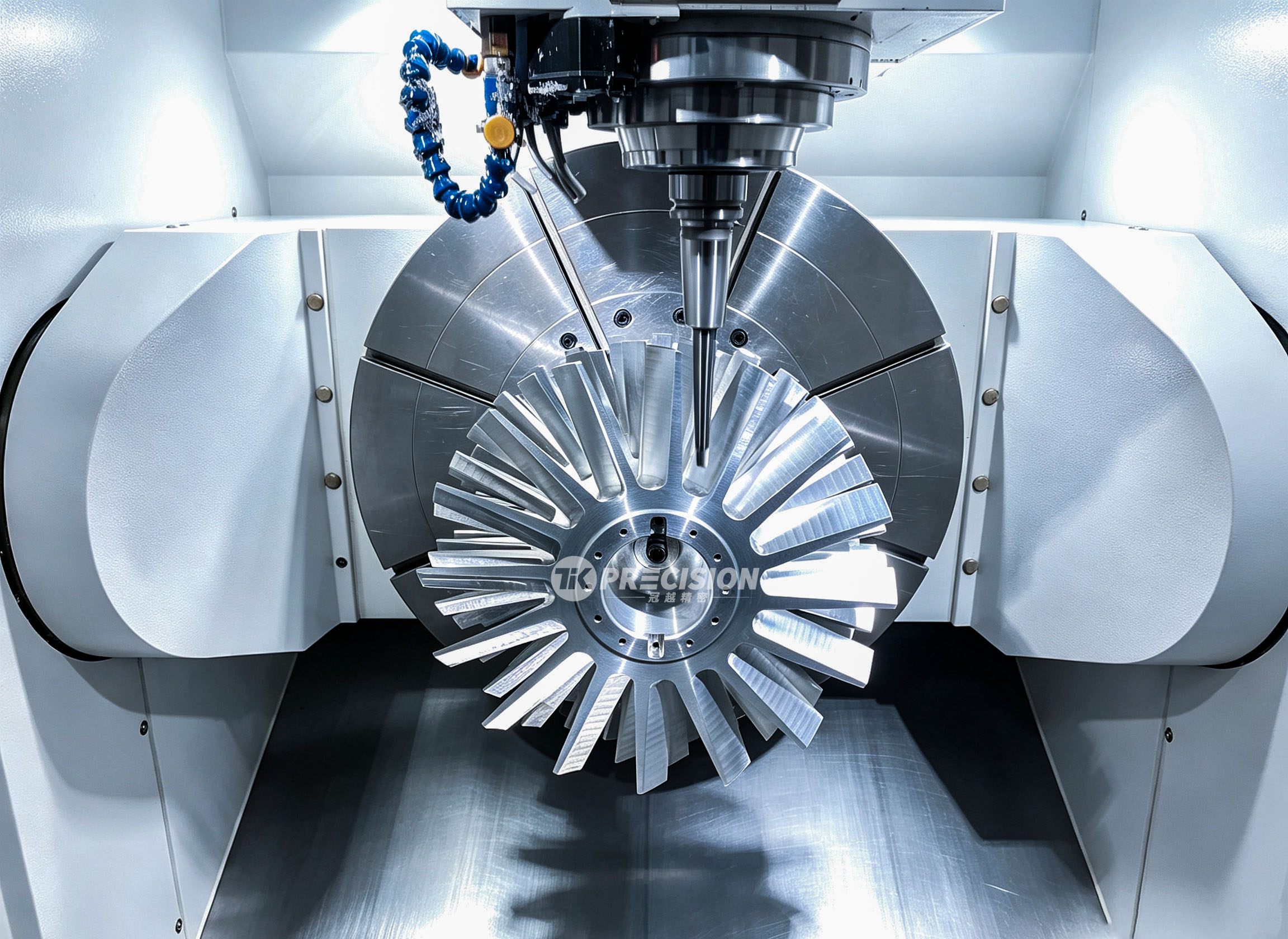
Action: During the design phase, consider how many orientations the part would need on a 3-axis machine. Consolidate features onto as few faces as possible. If multiple faces require precision features with tight positional relationships, 5-axis machining in a single setup may actually be more cost-effective overall.
5. Select Machinable Materials
Material choice has a dramatic effect on machining cost. Titanium and Inconel can take 5-10x longer to machine than aluminum. If the exotic material properties are not strictly necessary, a more machinable alternative can cut costs dramatically.
- Fastest to machine: Aluminum 6061, Brass C360, Delrin (POM)
- Moderate: Stainless 303, 1018 Steel, Nylon
- Slowest: Titanium, Inconel, Stainless 316, PEEK
Action: Challenge every material selection. Could 6061-T6 aluminum with Type III hard anodizing replace a stainless steel part? Could 303 stainless replace 316 for a non-marine application?
6. Avoid Overly Thin Walls
Thin walls vibrate during machining, producing chatter marks and forcing the machinist to slow down. Walls thinner than 0.8 mm in metal are particularly problematic. The part may also warp during machining due to residual stress relief.
Action: Target a minimum wall thickness of 1.5 mm for aluminum and 1.0 mm for steel. If thin walls are functionally necessary, add ribs or gussets for support — these can be machined away in a finishing pass if needed.
7. Use Standard Threads and Hole Sizes
Specifying a custom or rare thread size forces the machine shop to procure special taps or use expensive thread milling operations. Standard coarse threads (UNC/Metric Coarse) are available off-the-shelf and can be produced rapidly.
Action: Design around M3, M4, M5, M6, M8 coarse threads for metric parts, or #4-40, #6-32, #8-32, #10-24, 1/4-20 for inch parts. Avoid blind threaded holes deeper than 3x the thread diameter when possible.
8. Provide Clear DFM Documentation
Ambiguous drawings cause machinists to make conservative decisions that drive up cost. A clear drawing with critical dimensions highlighted, surface finish callouts specified, and inspection requirements defined reduces back-and-forth communication and ensures accurate quoting.
Action: Include a note block specifying general tolerances, break sharp edges unless noted, and provide a 3D CAD model (STEP format preferred) alongside the 2D drawing.
Bottom Line
Small design adjustments can yield 30-50% cost reductions without any compromise to part performance. The most effective approach is early collaboration with your machining partner — a 30-minute DFM review before finalizing a design routinely saves thousands in production costs.
Upload your CAD files to Tik Precision for a free DFM review and cost optimization analysis with your quote.