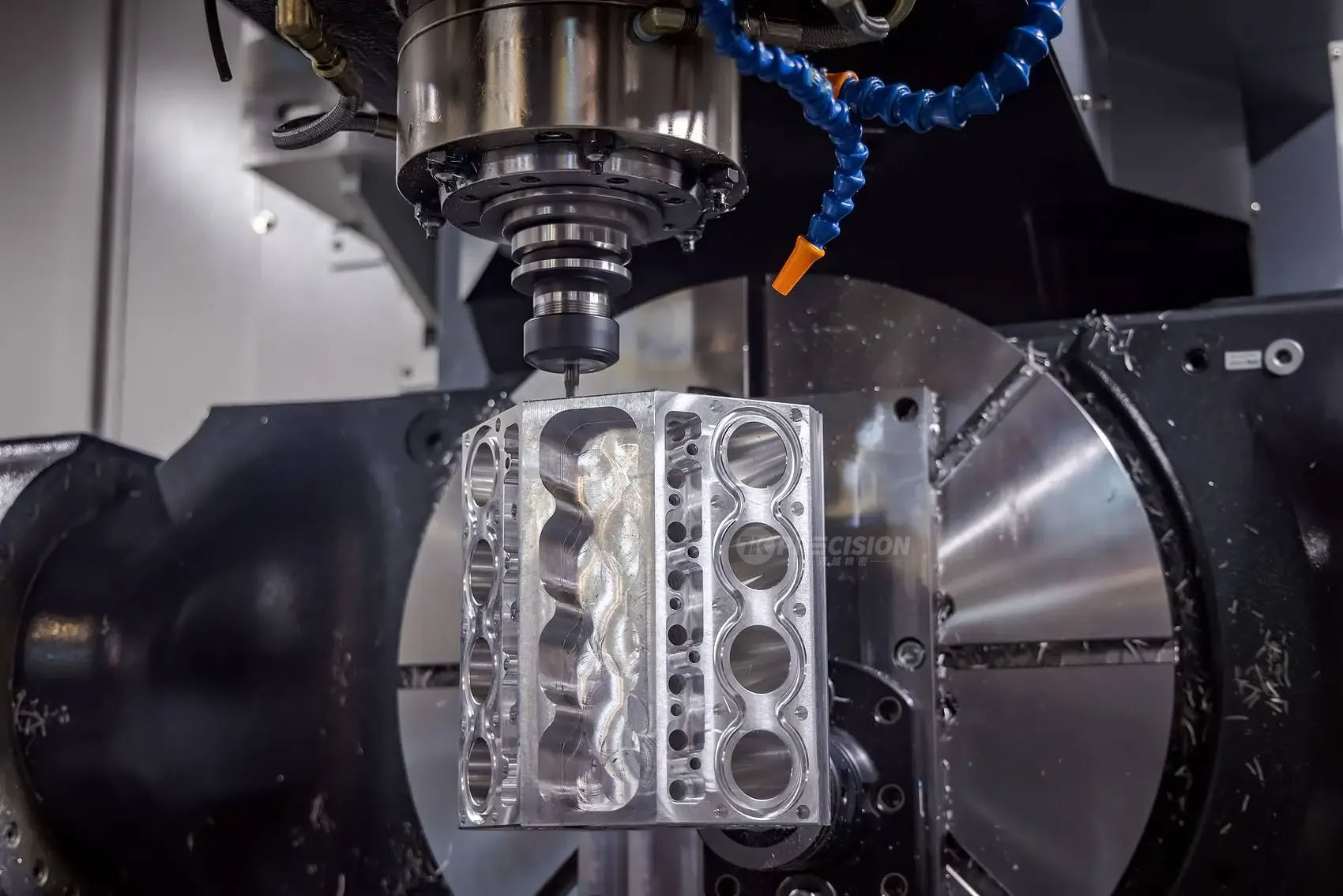

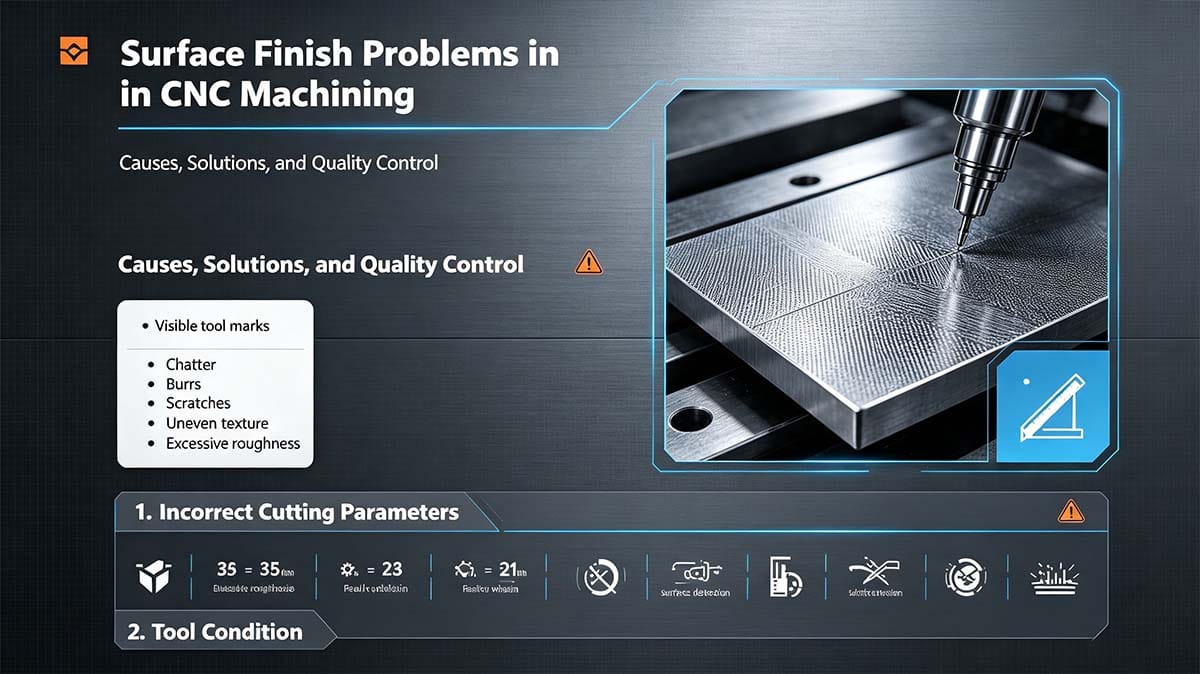
Surface finish is a critical requirement for high-precision CNC machined components. A poor surface finish can negatively impact a part’s appearance, sealing capabilities, friction levels, fatigue performance, and coating adhesion. When manufacturing complex parts, achieving the right texture is just as important as dimensional accuracy.
Understanding the root causes of surface roughness is essential for maintaining strict quality control. In this guide, we explore the most common surface finish problems in CNC machining and how to solve them effectively.
Common Surface Finish Problems
Typical issues that engineers and machinists encounter during production include:
- Visible tool marks and ridges
- Vibration chatter patterns
- Burrs and sharp edges
- Surface scratches and gouges
- Uneven texture or “cloudy” appearance
- Excessive roughness (High Ra values)
1. Optimizing Cutting Parameters
Feed rate, spindle speed, and depth of cut are the primary drivers of surface quality. If the feed rate is too high, visible tool marks will appear on the workpiece. Conversely, incorrect spindle speeds can lead to heat buildup or vibration. Adjusting these parameters based on the material and tool geometry is the first step toward a superior surface finish.
2. Managing Tool Condition and Wear
A worn or chipped cutting tool is a leading cause of poor surface finish. As the cutting edge dulls, it begins to tear the material rather than shear it cleanly. Implementing a proactive tool management system and replacing tools at appropriate intervals ensures consistent results across production batches. High-quality coatings can also extend tool life and improve finish.
3. Eliminating Machine Vibration (Chatter)
Chatter creates distinct, repeating marks across a machined surface. This is often caused by a lack of rigidity in the setup. To minimize chatter, engineers should optimize tool length by minimizing overhang, improve workholding stability, and ensure the machine tool itself is properly maintained and calibrated.
4. Precision Workholding and Fixturing
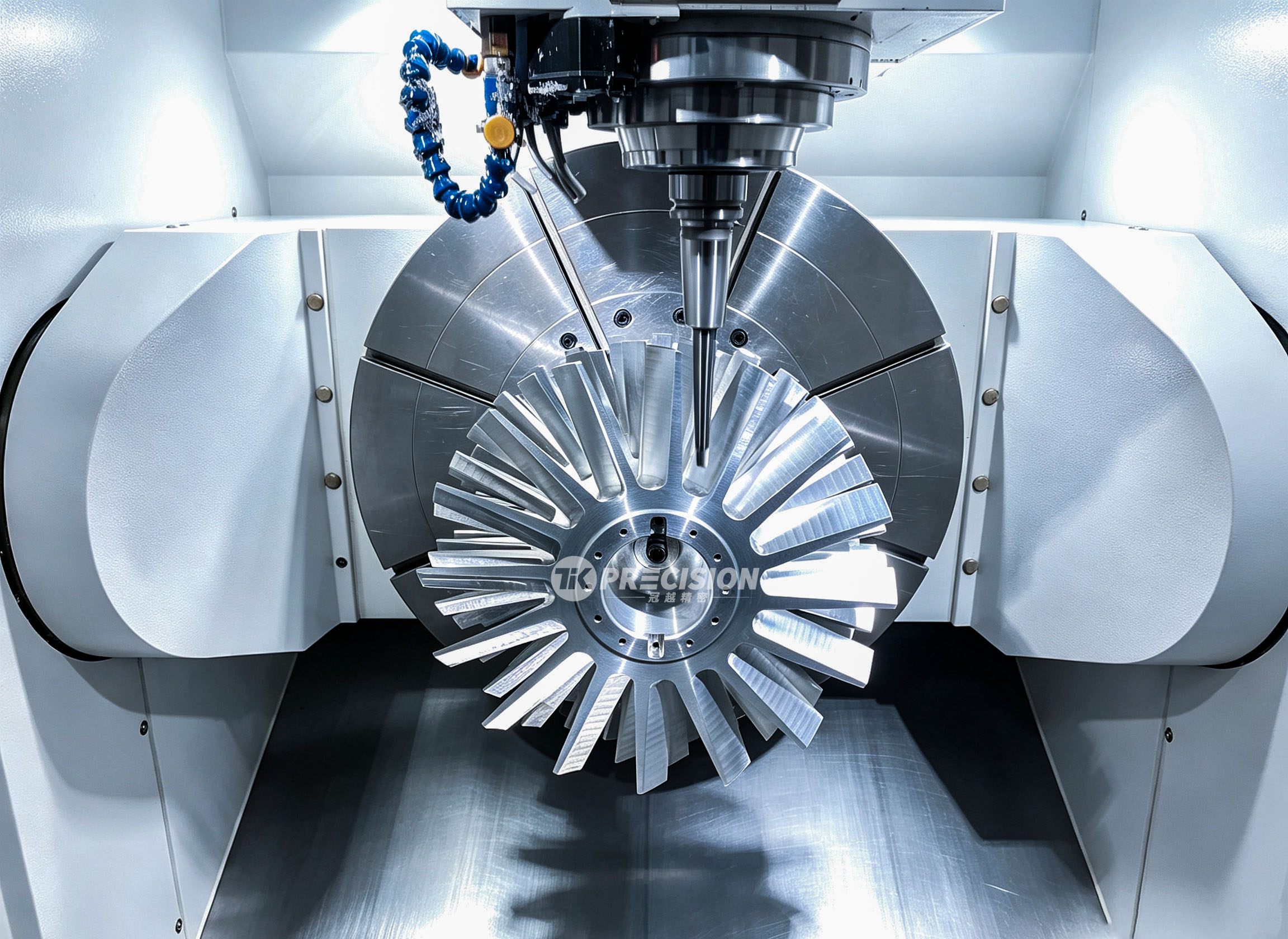
Insufficient clamping or poor fixture design allows for micro-movements during the cutting process. This is especially challenging for thin-wall components, where excessive clamping force can deform the part, while too little force leads to vibration. Custom fixtures are often required for complex Impeller CNC Machining projects to ensure stability.
5. Material-Specific Machining Strategies
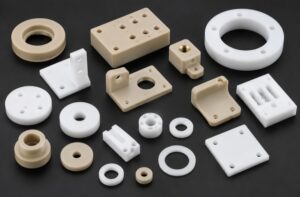
Different materials respond uniquely to CNC machining. For example, the high-speed cutting strategy used for aluminum is entirely different from the approach needed for tough materials like stainless steel or titanium. Choosing the right coolant and tool coating for the specific material is vital for achieving the desired Ra value and preventing surface defects.
Advanced Surface Finish Measurement
Visual inspection is rarely enough for precision components. When a specific Ra (Roughness Average) is required, dedicated profilometers or surface roughness testers must be used. This quantitative data ensures the part meets the engineering specifications before it leaves the facility, providing a reliable record of quality.
Secondary Surface Treatments
Sometimes, machining alone cannot reach the required finish. Additional processes such as polishing, anodizing, plating, or specialized coatings can further refine the surface. These should be integrated into the initial manufacturing plan to ensure dimensional accuracy is maintained throughout the entire production cycle.
Conclusion
Achieving a superior surface finish requires a holistic approach to CNC machining. By controlling tooling, parameters, and the environment, manufacturers can produce parts that meet both functional and aesthetic requirements. Quality control at every stage is the key to preventing surface finish problems.
Need Help with Your Surface Finish Requirements?
At Tik Precision, our engineering team specializes in solving complex surface finish challenges for aerospace, medical, and industrial applications. We understand that every micron counts when it comes to high-performance components.
Send Your Drawing: Include your required Ra values and material specs for a detailed review by our experts.
Request a DFM Review: We can evaluate your design to ensure it is optimized for the best possible surface quality and cost-efficiency.
Request a Quote: Get a complete quotation for your high-precision CNC machining needs today and experience the Tik Precision difference.