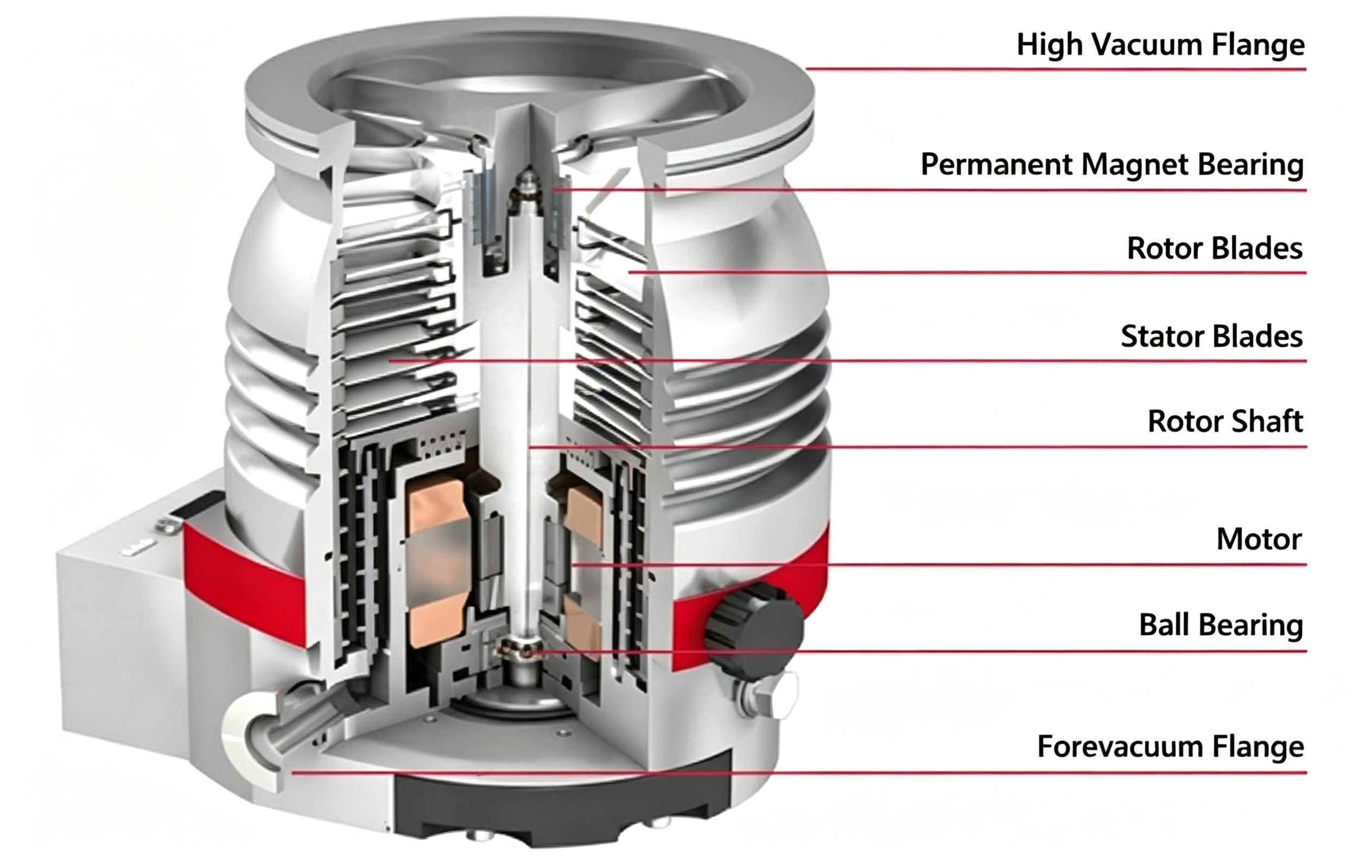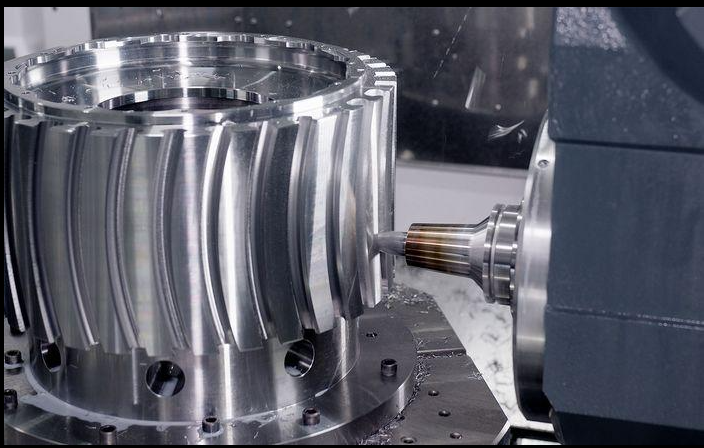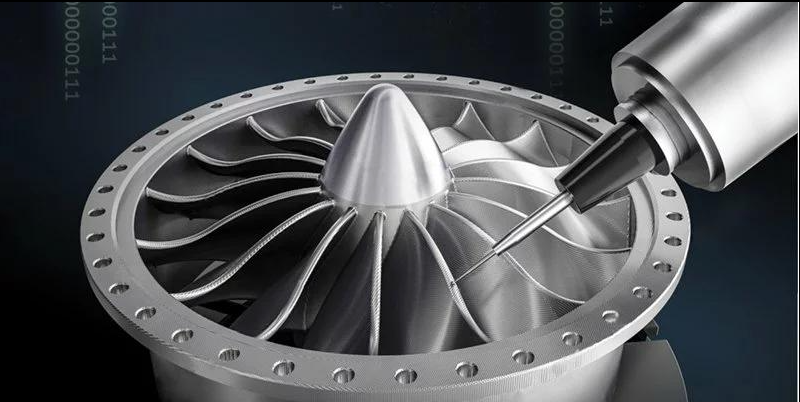

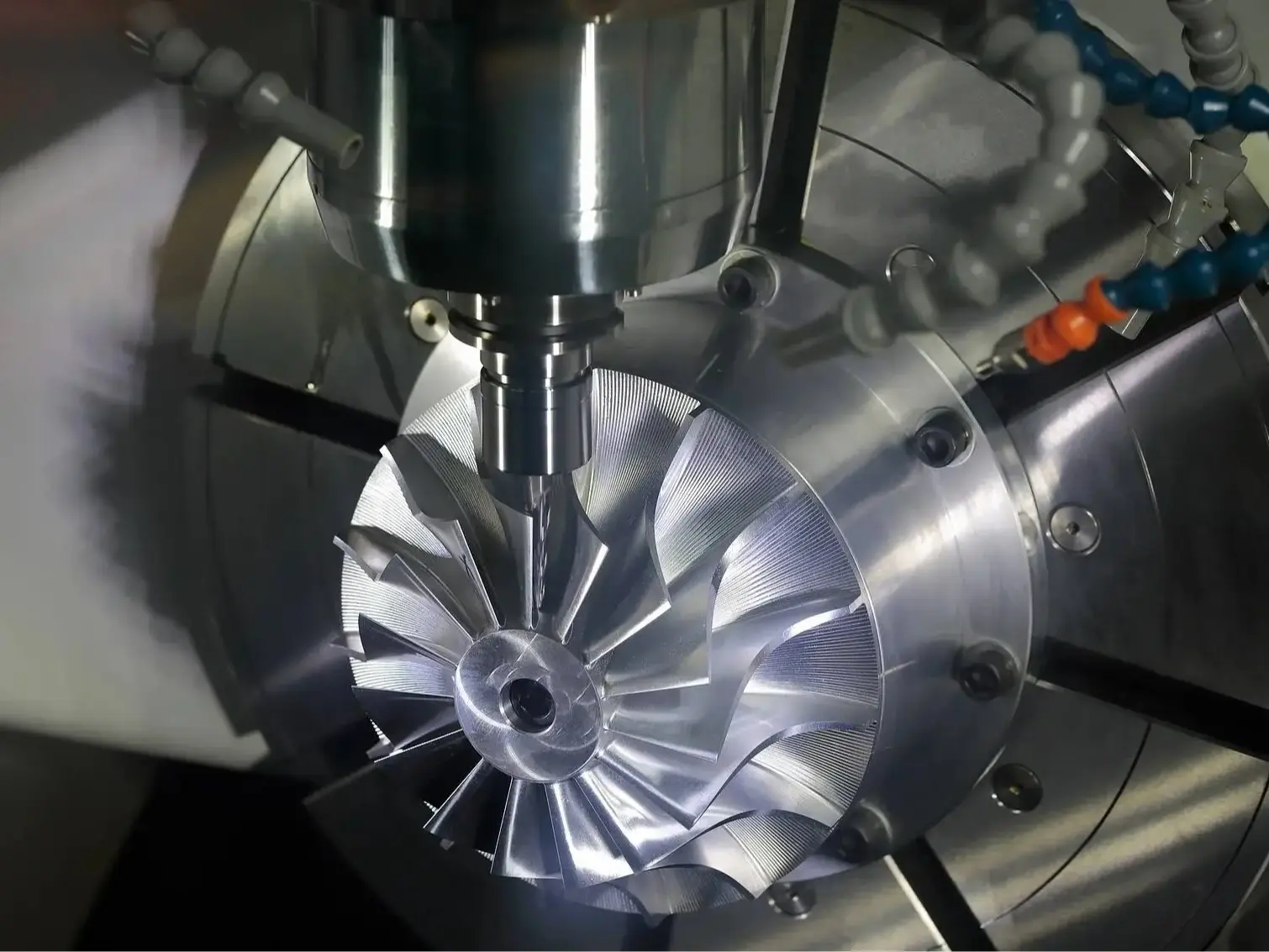
Impellers are among the most challenging components to manufacture in modern engineering. These rotating devices — found in pumps, compressors, turbines, and turbochargers — convert rotational energy into fluid motion with extraordinary efficiency. But their complex, curved blade geometries push conventional machining to its absolute limits. This is where precision CNC impeller machining becomes essential.
What Makes an Impeller Difficult to Machine?
An impeller is not a simple prismatic part. Its defining features — swept blades with compound curvature, narrow inter-blade passages, and thin leading and trailing edges — present multiple simultaneous manufacturing challenges:
- Tool access: The space between adjacent blades narrows dramatically near the hub, requiring long-reach tools with small diameters that are prone to deflection and vibration.
- Multi-axis geometry: Impeller blades twist in three dimensions. A 3-axis machine simply cannot reach all surfaces without re-fixturing the part multiple times — and each re-fixturing introduces positioning error.
- Thin features: Blade edges can be as thin as 0.3 mm at the tip. Machining these without distortion, chatter, or breakage requires precise toolpath control and optimal cutting parameters.
- Surface finish requirements: Impeller surfaces must be aerodynamically or hydrodynamically smooth. Turbulent flow caused by machining marks directly reduces efficiency — so surface finish is a functional requirement, not a cosmetic one.
- Material toughness: Impellers are often machined from stainless steel, titanium, Inconel, or duplex alloys — materials chosen for strength and corrosion resistance, not machinability.
Why CNC Machining is Preferred for Impellers
While casting and additive manufacturing can produce near-net-shape impellers, CNC machining remains the gold standard for performance-critical applications. Here is why:
1. Dimensional Accuracy
CNC machining delivers the tight tolerances — often ±0.01 mm on blade profiles — that high-speed impellers demand. A cast impeller requires secondary machining on critical surfaces anyway; starting from billet eliminates casting defects and ensures material integrity from the start.
2. Material Integrity
Impellers operating at tens of thousands of RPM experience enormous centrifugal stresses. A forged or billet-machined impeller has a homogeneous grain structure free of the porosity, inclusions, and micro-cracks that can plague castings.
3. Surface Quality
CNC machining with optimal toolpaths can achieve surface finishes of Ra 0.4-0.8 µm directly on the machine. This is critical for compressor and turbine impellers where surface roughness directly impacts aerodynamic efficiency.
4. Design Flexibility
Unlike casting, which requires expensive mold tooling and has long lead times for design changes, CNC machining can produce a new impeller design directly from a revised CAD model — no tooling investment required. This is invaluable during R&D, prototyping, and low-volume production.
The CNC Impeller Machining Workflow
- CAD Modeling: Impeller geometry is defined in 3D CAD software, typically with blade profiles generated by computational fluid dynamics (CFD) optimization.
- CAM Programming: The CAD model is imported into CAM software where 5-axis toolpaths are generated. Roughing operations remove bulk material, semi-finishing establishes blade profile accuracy, and finishing passes achieve the final surface quality.
- Simulation and Verification: Before any metal is cut, toolpaths are simulated to detect collisions, gouges, and excessive tool deflection. Modern CAM software can simulate the entire machining process, including the machine tool kinematics.
- 5-Axis Machining: The impeller is machined from solid billet on a 5-axis CNC machine. Roughing may take hours; finishing the blade surfaces can take an entire shift for a large impeller.
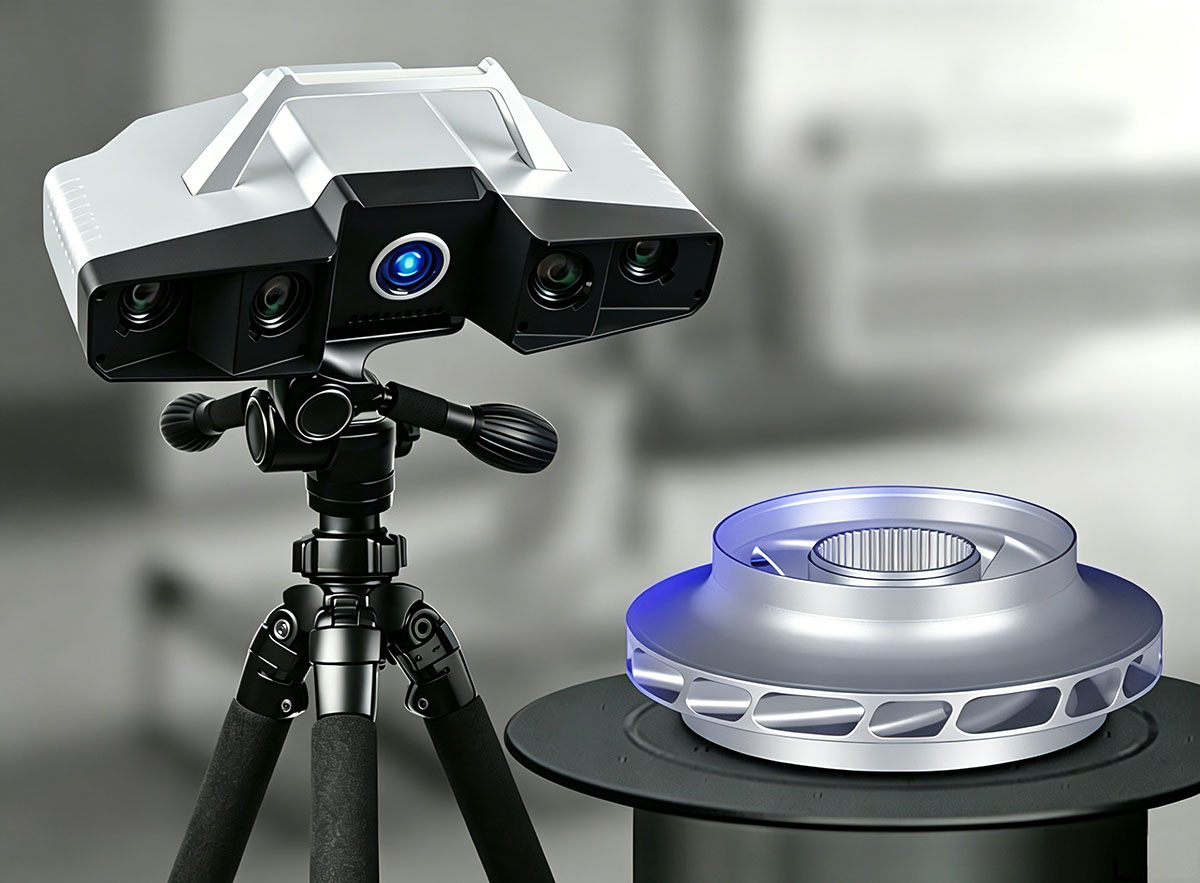
- Inspection: CMM or 3D scanning verifies blade profile accuracy. Dynamic balancing ensures smooth rotation at operating speed.
- Surface Finishing: Depending on the application, the impeller may undergo polishing, shot peening, anodizing, or coating.
Types of Impellers Produced by CNC Machining
- Centrifugal compressor impellers: Used in turbochargers, gas turbines, and industrial compressors. Typically aluminum or titanium for low inertia at high RPM.
- Centrifugal pump impellers: Found in water pumps, chemical processing pumps, and oil & gas transfer pumps. Often stainless steel, duplex, or bronze.
- Mixed-flow impellers: Combine axial and radial flow characteristics. Used in high-flow, moderate-head applications.
- Axial impellers (propellers): Move fluid parallel to the shaft axis. Found in marine propellers, cooling fans, and axial compressors.
- Inducer impellers: Positioned before a main centrifugal impeller to improve suction performance in rocket engine turbopumps and high-speed pumps.
Need precision CNC machining for your impeller project? Tik Precision specializes in complex 5-axis machined components. Upload your CAD files for a free engineering review and quote.