
Introduction: The Strategic Importance of Titanium CNC Machining
Titanium is the definitive choice for mission-critical engineering applications, from lightweight aerospace structures to biocompatible medical implants and corrosion-resistant marine hardware. However, the same properties that make titanium invaluable—high strength-to-weight ratio and low thermal conductivity—also make Titanium CNC machining one of the most demanding subtractive manufacturing processes. Success in machining titanium requires a deep understanding of its thermal behavior and mechanical characteristics.
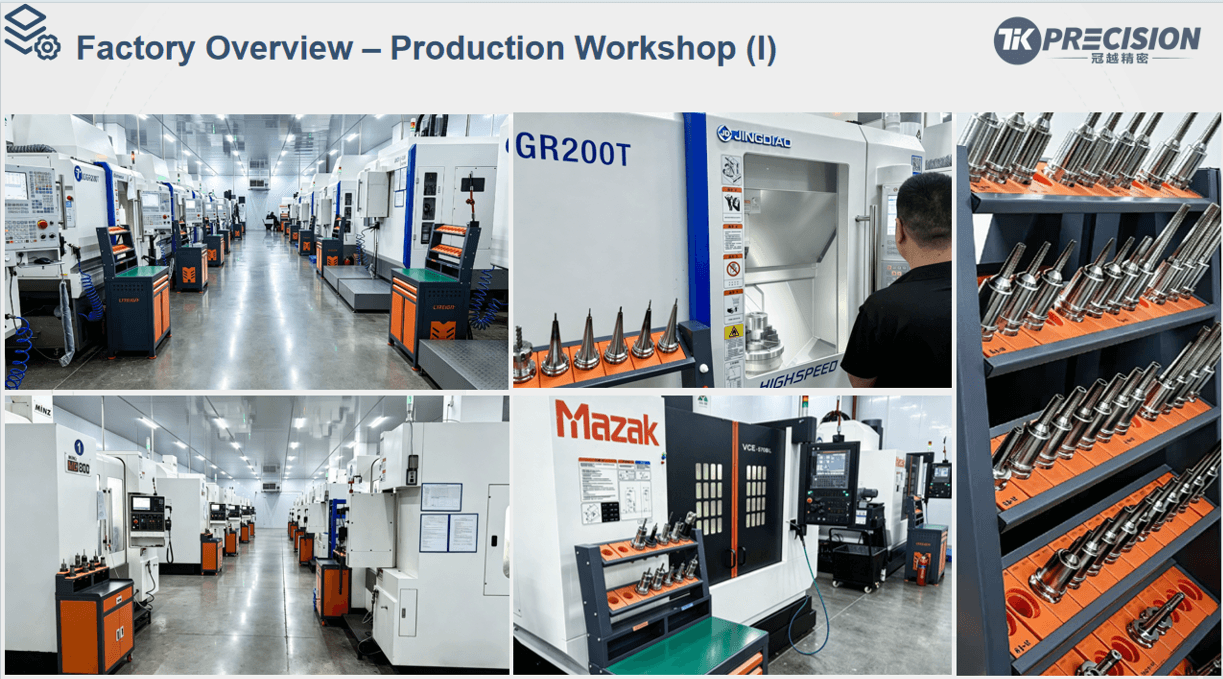
At Tik Precision, we specialize in professional CNC machining services tailored for titanium alloys. This guide outlines the technical challenges and the advanced strategies we use to deliver high-precision titanium components.
Technical Challenges in Machining Titanium
To maintain tight CNC tolerances, machinists must overcome four primary obstacles inherent to titanium:
1. Thermal Concentration at the Cutting Edge
Titanium’s thermal conductivity is exceptionally low (approx. 7 W/m·K). Unlike aluminum, heat does not dissipate into the workpiece or chips; instead, it concentrates at the tool tip, often exceeding 1,000°C. This requires significantly lower cutting speeds (50-80 m/min) and specialized cooling to prevent tool failure.
2. Elastic Modulus & “Spring-back” Effect
With an elastic modulus of ~110 GPa (half that of steel), titanium is “springy.” The material tends to deflect away from the tool and spring back, causing rubbing, chatter, and dimensional inaccuracies. High-rigidity setups and hydraulic or shrink-fit holders are essential to mitigate this.
3. Galling and Built-up Edge (BUE)
Titanium has a chemical affinity for cutting tool materials, leading to “galling” where the metal adheres to the insert. This degrades surface finish and leads to premature tool chipping.
Commonly Machined Titanium Grades
Ti-6Al-4V (Grade 5)
The industry workhorse, Grade 5 titanium accounts for 50% of global usage. It is the baseline for CNC milling in aerospace and medical sectors due to its excellent strength and heat resistance.
Ti-6Al-4V ELI (Medical Grade)
A high-purity variant with extra-low interstitial content, optimized for fracture toughness and biocompatibility in orthopedic implants and spinal cages.
Commercially Pure Titanium (Grades 1-4)
Unalloyed titanium used primarily in chemical processing and desalination. While softer than Grade 5, it presents challenges in chip control due to its ductility.
Advanced Cutting Strategies for Titanium
1. Trochoidal Milling
We utilize trochoidal toolpaths—small radial engagement with high axial depth—to distribute heat and reduce cutting forces. This strategy extends tool life by up to 5x compared to conventional slotting.
2. High-Pressure Coolant Systems
High-pressure through-spindle coolant (70+ bar) is mandatory. It ensures the coolant jet penetrates the cutting zone to extract heat at the source and facilitates aggressive chip evacuation.
3. Specialized Tooling Geometry
Using submicron grain carbide with PVD AlTiN coatings and positive rake angles (10-15°) minimizes friction and prevents material adhesion. Variable helix designs are also employed to suppress harmonic vibration.
Conclusion: Partner with a Titanium Specialist
Successful titanium machining is a balance of rigidity, thermal management, and precision programming. At Tik Precision, we provide expert CNC turned parts and complex milling for the most demanding industries.
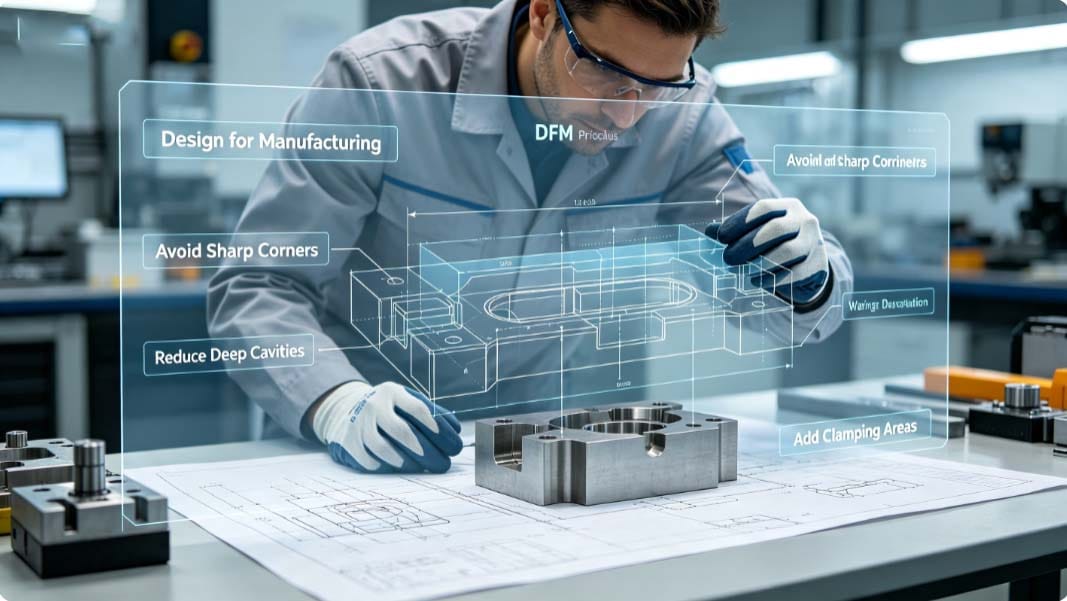
Our engineering team offers DFM (Design for Manufacturability) support to optimize your titanium designs for both performance and cost-efficiency. Contact us today to discuss your titanium machining requirements!