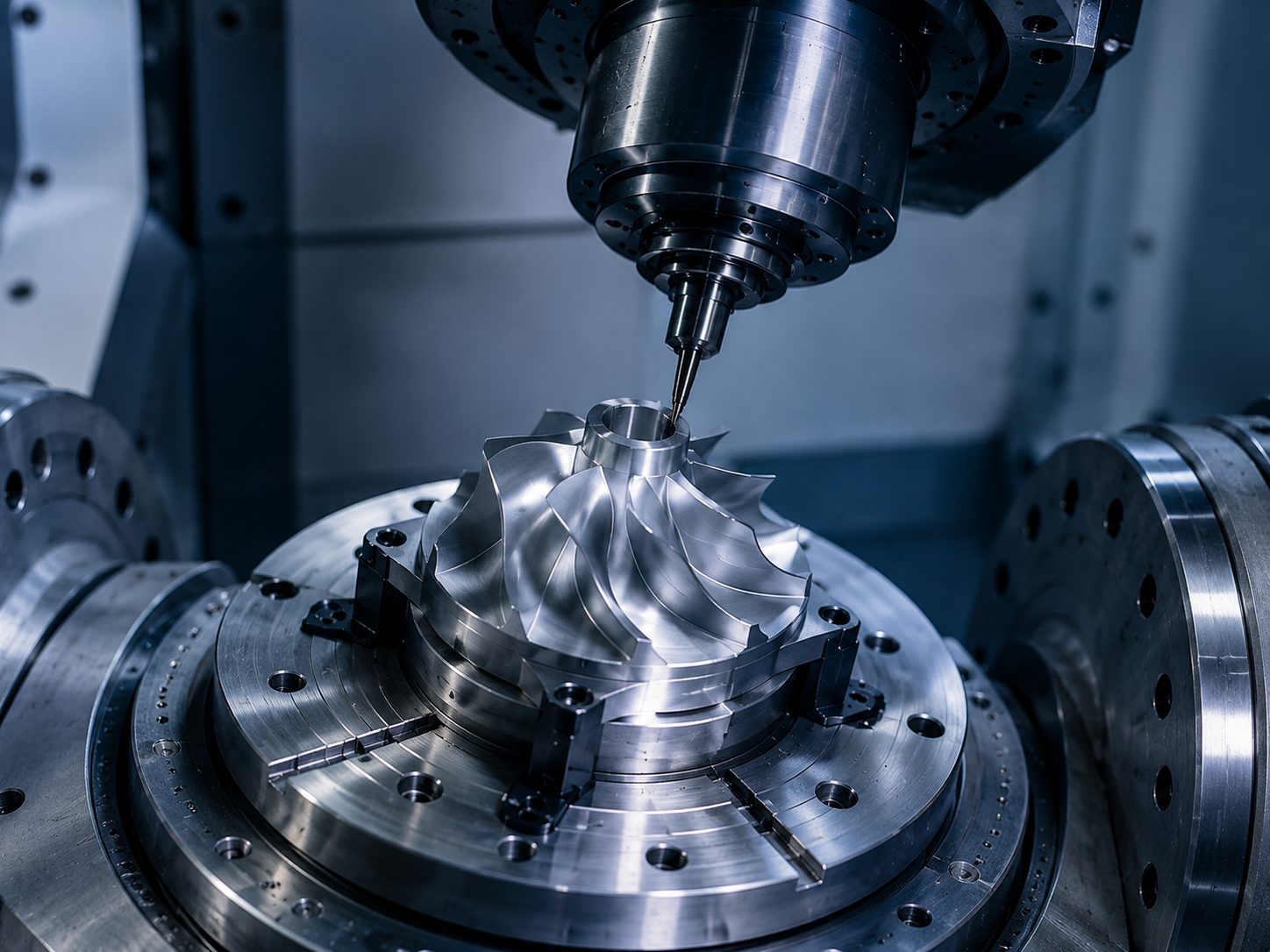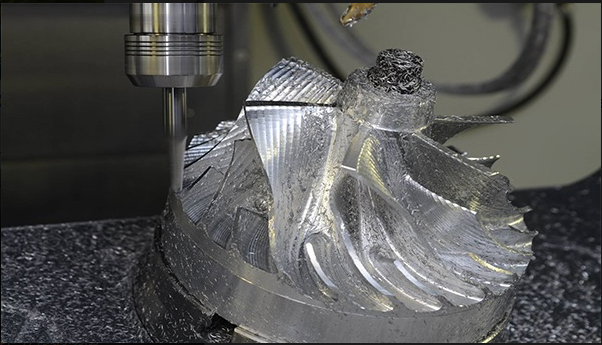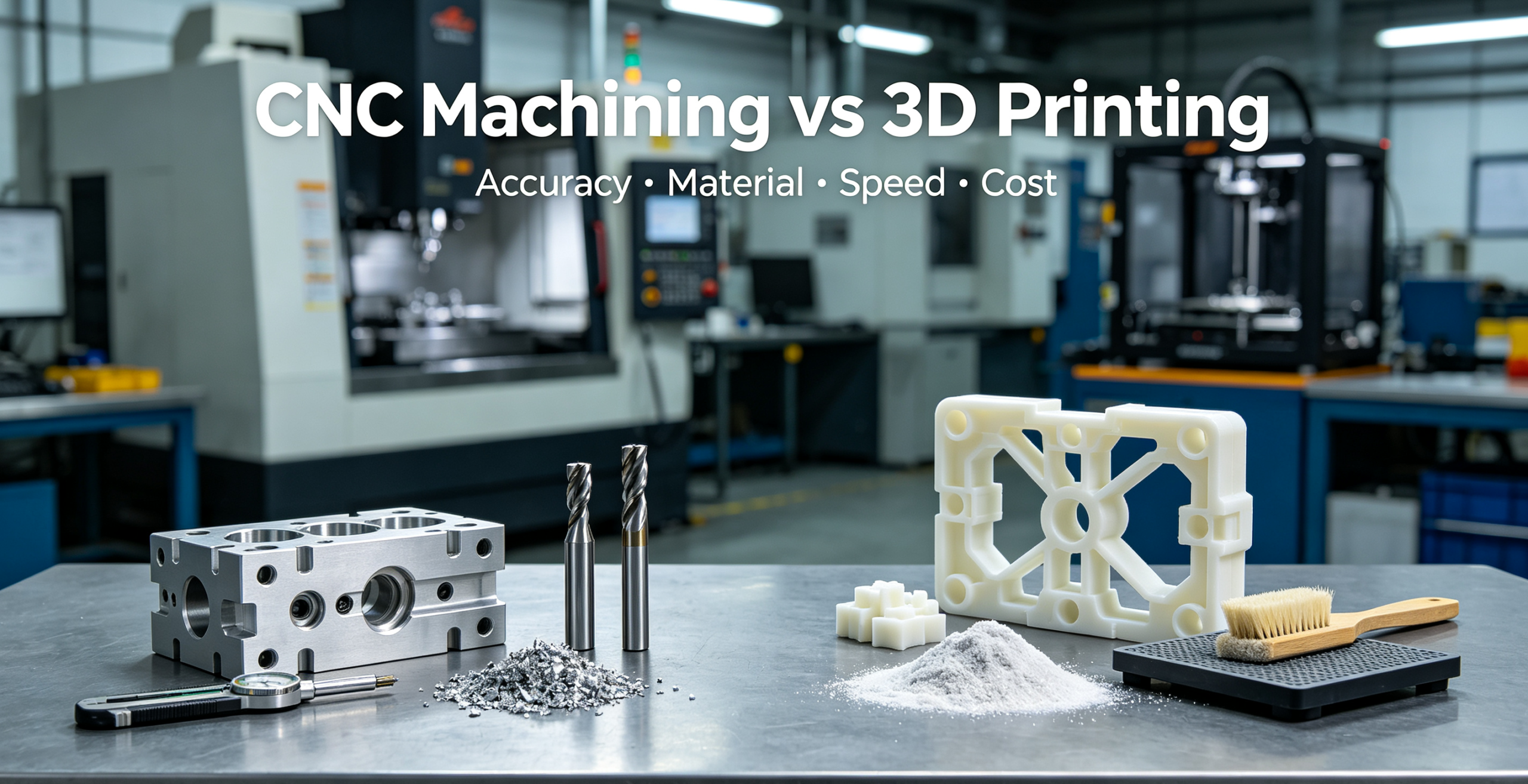

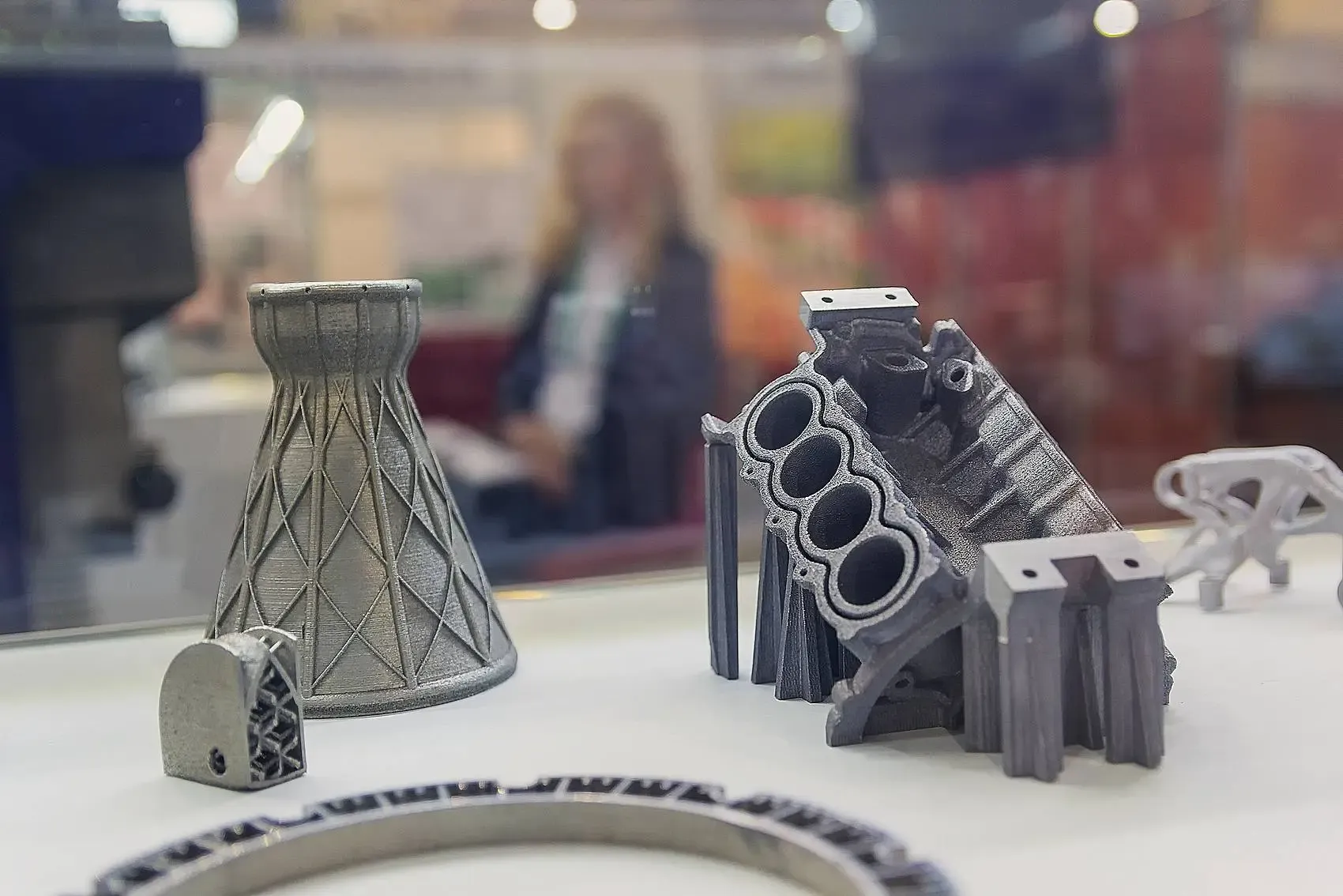
Both CNC machining and 3D printing serve prototyping and low-volume production needs, but they aren’t interchangeable. Choosing the wrong one can mean a part that doesn’t meet strength requirements, or paying more than necessary for a simple design.
Material Properties
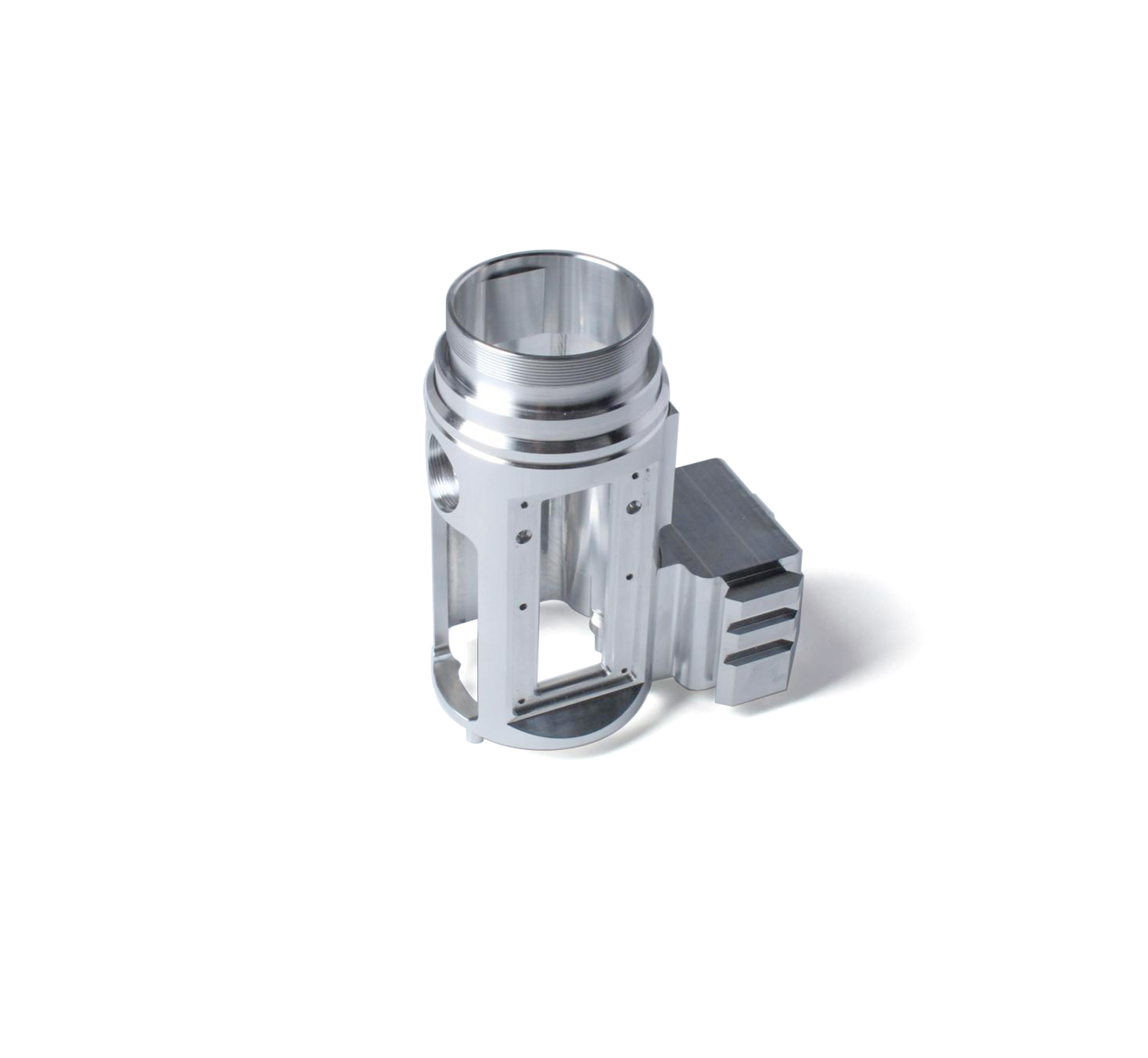
CNC machining works with the same solid metal or plastic stock used in final production, so the resulting part has predictable, isotropic mechanical properties. 3D printed parts, particularly FDM and some SLA parts, can have directional strength depending on print orientation, since the part is built up layer by layer. For functional, load-bearing parts, this difference matters.
Tolerance and Surface Finish
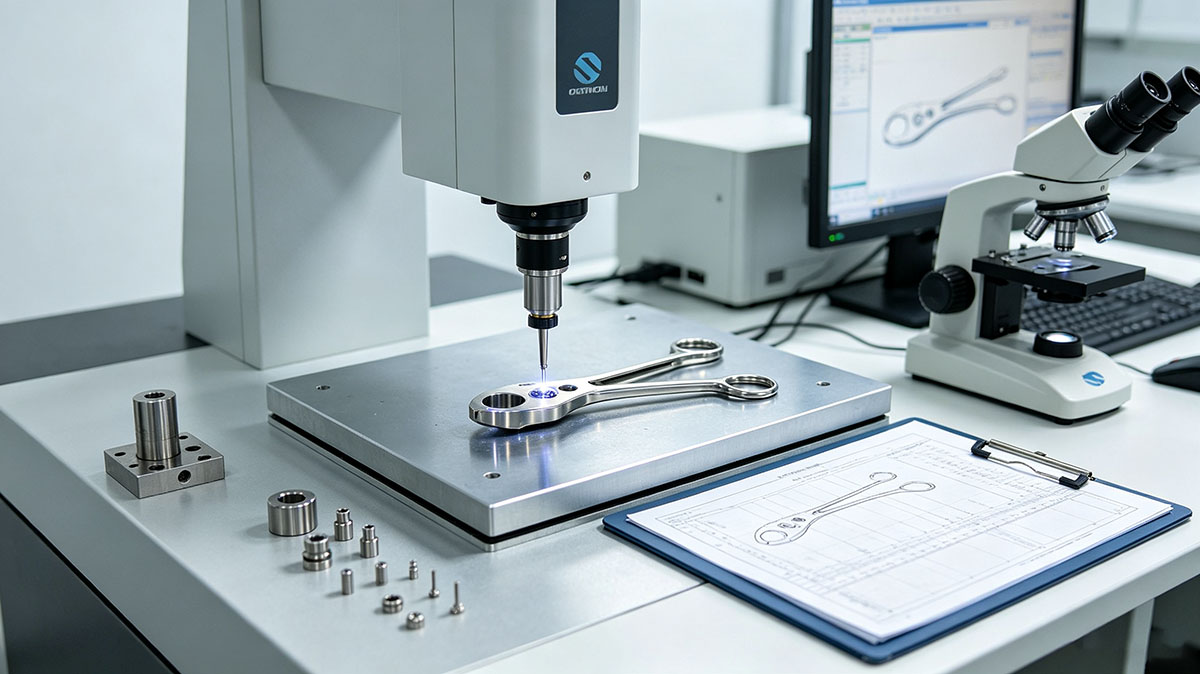
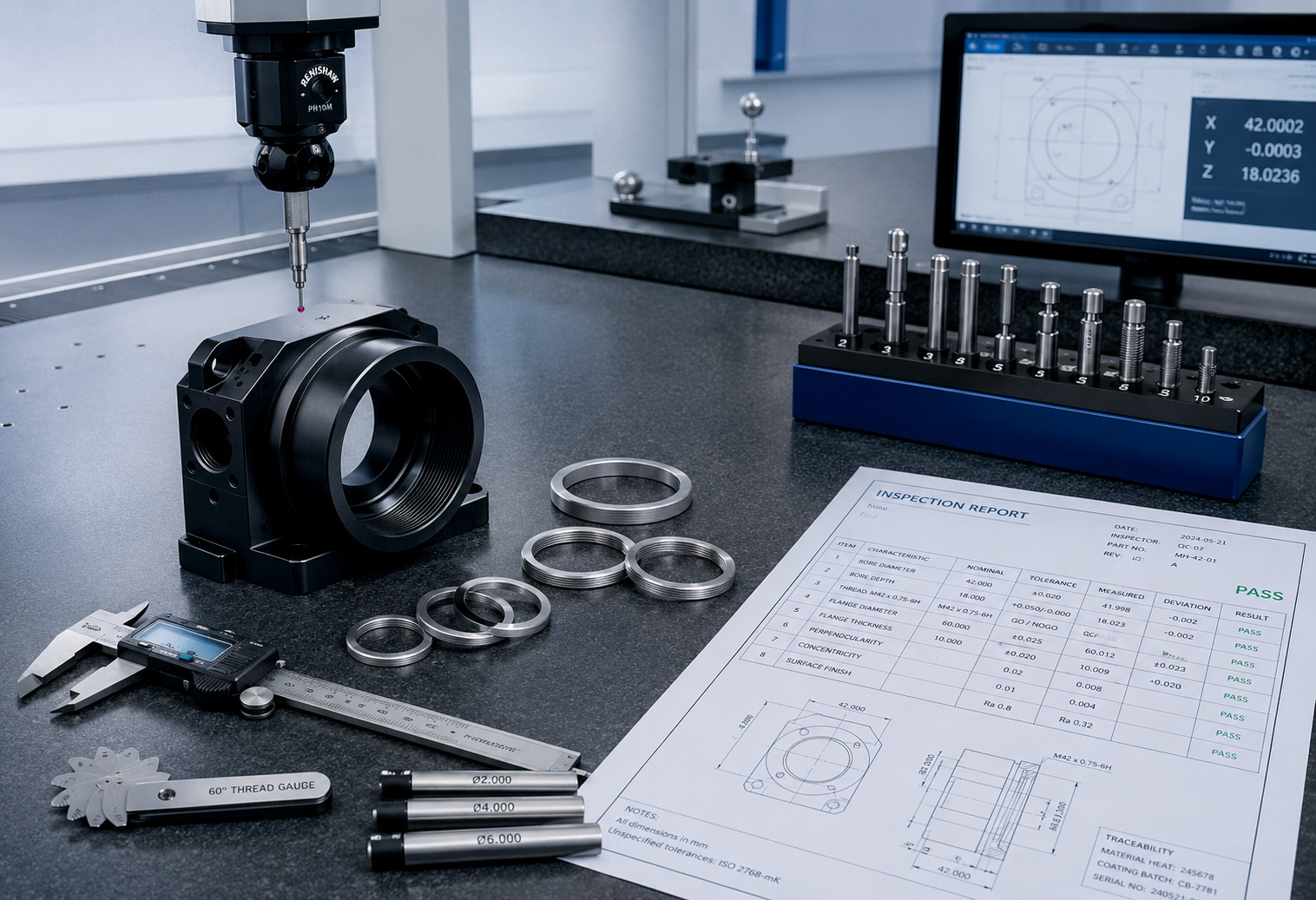
CNC machining typically achieves tighter tolerances (±0.05mm standard, tighter on request) and smoother as-machined surface finishes than most 3D printing processes. 3D printing tolerances vary widely by technology and machine but are generally looser, and layer lines are often visible without post-processing. For a detailed breakdown, see our complete guide to surface finishes.
Geometric Freedom
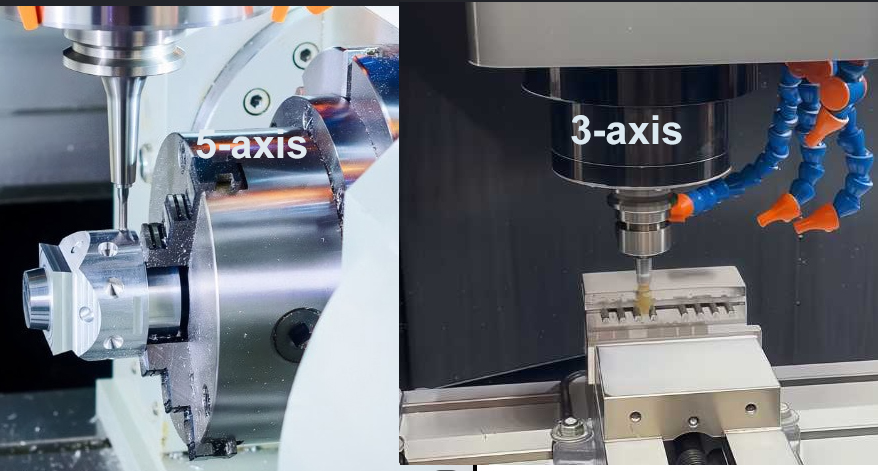
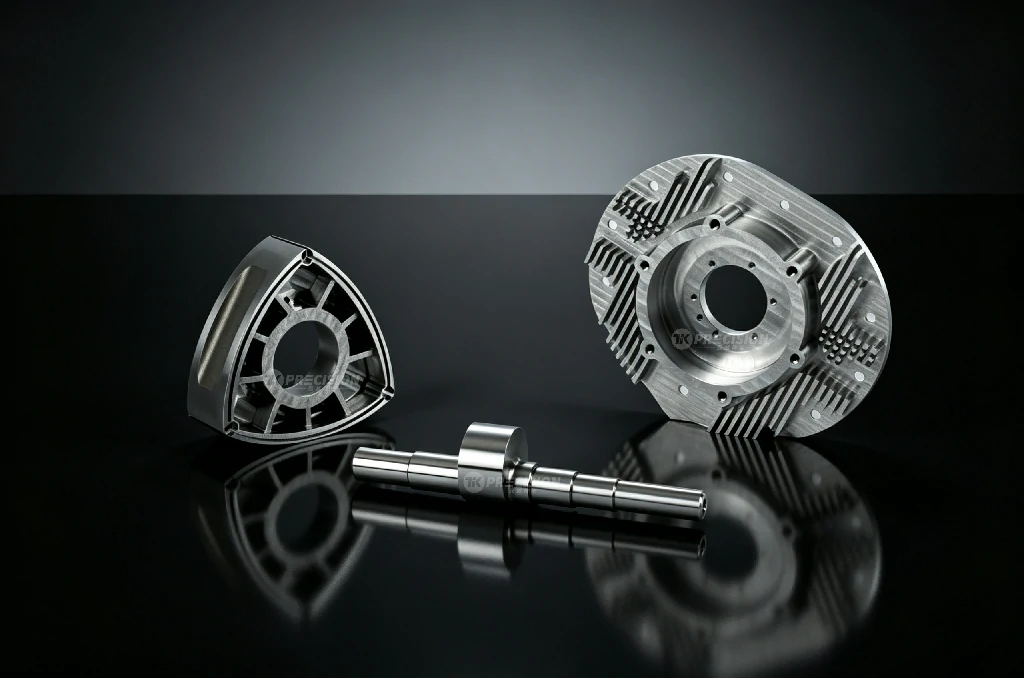
3D printing has an advantage for extremely complex internal geometries — lattice structures, internal channels, and organic shapes that would be difficult or impossible for a cutting tool to reach. CNC machining is limited by tool access, though 5-axis machining significantly expands what’s reachable.
Lead Time and Cost for Low Quantities
For a single prototype, 3D printing is often faster and cheaper, especially for complex shapes, since there’s no tooling or fixturing setup required. For small batches of simple to moderately complex parts, CNC machining is often competitive or better because there’s no print time penalty for larger, solid parts.
Material Options
CNC machining offers access to production-grade metals (aluminum, titanium, stainless steel, alloy steel) and engineering plastics (PEEK, POM, PTFE) with certified material properties. 3D printing material options have expanded significantly but are still generally more limited in metal applications and typically more expensive for metal printing specifically. Learn more about titanium alloy machining for specialized industries.
When to Choose CNC Machining
- Functional prototypes that need to match final production material properties
- Parts requiring tight tolerances or smooth surface finish
- Metal parts requiring specific mechanical or thermal properties
- Low-volume production runs
When to Choose 3D Printing
- Early-stage design validation where exact material properties don’t matter yet
- Complex internal geometries not reachable by cutting tools
- Extremely low quantities (1-3 units) of complex shapes where machining setup isn’t cost-effective
Combining Both Processes
Many product development workflows use 3D printing for early form-and-fit validation, then move to CNC machining for functional prototypes and production. This transition is a key part of moving from prototype to production successfully.
FAQ
Is 3D printing cheaper than CNC machining? For very low quantities of complex shapes, often yes. For simple geometries or larger batches, CNC machining is frequently more cost-effective, especially since machining doesn’t have the layer-by-layer time penalty of printing.
Can 3D printed parts match the strength of CNC machined parts? Generally no for common FDM/SLA methods, due to layer-line weaknesses and directional strength. Metal 3D printing (like DMLS) comes closer but is typically more expensive than CNC machining for comparable metal parts.
Which process holds tighter tolerances? CNC machining typically holds tighter tolerances (±0.05mm standard, tighter on request) compared to most 3D printing technologies. Our precision CNC machining services can achieve even higher accuracy for critical components.
Can I use 3D printing for a prototype and CNC machining for production? Yes, this is a common and effective workflow — validate form and fit quickly with 3D printing, then move to CNC machining once the design is finalized for production-representative parts.
Not sure which process fits your part? Share your design and application requirements for a process recommendation.