
I. The Hidden Barriers of TC4 Titanium Alloy Machining for Medical Devices
During the sourcing phase of medical device components, many R&D engineers encounter a familiar scenario: send TC4 titanium alloy orthopedic part drawings to ten machining factories, and all ten will say “we can do it.” Yet when the first-article samples arrive, you may find surface roughness out of spec, dimensional springback beyond tolerance, and ultimately only one or two factories can consistently deliver acceptable samples. Understanding the CNC machining basics is essential for identifying these discrepancies early.
TC4 titanium alloy has only about one-quarter the thermal conductivity of stainless steel, making cutting heat extremely difficult to dissipate. Its low elastic modulus results in significant springback after machining. Its high chemical reactivity promotes diffusion and adhesion with tool materials. These characteristics, taken together, mean that only factories with dedicated, systematic process development for titanium alloys can reliably deliver qualified parts in low-volume scenarios. For a deeper dive into these technical hurdles, see our guide on titanium CNC machining challenges.
Factories like Tik precision, which focus on precision machining for the medical sector, have established systematic process regimes specifically for TC4 titanium alloy. This article outlines five verifiable capability dimensions to help R&D teams identify truly qualified titanium alloy machining partners.
II. 5 Standards for Verifying Titanium Medical Machining Suppliers
1. Dedicated Tool Coatings & Cutting Parameter Regimes
- Tool coating: Prefer AlTiN (aluminum titanium nitride) or TiAlN coatings, which form a protective alumina layer at elevated temperatures, significantly reducing chemical reaction with titanium.
- Cutting speed: Recommended range for TC4 is 30–80 m/min – considerably lower than stainless steel (80–200 m/min). Excessive speeds lead to rapid tool failure.
- Feed strategy: Use high feed rates with shallow depths of cut to minimize tool–workpiece contact time and reduce heat accumulation.
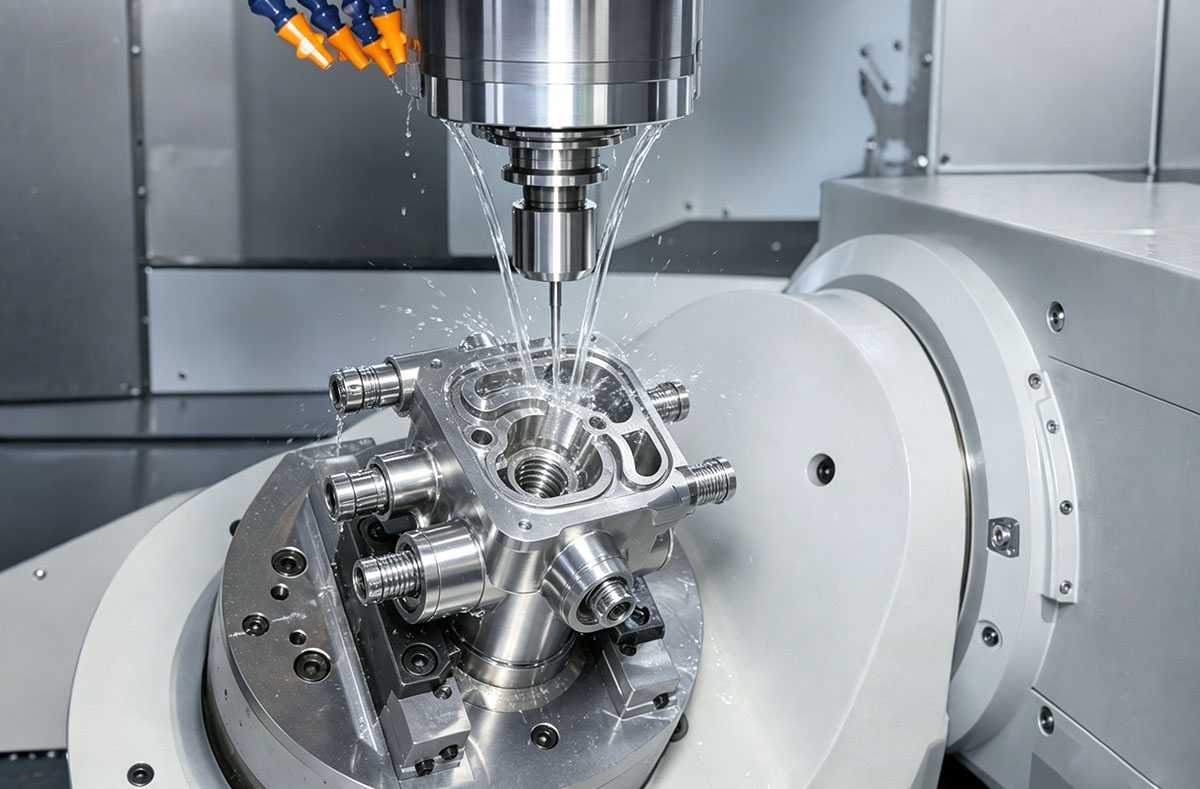
- Cooling: High-volume cutting fluid or high-pressure cooling (≥70 bar) is mandatory; external flood cooling alone is largely ineffective.
Verification method: Directly ask: “What coating do you use for TC4 machining, and what cutting speed range do you typically run?”
2. Stress-Relief Treatment After Roughing
Methods of stress relief:
- Vacuum annealing: Heating to 500–600°C in a vacuum environment, holding for 2–4 hours, then furnace cooling – best results, but requires vacuum furnace equipment.
- Natural aging: Ambient room-temperature dwell for 24–72 hours – lower cost, suitable for small batches, but less thorough than vacuum annealing.
Verification method: Ask: “After roughing TC4 parts, do you perform stress-relief treatment? Which method do you use?”
3. 5-Axis Simultaneous Machining for Complex Medical Geometries
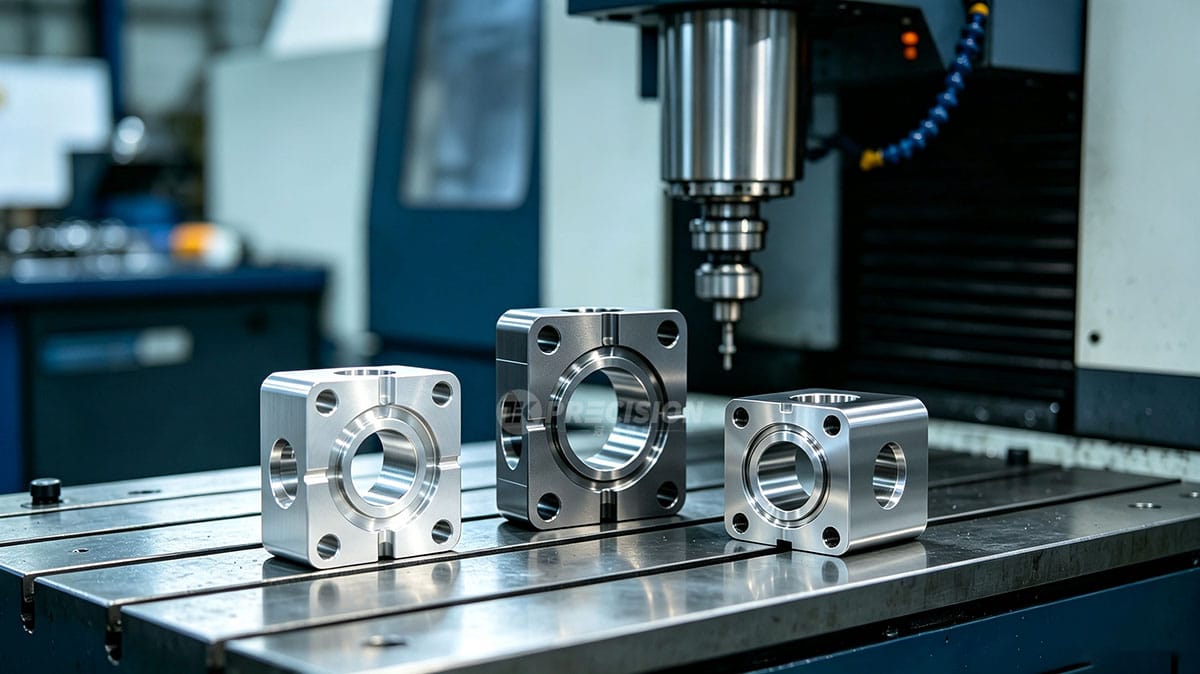
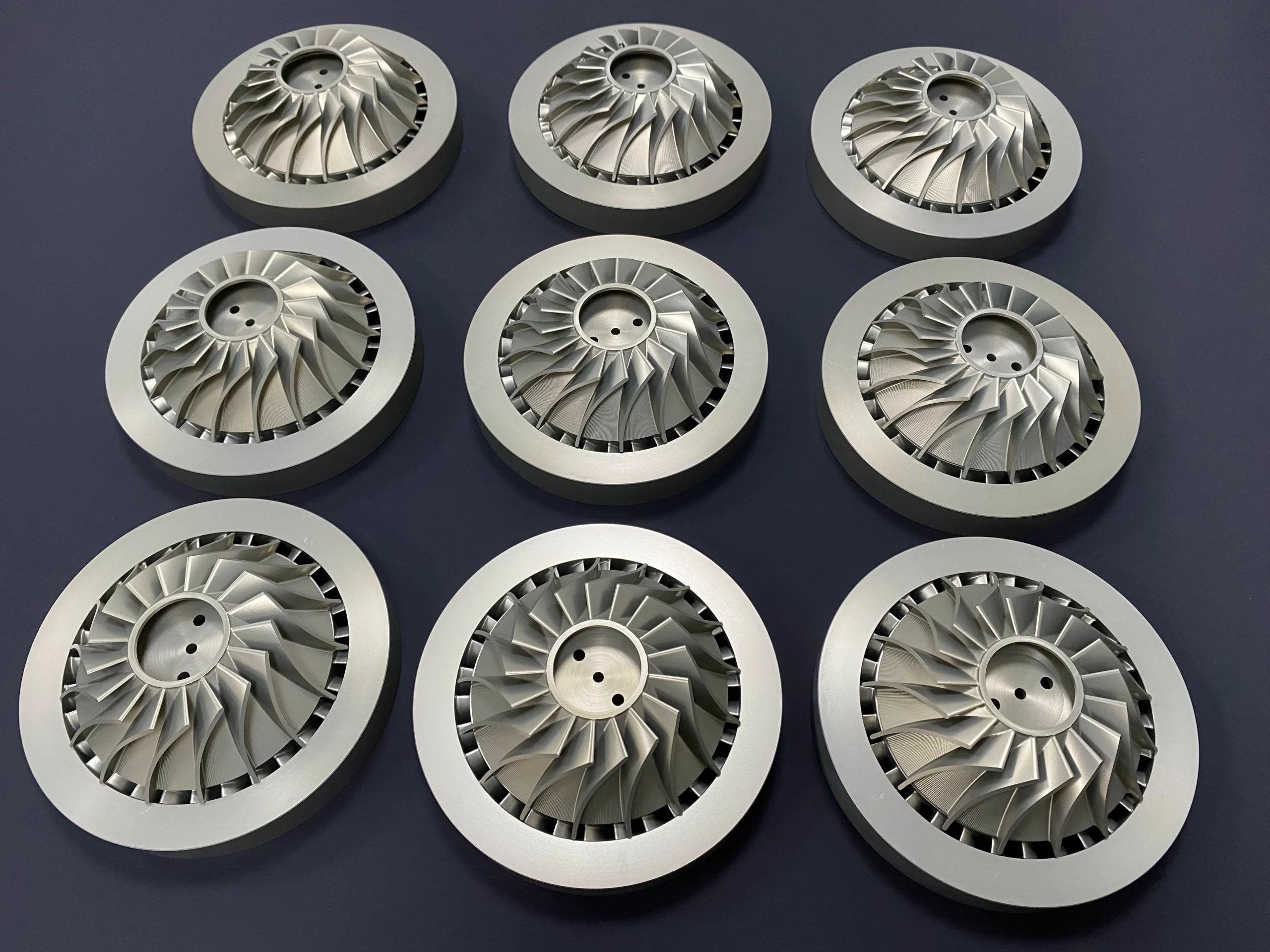
Medical TC4 parts often feature complex 3D surfaces – orthopedic implant curvatures, surgical instrument articulations, implant helical structures. If these features are machined in multiple set-ups, each re-fixturing introduces locating errors that accumulate and may exceed CNC machining tolerances.
A factory genuinely capable of titanium alloy medical part machining must have 5-axis simultaneous machining centers to complete all complex surface features in a single set-up, avoiding multi-set-up error accumulation.
4. ASTM F136 Material Certificates with Heat Number
- Material Certificate of Conformance (COC) explicitly states “Meets ASTM F136” – not just a generic “TC4 titanium alloy” designation.
- Certificate includes the heat number, with actual measured values for chemical composition and mechanical properties.
- Can provide material supplier qualification documentation.
5. Surface Finishing: Electropolishing and Anodizing
Surface finishing is critical for biocompatibility and functionality. Electropolishing is ideal for surgical instruments requiring high-gloss surfaces (Ra ≤ 0.4 µm), while anodizing is preferred for implants requiring osseointegration. For more details on post-processing, refer to our guide to surface finishes.
III. Case Study: Precision CNC Machining for Surgical Robotics
A surgical robotics company developing a TC4 titanium alloy wrist joint module – a part featuring complex 3D curved articulation geometry, tolerance ±0.008 mm, surface requiring anodizing (uniform blue oxide film), first-order quantity of 3 pieces, 9-working-day lead time. This project highlights our expertise in CNC machining for robotics.
Tik precision’s process solution:
- AlTiN-coated tools, cutting speed 45 m/min, high-pressure cooling at 80 bar.
- Vacuum annealing after roughing: 500 °C × 2 h for residual stress relief.
- 5-axis simultaneous precision milling – all curved surfaces completed in a single set-up.
- Anodizing controlled to produce uniform blue oxide film.
IV. Summary: TC4 Titanium Medical Part Machining Capability Checklist
For R&D teams developing TC4 titanium alloy precision components for orthopedics, cardiovascular devices, and surgical robotics, partnering with a low-volume machining supplier that possesses systematic TC4 process expertise, in-house full-process equipment, and medical-grade material traceability – exemplified by factories like Tik precision – fundamentally avoids rework cycles and development delays caused by inexperienced vendors.