

How to Reduce CNC Machining Lead Times Without Sacrificing Quality

Picture of Kenny Gan
Kenny Gan
Overseas customer and engineering team review technical documents on laptop, ZEISS CMM metrology lab background
Share

Table of Contents

Long CNC machining lead times can disrupt product launches, prototype testing, equipment maintenance, and customer deliveries.

However, reducing lead time does not necessarily mean running machines faster. In many cases, the biggest delays occur before machining even begins.

Where CNC Lead Time Is Lost

Common sources of delay include:

  • Engineering review
  • Quotation
  • Programming
  • Material procurement
  • Fixture preparation
  • Machine scheduling
  • Secondary processing
  • Inspection
  • Shipping

Improving these stages can significantly shorten the overall production cycle.

1. Provide Complete Engineering Information

A complete drawing or 3D model allows the manufacturer to begin DFM analysis immediately.

Important information includes:

  • Material
  • Quantity
  • Tolerances
  • Surface finish
  • Heat treatment
  • Coating requirements
  • Inspection requirements

Incomplete information often leads to repeated communication and quotation delays.

2. Use DFM Analysis Early

Design-for-manufacturing analysis can identify potential problems before production.

For example, a feature may be technically possible but require an additional setup or specialized tooling.

Changing the design before production is usually much easier than changing it after machining has started.

3. Choose the Appropriate CNC Process

Not every component requires the same machine.

Depending on geometry, manufacturers may use:

  • CNC turning
  • CNC milling
  • Mill-turn machining
  • 4-axis machining
  • 5-axis machining
  • Grinding

Selecting the appropriate process can reduce both machining time and setup time.

4. Reduce Unnecessary Setups

Every setup adds time.

When possible, manufacturers can use multi-axis machining to access multiple surfaces without repeatedly repositioning the component.

5. Prepare Materials in Advance

Material availability can become a major bottleneck.

For urgent projects, confirming material availability early can prevent unnecessary waiting.

6. Standardize Inspection

Inspection requirements should be clearly defined before production.

When inspection criteria are unclear, parts may be completed but remain on hold while engineering teams determine acceptance requirements.

7. Coordinate Secondary Processes

Surface treatment, heat treatment, balancing, coating, and other external processes should be planned as part of the production schedule rather than treated as separate activities.

8. Maintain Production Visibility

Customers benefit from clear production milestones:

Engineering Review → Material → Programming → Machining → Inspection → Finishing → Final Inspection → Shipment

Visibility makes it easier to identify delays before they become delivery problems.

Conclusion

Reducing CNC machining lead time is primarily a process-management challenge.

The most effective strategy is to remove unnecessary waiting, improve engineering communication, optimize machining processes, and coordinate secondary operations.

Fast machining is only one part of fast manufacturing.

Need CNC Machined Parts Faster?

Long lead times are often caused by engineering review, material procurement, complex setups, secondary processing, or inspection—not simply machining time.

Our team can review your project and develop a manufacturing approach focused on reducing unnecessary production delays.

Send Your Drawing
Provide your drawings, CAD files, material requirements, and quantity.

Request a DFM Review
We can identify features or processes that may be increasing machining time.

Request a Quote
Tell us your target quantity and required delivery date so we can evaluate the most efficient production strategy.


Need a Manufacturing Quote?

Upload your drawings and receive DFM feedback, material recommendations, and a clear manufacturing quote.

16+

Year

50K+

Parts Manufactured

98.2%

On-time Delivery

Request a Quote
All Articles From The Author
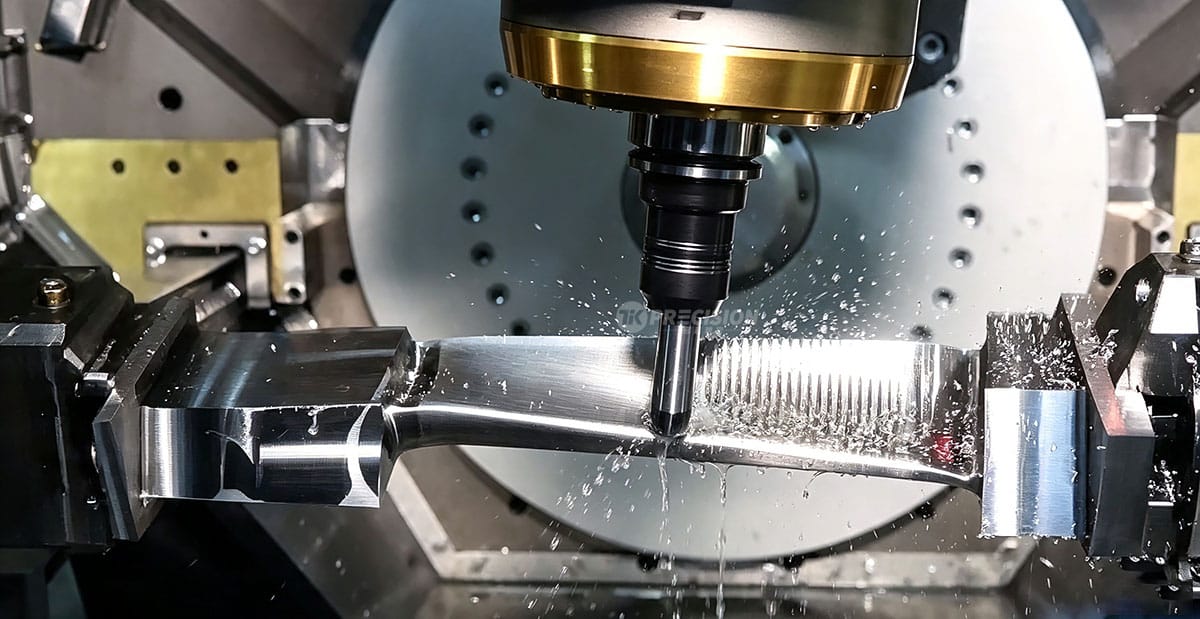
5-axis CNC machining center milling twisted aerospace engine turbine blade, precision CNC milling of aeroengine turbine blade with coolant, aerospace precision machined components

5-Axis CNC Machining for Aerospace Turbine Components: Achieving Precision on Complex Airfoil Geometries

  The Role of 5-Axis Machining in Modern Turbine Manufacturing 5-axis CNC machining has become a critical manufacturing technology for producing today’s most demanding

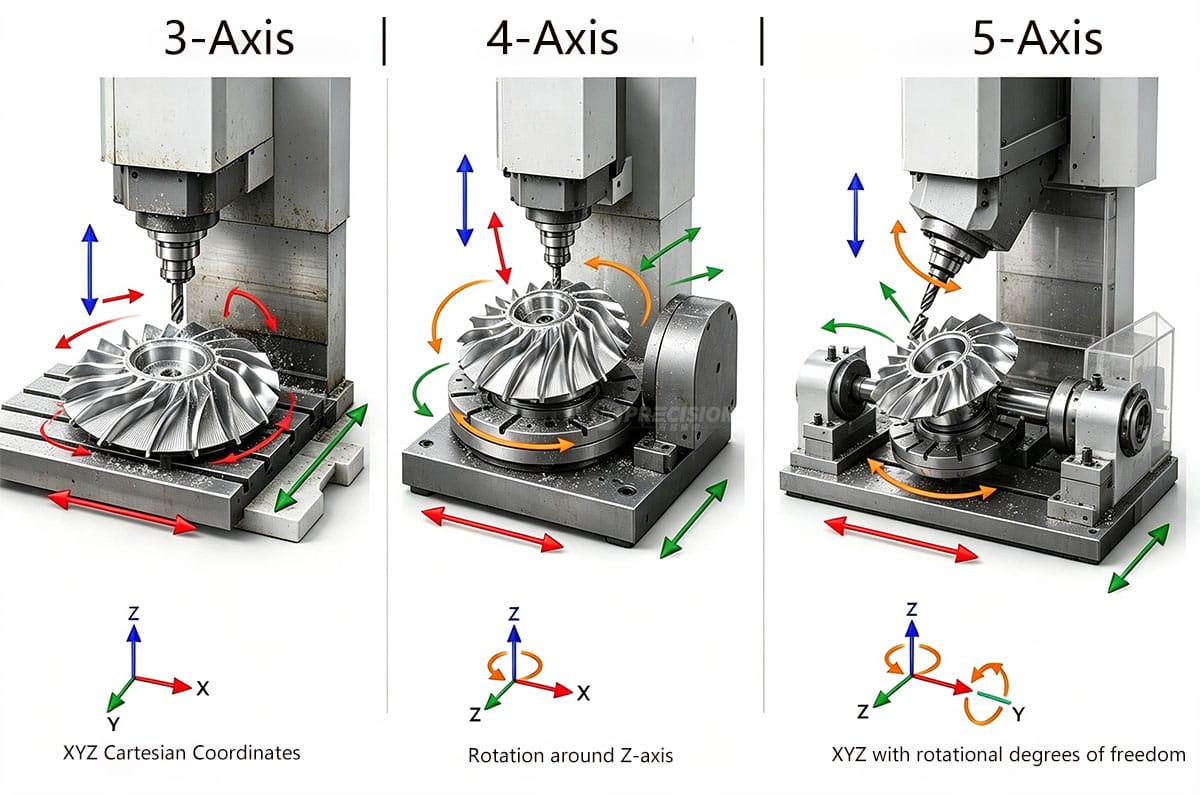
Industrial technical illustration, three panels side by side, labeled at top left to right: 3-axis, 4-axis, 5-axis.

3-Axis vs 4-Axis vs 5-Axis CNC Machining: Which One Do You Need?

Not every part needs 5-axis machining, and not every part can be made on a 3-axis machine. Choosing the right CNC machining process affects

DFM Checklist for CNC Machining: Design for Manufacturability Guide

Design for Manufacturability (DFM) review catches costly problems before a part ever reaches the machine shop floor. A part that looks fine on screen

CNC Machining for Aerospace: Materials, Tolerances, and Best Practices

Aerospace components carry higher stakes than most other industries — failure isn’t just costly, it can be catastrophic. That reality shapes nearly every decision

Final quality check before shipment for custom parts

CNC Machining vs 3D Printing: Which Process Should You Use?

Both CNC machining and 3D printing serve prototyping and low-volume production needs, but they aren’t interchangeable. Choosing the wrong one can mean a part

The Complete Guide to Precision CNC Machining Services Capabilities, Processes, and Applications

The Complete Guide to Precision CNC Machining Services: Capabilities, Processes, and Applications

Precision CNC machining is the backbone of modern manufacturing. From aerospace turbine components to medical implants to consumer electronics enclosures, CNC machining produces the

5-Axis CNC Impeller Machining Overcoming 5 Common Manufacturing Challenges

Impeller CNC Machining-Precision Components for Compressors, Pumps & Turbines

The Ultimate Guide to Impeller CNC Machining: Precision Components for Compressors, Pumps & Turbines In the world of rotating machinery, the impeller is the

CNC Machining Hydraulic Valve Body Parts: A Complete Guide to Precision Manufacturing and Quality Control

What Are Hydraulic Valve Body Parts? Hydraulic valve body parts are critical components used in hydraulic control systems. They regulate fluid flow, pressure, and

Understanding CNC Machining Tolerances

1. Introduction: Why Tolerances Matter in CNC Machining In the world of precision manufacturing, CNC machining tolerances define the permissible limit of variation for

Start a New Project

Turn Your CAD Files Into Precision Parts

Share your requirements with our engineering team. We will review manufacturability, materials, tolerances and lead time before quoting.

2-Hour Quote

Fast response for complete RFQs

Free DFM Review

Engineering feedback before production

Secure CAD Files

Confidential upload and NDA support

No MOQ

Prototype to low-volume production

Need help preparing an RFQ?

info@tikprecision.com

RFQ Form

Tell Us About Your Project

Upload CAD Files | Free DFM Analysis | 2-Hour Quote | No MOQ Required | NDA Protected