Selecting a CNC machining partner for impeller production is a high-stakes decision. The wrong choice means missed tolerances, late deliveries, quality escapes, and — in the worst case — impeller failures that damage downstream equipment or endanger personnel. The right partner becomes a long-term extension of your engineering team. Here is a systematic framework for evaluating and selecting an impeller machining supplier.
1. Verify 5-Axis Capability — But Go Deeper
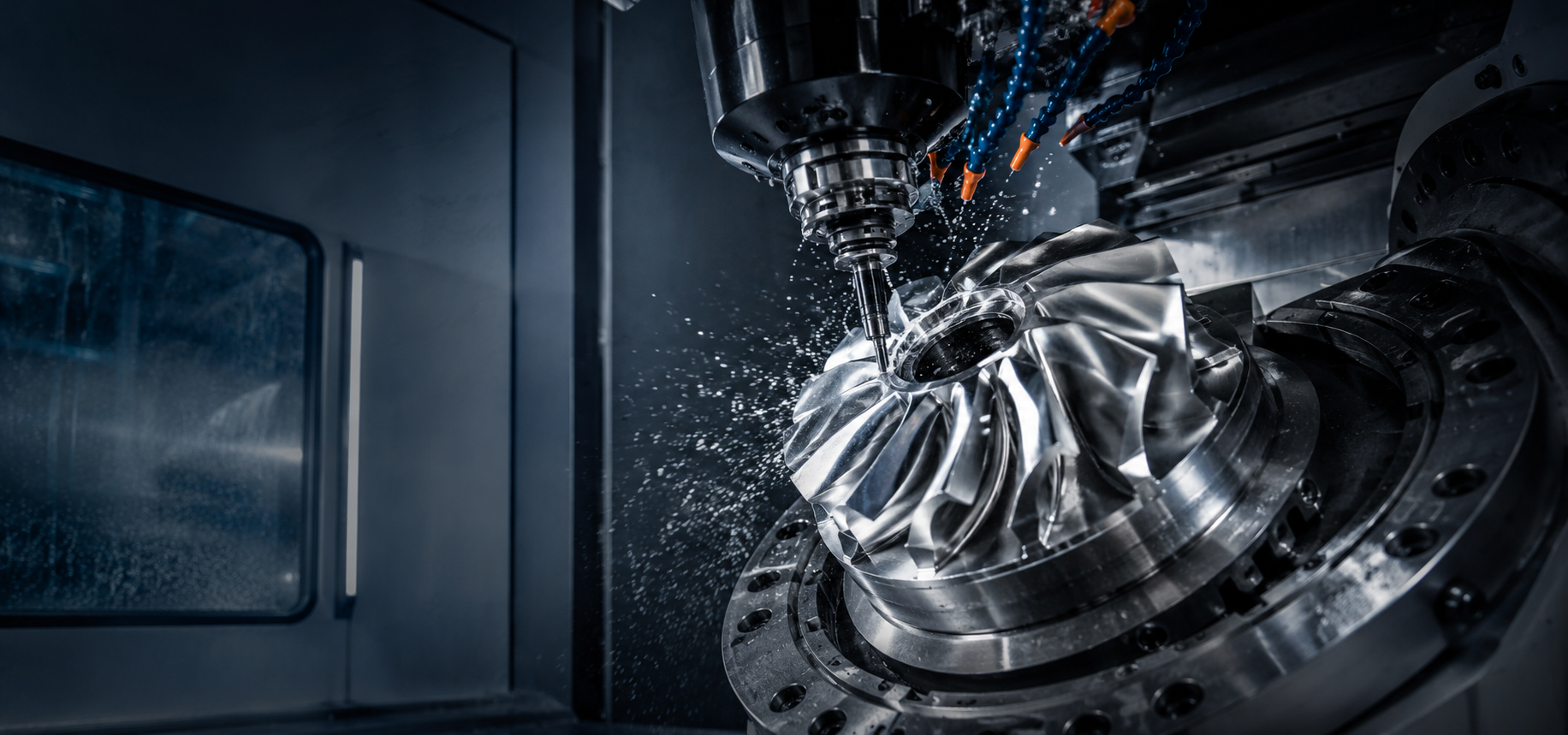
Every machine shop that claims impeller capability will tell you they have 5-axis machines. That is the baseline — not a differentiator. What matters is how those machines are configured and how they are programmed.
Questions to ask:
- Do you have simultaneous 5-axis capability, or only 3+2 positioning? (Impeller blades require simultaneous 5-axis motion — 3+2 positioning is insufficient.)
- What is the rotary axis configuration — trunnion (table-table) or tilting head (head-table)? Trunnion-style machines typically offer better rigidity for the heavy roughing cuts that impeller machining demands.
- What CAM software do you use, and does it include an impeller-specific module? Generic 5-axis programming cannot match the efficiency and reliability of impeller-specific toolpath algorithms.
- Can you provide toolpath simulation videos or screenshots showing collision-free machining of similar impellers?
- What is the maximum workpiece diameter and weight your machines can handle? Industrial impellers exceeding 500 mm diameter require large-format 5-axis machines that not every shop possesses.
2. Evaluate Material Experience
Machining aluminum is fundamentally different from machining Inconel. A shop that produces beautiful aluminum impellers may struggle with titanium or duplex stainless. Material-specific experience matters.
Questions to ask:
- What percentage of your impeller work is in my specified material?
- Can you provide surface finish measurement data (Ra values) from impellers you have machined in this material?
- What cutting tools, speeds, feeds, and coolant strategies do you use for this material?
- Do you have experience with the specific grade — not just “stainless steel” but “17-4 PH Condition H1150” or “Duplex 2205”?
- For titanium: how do you manage the risk of titanium fire (the exothermic reaction between titanium chips and oxygen at high temperature)?
3. Inspect the Quality System
Impeller quality cannot be inspected into a part — it must be built in. But the inspection capability must exist to verify that quality has been achieved.
Questions to ask:
- Do you have in-house CMM capability? What software (PC-DMIS, Calypso, Modus) do you use for blade profile analysis?
- Do you have 3D scanning capability for complex surface verification?
- Can you provide sample inspection reports from previous impeller projects, showing blade profile deviation maps?
- What is your process capability (Cpk) for critical impeller dimensions?
- For aerospace work: are you AS9100 certified? Do you have experience with First Article Inspection (FAI) per AS9102?
- For medical work: are you ISO 13485 certified?
- Do you perform in-process inspection, or only final inspection? In-process measurement allows correction before a part is scrapped.
4. Assess Balancing Capability
A geometrically perfect impeller that has not been balanced is an incomplete part. Balancing should be integrated into the production workflow, not treated as an afterthought.
Questions to ask:
- Do you have in-house dynamic balancing capability? What balance grades (ISO 1940 G6.3, G2.5, G1, G0.4) can you achieve?
- What is the weight range and maximum RPM of your balancing machines? A machine rated for 50 kg at 3,000 RPM cannot balance a 2 kg impeller to G2.5 at 60,000 RPM.
- Do you balance in one plane or two planes? Impellers with significant axial length require two-plane balancing.
- Do you provide a balance certificate with every impeller?
- Can you perform overspeed testing if required?
5. Review DFM and Engineering Support
The best impeller CNC machining partners contribute engineering value before the first chip is cut. Their DFM (Design for Manufacturability) feedback can reduce cost, improve quality, and shorten lead time — but only if they provide it early and honestly.
Questions to ask:
- Do you provide DFM feedback as part of the quoting process, or only after an order is placed?
- Can you show an example of DFM feedback you provided on a previous impeller project — what issues were identified, and what changes were recommended?
- Do your programmers participate in design reviews before programming begins?
- If we provide only a CFD-optimized blade profile but need help with the hub, shroud, and mechanical interface design, can your engineering team support that?
6. Check References — Specifically for Impellers
General machining references are not sufficient. Impellers are a specialized category, and you need evidence of successful impeller production.
Questions to ask (of references):
- What type of impellers did this supplier produce for you — material, diameter, open or closed, operating RPM?
- How many impellers have they produced for you, and over what time period?
- Was the first article accepted, or were iterations required?
- How did they handle non-conformances — did they proactively communicate issues, or did problems surface only at final inspection?
- Have any of their impellers experienced in-service failures?
- Would you use them again for a new impeller program?
7. Evaluate Lead Time and Capacity
An impeller CNC machining partner with perfect quality but 26-week lead time is useless for a program that needs parts in 8 weeks.
Questions to ask:
- What is your current capacity utilization? How many impellers are currently in your production queue?
- What is a realistic lead time for the first article, and what is the lead time for production quantities?
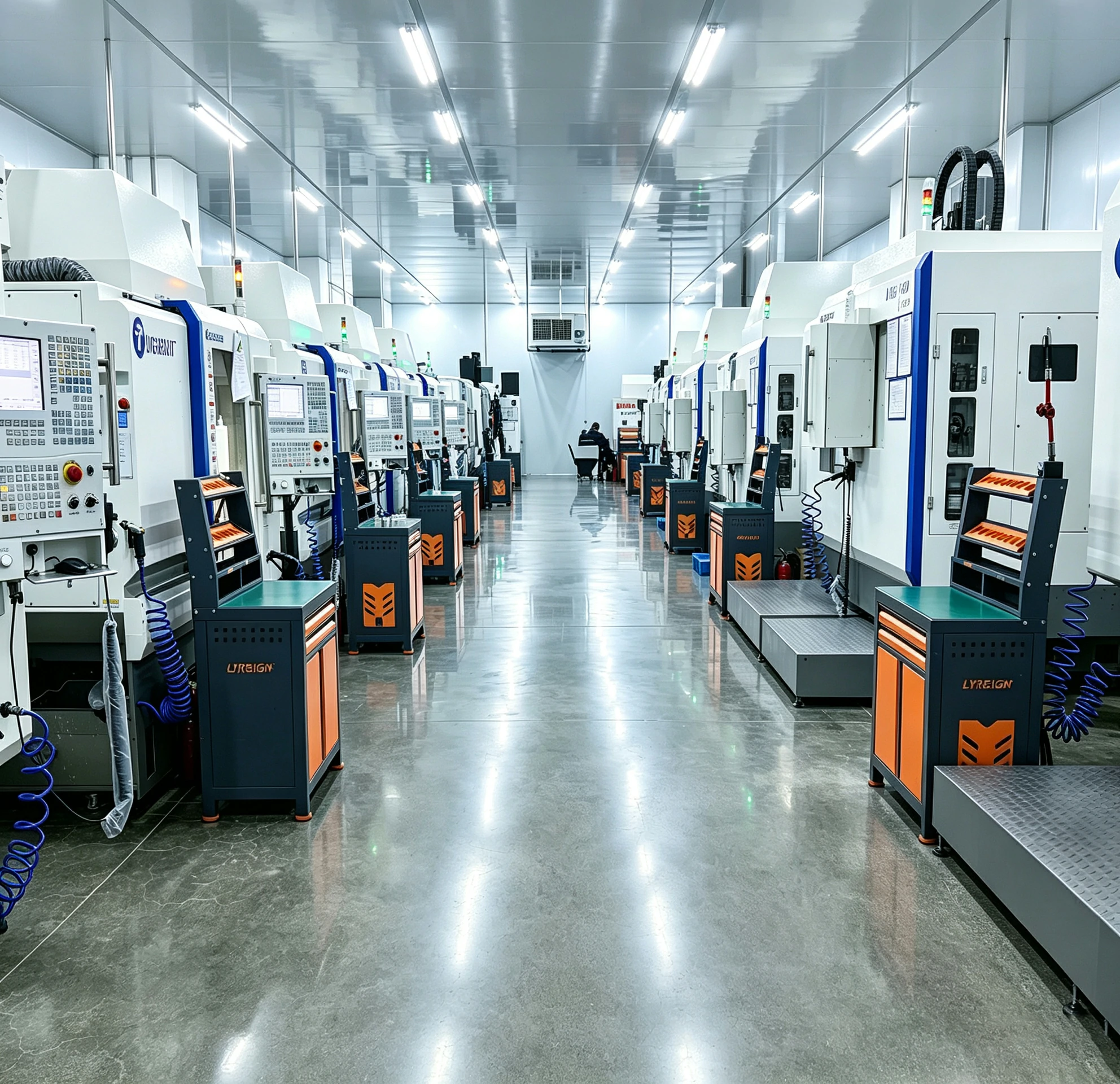
- Do you have redundancy — multiple 5-axis machines — so that a machine breakdown does not halt production?
- What is your on-time delivery rate for the past 12 months?
Red Flags to Watch For
- The shop cannot provide sample inspection data from previous impeller projects.
- They claim to program impellers using general 5-axis toolpaths rather than impeller-specific CAM modules.
- They do not own their balancing equipment (outsourcing balancing introduces schedule risk and quality disconnects).
- They agree to every tolerance on your drawing without question — an experienced impeller machinist will push back on unnecessarily tight or un-inspectable tolerances.
- Their price is dramatically lower than competitors — impeller machining is expensive for good reason; extremely low pricing indicates corners being cut somewhere.
At Tik Precision, we welcome rigorous supplier qualification. Our facility features simultaneous 5-axis machining, in-house CMM and balancing, and an engineering team that provides DFM feedback on every quote. Contact us to begin the conversation about your impeller CNC machining requirements.