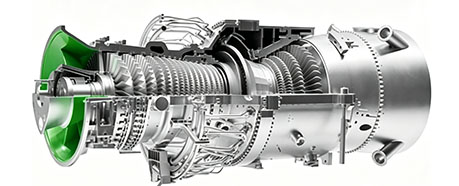
Beyond the major industries — aerospace, medical, automotive, energy — lies a vast landscape of precision mechanical components that keep the world’s machinery running. These are the shafts that transmit power, the gears that mesh silently, the bearings that reduce friction, and the seals that contain pressure. They are not glamorous, but they are essential — and their quality depends entirely on the precision with which they are machined. Our CNC machining services provide the mechanical precision that these essential systems demand.
Shafts and Rotating Components
Shafts are among the most fundamental mechanical components, yet precision shaft machining demands exceptional process control and strict CNC machining tolerances:
Critical Shaft Features
- Bearing journals: The surfaces where shafts interface with rolling-element or fluid-film bearings. Typically ground to IT5-IT6 tolerances with surface finishes of Ra 0.2-0.4 µm. Roundness must be controlled — a journal that is 0.005 mm out-of-round will cause bearing vibration and reduced life.
- Shoulders and fillets: The transition between diameters is a stress concentration. Fillets must be machined with generous radii — typically 0.5-2 mm — and polished to remove machining marks that could initiate fatigue cracks.
- Keyways: Slots machined for parallel keys, Woodruff keys, or tapered keys. Width tolerance of ±0.02 mm is typical. Symmetry relative to the shaft centerline must be controlled to prevent key rocking.
- Splines: External or internal splines transmit torque between mating components. Involute spline profiles per ANSI B92.1 or DIN 5480. Produced by hobbing, shaping, or CNC milling with form cutters.
- Threads: Precision threads for lock nuts, retaining rings, or direct attachment. Thread classes 2A/2B (standard) to 3A/3B (precision) per ANSI/ASME B1.1. Thread grinding may be required for the most demanding applications.
Shaft Materials
- 4140 / 4142 Alloy Steel: The most common shaft material. Heat-treatable to 28-36 HRC for general service, or 40-50 HRC for wear resistance. Induction hardening can selectively harden bearing journals while leaving the shaft core tough.
- 4340 Alloy Steel: Higher nickel content for improved toughness at high strength levels. Used for highly stressed shafts — crane hoist drums, rolling mill spindles, and helicopter rotor shafts.
- 17-4 PH Stainless: Corrosion-resistant shafts for food processing, marine, and chemical equipment. Age-hardenable to H900 (44 HRC), H1025 (38 HRC), or H1150 (33 HRC) condition.
- 300M / 4340M: Vacuum-arc remelted ultra-high-strength steel for landing gear components and structural pins. Yield strength exceeds 1,500 MPa. Machined in the annealed condition, then heat-treated and ground.
Precision Gears
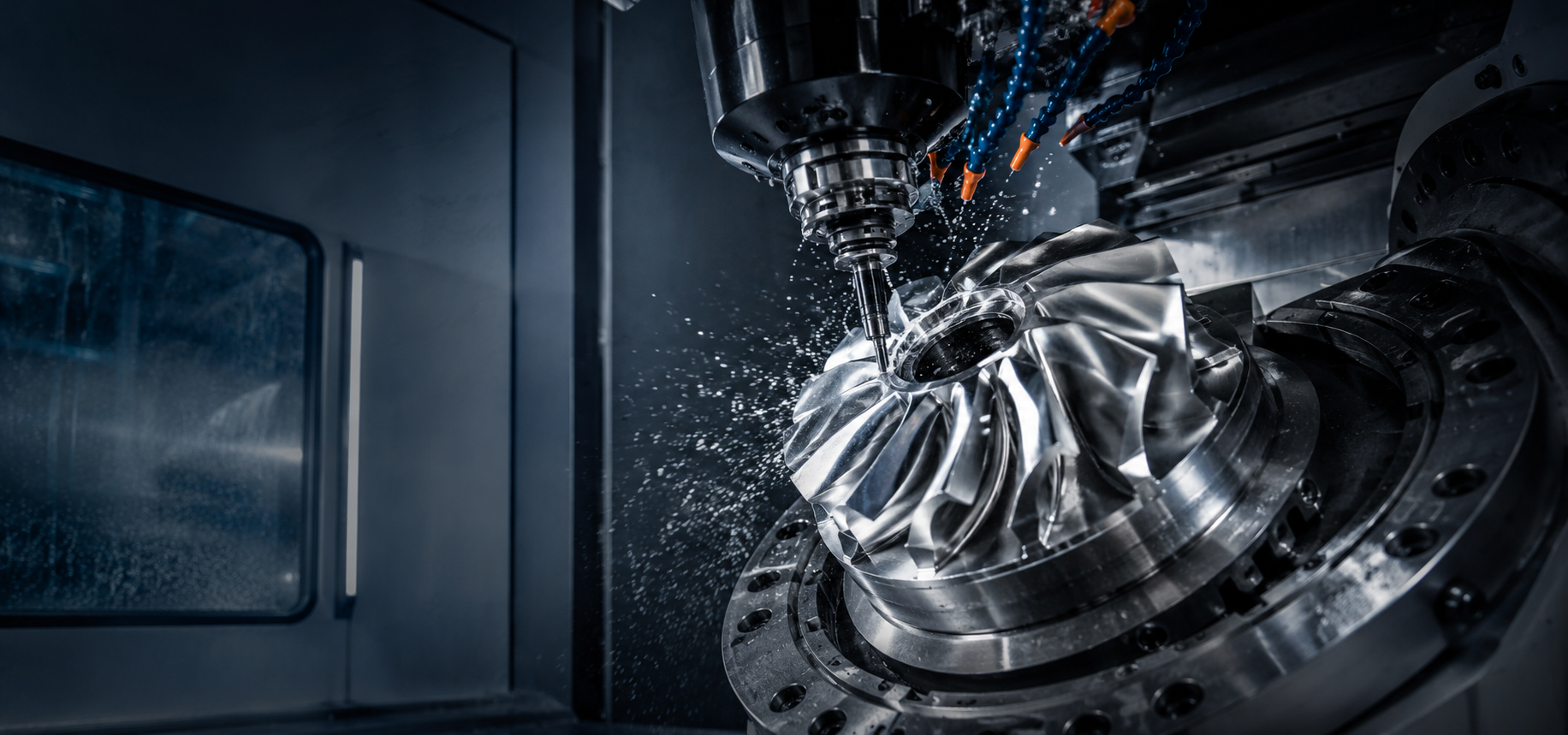
Gears convert speed and torque with efficiency that depends directly on manufacturing precision. For high-precision gear production, our CNC milling services offer the flexibility needed for complex tooth profiles.
Gear Manufacturing Processes
- Gear hobbing: A rotating hob generates tooth profiles progressively. The standard process for external spur and helical gears. AGMA Class 8-10 quality is typical for general industrial gearing.
- Gear shaping: A reciprocating cutter generates internal and external gear teeth. Used for internal ring gears, cluster gears, and gears where adjacent shoulders prevent hob runout.
- Gear grinding: After heat treatment, gear teeth are ground to final profile accuracy (AGMA Class 12-14 for precision gearing; AGMA Class 15 for aerospace). Form grinding or generating grinding (using a worm grinding wheel).
- CNC gear milling: For one-off and prototype gears, tooth profiles can be milled on a 5-axis CNC machining center using a ball end mill or form cutter. Not economical for production volumes but fast and flexible for prototypes.
Gear Quality Metrics
- Profile deviation: The difference between the actual and ideal involute curve. Profile errors cause noise and reduce efficiency.
- Lead deviation: The deviation of the tooth flank from the ideal helix angle. Lead errors cause concentrated loading at one end of the tooth.
- Pitch deviation: Variation in the spacing between adjacent teeth. Cumulative pitch error affects smoothness of rotation.
- Runout: Eccentricity of the gear teeth relative to the bore. Runout causes once-per-revolution transmission error.
Bearing Components
While rolling-element bearings are mass-produced by specialized manufacturers, precision-machined bearing components support niche applications where standard bearings are unsuitable. For cylindrical bearing components, our CNC turning services provide the necessary rotational precision.
- Sleeve bearings and bushings: Plain cylindrical bearings machined from bronze (C932, C954), self-lubricating composites, or engineered thermoplastics (PEEK, PTFE-filled Delrin). ID is bored or honed to precise clearance (typically 0.001-0.003 x shaft diameter). OD is precision-turned for press-fit or slip-fit installation.
- Thrust washers and plates: Flat bearing surfaces that support axial loads. Machined from bearing bronze, hardened steel (with ground faces), or self-lubricating materials. Parallelism and surface finish are critical — waviness causes oil film breakdown.
- Bearing housings and pillow blocks: Cast iron, ductile iron, or steel housings machined for bearing bore (H7 tolerance typical), mounting surfaces, and sealing features. Split housings are machined as matched pairs with dowel pins for reassembly alignment.
Seals and Sealing Components
- Mechanical seal components: Rotary and stationary seal faces machined from silicon carbide, tungsten carbide, or carbon graphite. Lapped to optical flatness (1-3 helium light bands) for leak-tight sealing. Metal seal housings machined from stainless steel or Hastelloy for chemical compatibility.
- Labyrinth seals: Non-contacting seals with a tortuous leakage path. Thin, sharp-edged teeth machined on shafts or stationary housings. Tooth tips must be concentric and sharp — a radiused or eccentric tooth dramatically increases leakage.
- O-ring grooves and gland details: Precision-machined grooves per AS568 or ISO 3601 standards. Groove width, depth, and surface finish affect O-ring squeeze, which determines static and dynamic sealing performance.
The CNC Machining Advantage for Custom Components
Custom mechanical components share a common requirement: they are produced in quantities too small to justify dedicated tooling but with tolerances too tight for general fabrication. CNC machining fills this gap perfectly, similar to how it serves specialized fields like CNC machining for optics and photonics.
- No tooling investment: Parts are machined directly from CAD models — no dies, molds, or patterns required.
- Material flexibility: Any machinable material is available — from common alloys to exotic superalloys.
- Design iteration: Design changes can be implemented in hours by modifying the CAM program, not months by modifying tooling.
- Scalability: From a single prototype to thousands of production parts, CNC machining scales with consistent quality.
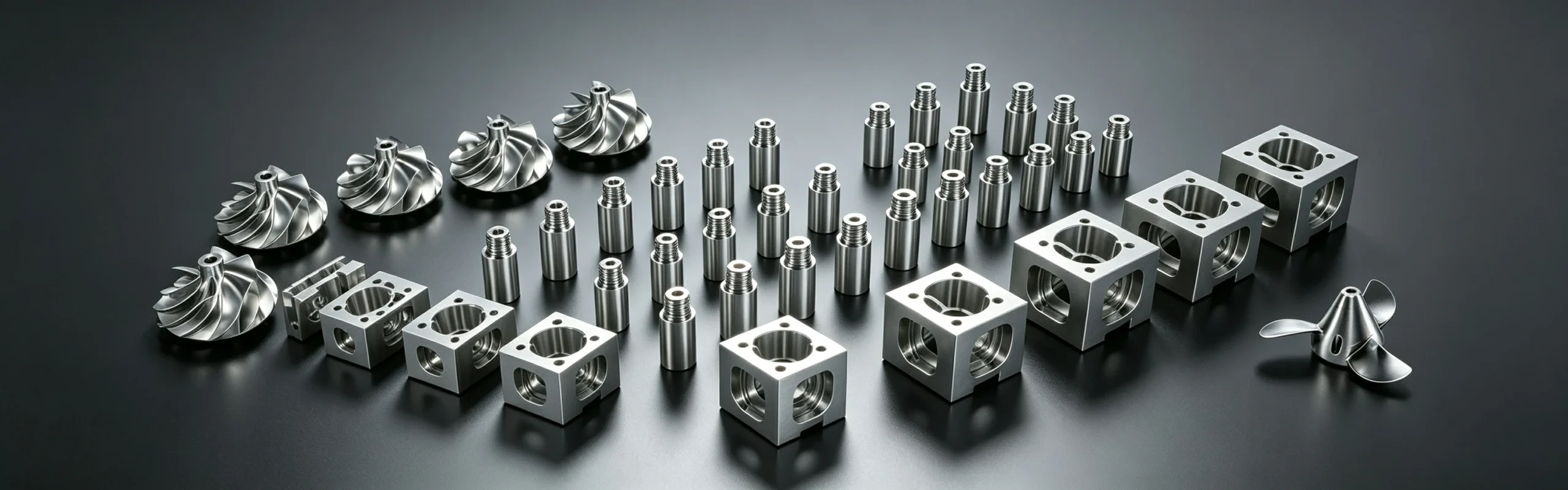
Tik Precision provides comprehensive CNC machining services for custom mechanical components — shafts, gears, bearings, seals, and precision hardware. From single prototypes to production quantities, we deliver the quality and precision your applications demand. Contact us with your custom component requirements.