A CNC machined part fresh off the machine is functional but rarely finished. Surface treatments enhance corrosion resistance, improve wear characteristics, control friction, and provide the aesthetic quality that customers expect. Choosing the right finish is as important as choosing the right material — and sometimes more difficult, given the dozens of options available. This guide covers the most common CNC surface finishing processes and when to use each one.
Why Surface Finishing Matters
Surface finishing serves at least one of four purposes:
- Protection: Shielding the base material from corrosion, oxidation, and chemical attack.
- Function: Adjusting surface hardness, friction coefficient, reflectivity, or electrical properties.
- Aesthetics: Achieving a specific color, texture, or visual consistency across parts.
- Preparation: Creating a surface profile for adhesive bonding, painting, or subsequent coating processes.
Many parts require a finish for more than one of these reasons — a medical instrument might need corrosion protection, a matte anti-glare surface, and a biocompatible contact layer, all from the same finishing process.
Anodizing: The Gold Standard for Aluminum
Type II (Decorative / Sulfuric Acid Anodizing)
Creates a durable, corrosion-resistant oxide layer 5-25 microns thick. Available in clear, black, and a limited range of dyed colors. Ideal for consumer products, electronic enclosures, and general-purpose aluminum components.
Type III (Hardcoat Anodizing)
Produces a much thicker (25-150 microns) and harder oxide layer. The surface hardness rivals that of tool steel in terms of wear resistance. Used for aerospace components, military hardware, pistons, and sliding mechanisms. Dark gray to black in color; cannot be dyed to bright colors.
Key considerations: Anodizing adds thickness (roughly half the coating grows inward, half outward). Account for this in threaded holes and press-fit bores. Masking can protect critical surfaces that must remain uncoated.
Plating: Adding a Functional Metal Layer
Electroless Nickel Plating
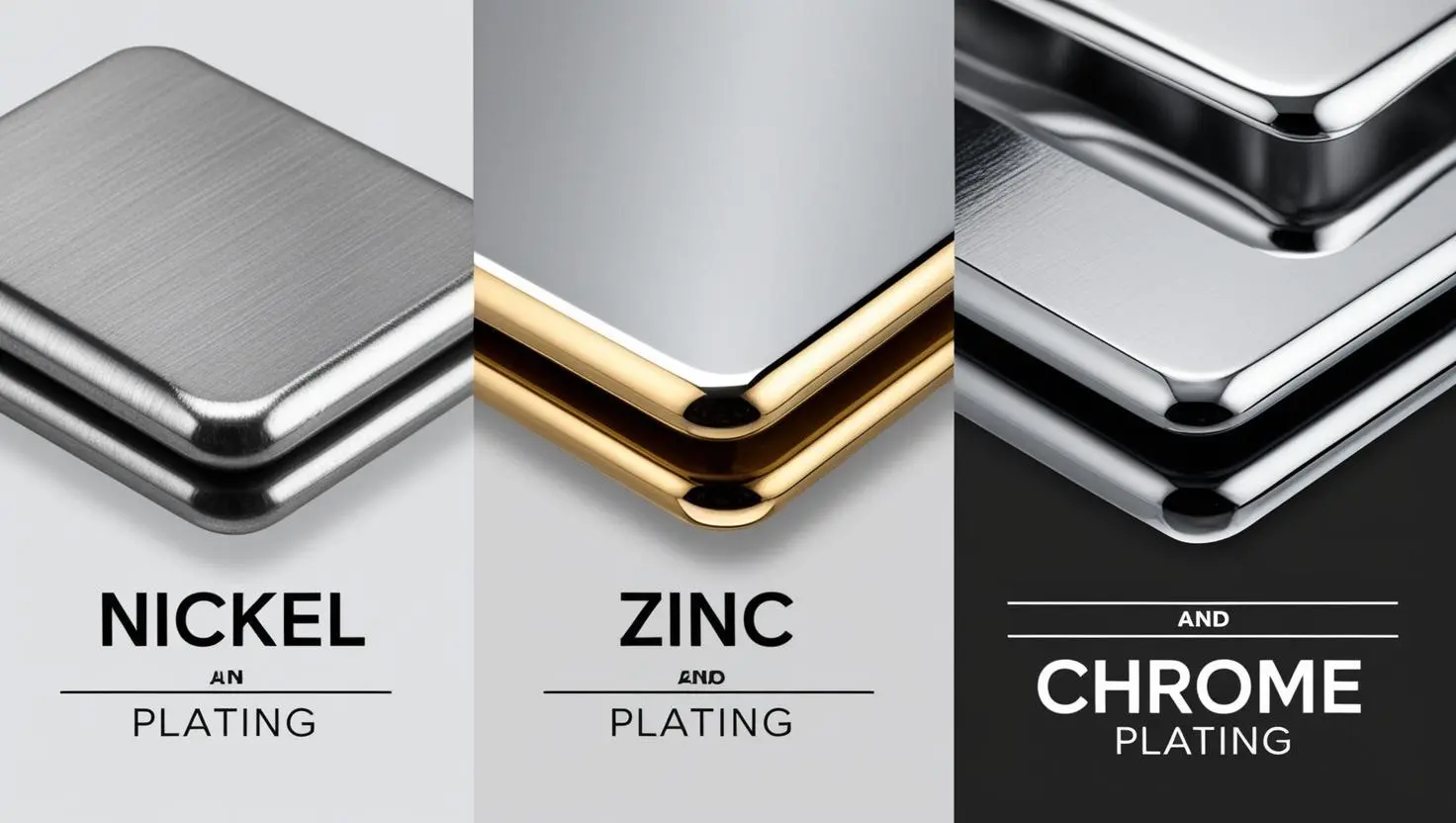
Deposits a uniform nickel-phosphorus layer without using electrical current, meaning the coating thickness is consistent even inside deep holes and on complex geometries. Offers excellent corrosion resistance and moderate hardness (can be heat-treated to 60+ HRC). Widely used in oil & gas, food processing, and semiconductor equipment.
Zinc Plating
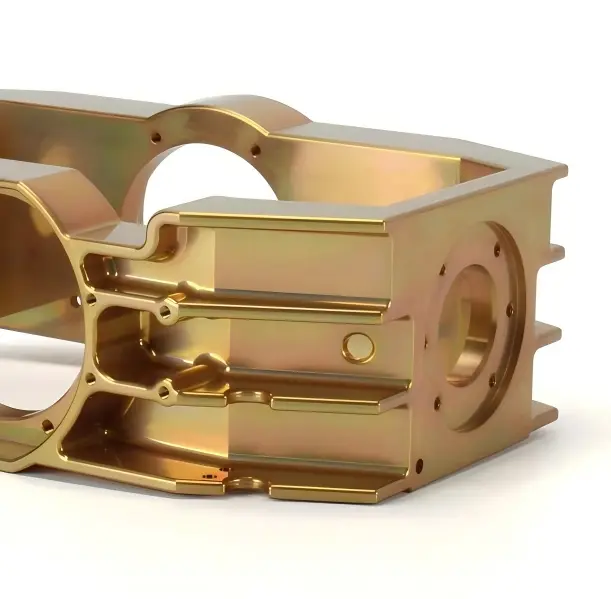
An economical corrosion protection for steel parts. Available with clear (blue-bright), yellow, or black chromate conversion coatings that enhance corrosion resistance further. Commonly specified for fasteners, brackets, and automotive components.
Hard Chrome Plating
Produces a very hard, wear-resistant surface on steel. Thicknesses range from 10-500 microns. Used for hydraulic cylinder rods, industrial rolls, and mold tooling that requires a release surface.
Passivation: Restoring Stainless Steel Corrosion Resistance
Machining stainless steel embeds microscopic iron particles into the surface, creating initiation points for rust. Passivation uses a nitric or citric acid bath to dissolve these free iron particles, allowing the natural chromium oxide layer to reform uniformly.
Passivation is mandatory for medical, pharmaceutical, and food-contact stainless components. It is a low-cost process that adds no measurable thickness and does not change surface appearance.
Powder Coating: Durable Color for Large Parts
Powder coating applies a free-flowing dry powder electrostatically, then cures it under heat to form a tough, uniform skin. Available in virtually any color and texture — gloss, matte, satin, hammered, or wrinkle finishes.
Advantages: Chip-resistant, UV-stable, environmentally friendly (no solvents), and thicker than wet paint (50-150 microns). Ideal for machinery frames, enclosures, outdoor equipment, and architectural components.
Limitations: Not suitable for threaded holes or precision surfaces without masking. The coating adds significant thickness that must be factored into assembly fits.
Bead Blasting and Media Finishing
Blasting with glass beads, aluminum oxide, or walnut shells creates a uniform matte surface texture. It removes machining marks and provides a consistent cosmetic appearance. Can be used as a standalone finish or as preparation for anodizing or plating.
- Glass bead: Produces a smooth, satin finish. Ideal for cosmetic aluminum and stainless parts.
- Aluminum oxide grit: More aggressive — used for surface preparation before painting or for creating a specific roughness (Ra value).
- Sandblasting: Aggressive profile creation, used for architectural concrete forms and heavy industrial equipment.
Polishing and Electropolishing
Mechanical polishing progressively uses finer abrasives to achieve a mirror-like surface. Electropolishing uses an electrochemical process that dissolves surface peaks preferentially, resulting in a smoother, brighter surface at the microscopic level.
Both processes serve hygienic applications where surface roughness (Ra) must be minimized to prevent bacterial adhesion. Electropolishing is common for sanitary tubing, pharmaceutical vessels, and surgical instruments — it can achieve Ra values below 0.1 µm.
Choosing the Right Finish: A Decision Framework
- What is the base material? Anodizing only works on aluminum. Passivation only works on stainless steel.
- What is the primary goal? Corrosion protection, wear resistance, cosmetic appearance, or surface preparation?
- Are there precision features? Threads, bores, and sealing surfaces may need masking or secondary machining.
- What is the operating environment? UV exposure, chemical contact, temperature extremes, or FDA-regulated contact?
- What is the budget? Electropolishing costs 5-10x more than bead blasting; hardcoat anodizing costs 2-3x more than Type II.
Need help selecting the optimal surface finish for your CNC parts? Tik Precision offers a full range of in-house and partner finishing services. Contact us with your requirements for a tailored recommendation.