
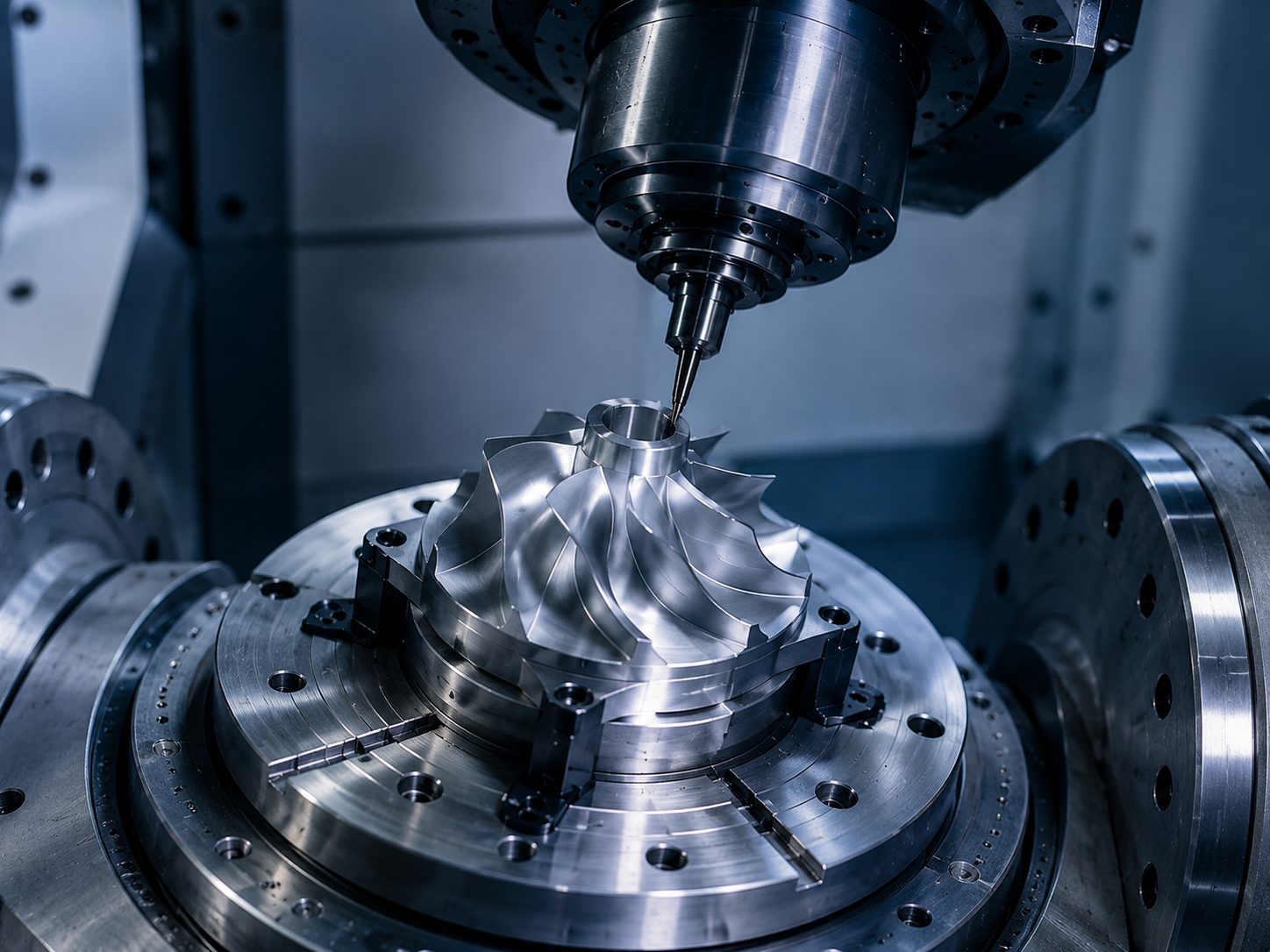
5-Axis CNC Machining for Impellers: Why It is Essential

5-axis machining services for complex impellers and precision metal parts

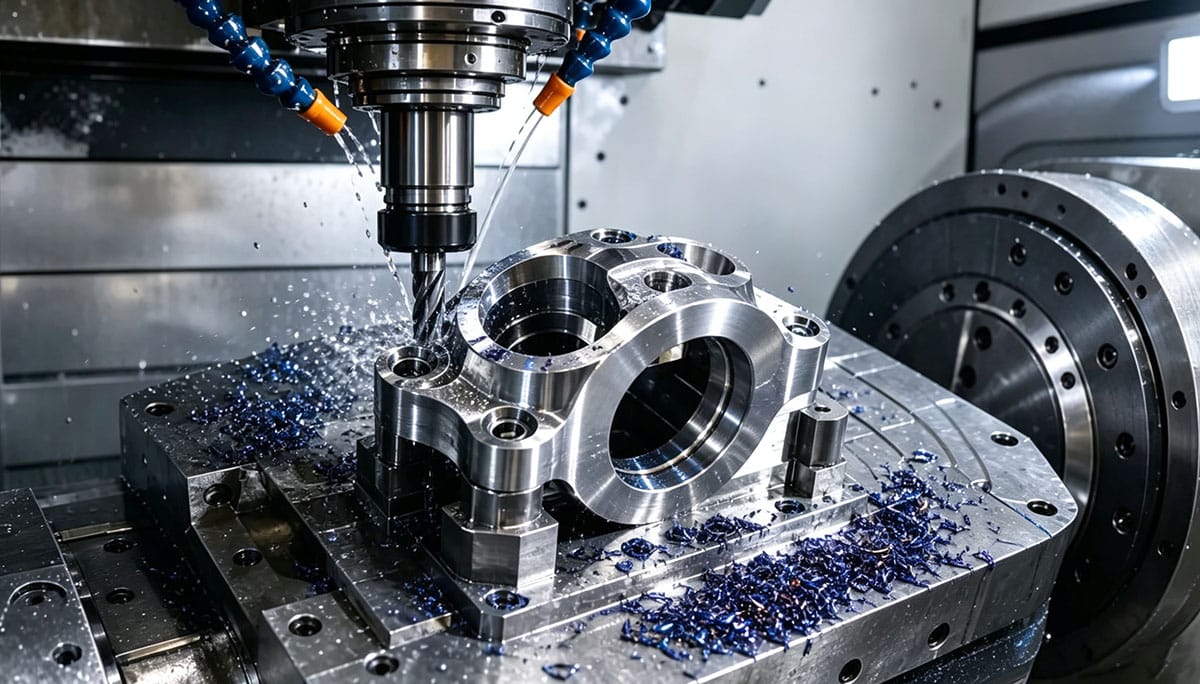
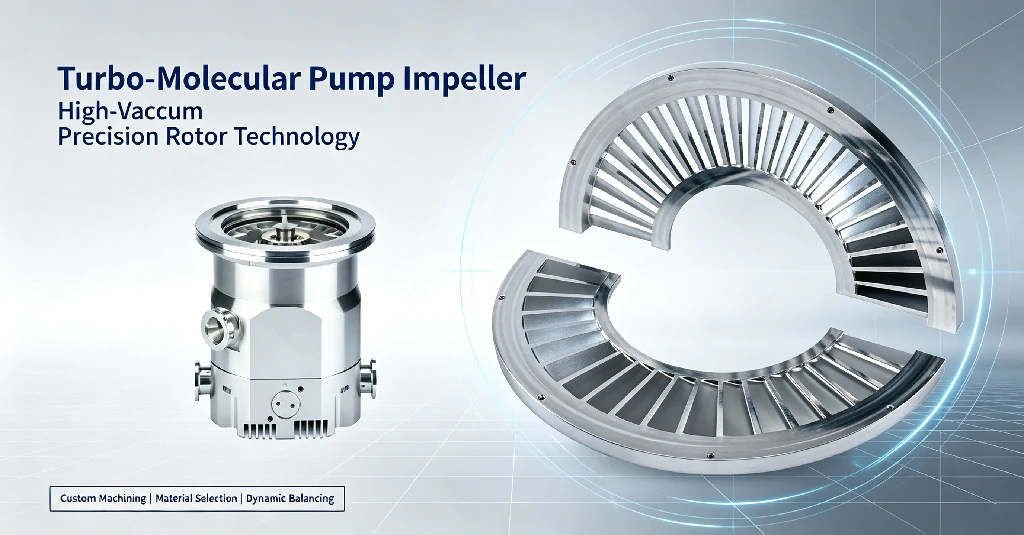
If there is one application that justifies every dollar invested in 5-axis CNC technology, it is impeller machining. The complex, doubly-curved surfaces of impeller blades cannot be efficiently produced on 3-axis or even 4-axis machines. Understanding why 5-axis is essential — and how to leverage its capabilities — is the key to producing impellers that meet performance specifications on time and on budget.

The Geometry Problem: Why 3-Axis Fails

On a 3-axis machine, the cutting tool always approaches the workpiece from above — the Z-axis direction. For a simple rectangular part with features on multiple faces, this means re-fixturing. For an impeller, it means something worse: many surfaces are physically unreachable from any single orientation.

Consider the concave surface of a centrifugal impeller blade. On a 3-axis machine, the tool would need to approach from the side, at an angle — both impossible. The machinist would be forced to:

  • Use a ball end mill and step over in tiny increments (excessive cycle time and poor surface finish)
  • Re-fixture the part multiple times (introducing positioning errors that accumulate across setups)
  • Accept that some undercut regions near the hub simply cannot be machined at all

The result: a technically “machined” impeller that requires extensive hand-polishing, still fails to meet blade profile tolerances, and costs far more in labor than the raw material is worth.

What 5-Axis Brings to Impeller Machining

A 5-axis machine adds two rotary axes (A and B, or A and C) to the standard X, Y, Z linear axes. This enables the tool to approach the workpiece from any angle, maintaining optimal cutting orientation relative to the blade surface at every point along the toolpath.

Continuous 5-Axis Machining

In simultaneous 5-axis machining, all five axes move at once. The tool tip follows the blade profile while the rotary axes continuously tilt the tool (or the workpiece, depending on machine configuration) to maintain the ideal lead and tilt angles. This produces a smooth, continuous cut surface — no dwell marks, no stepovers, no hand-finishing required.

Shorter, Stiffer Tools

Because the tool can tilt, you can use significantly shorter cutting tools than would be required on a 3-axis machine. A shorter tool is a stiffer tool — less deflection, less chatter, higher feed rates, and better surface finish. In impeller machining, where inter-blade spaces are tight and deep, this advantage is transformative.

Single-Setup Machining

A properly fixtured impeller on a 5-axis machine can be roughed and finished in a single setup. This eliminates the cumulative positioning errors from multiple re-fixturings and ensures that the blade-to-bore relationship — the concentricity of the impeller relative to its shaft bore — is maintained within microns.

5-Axis Toolpath Strategies for Impellers

Roughing: The Swarf Milling Approach

Bulk material removal between blades is often done using “swarf” or flank milling, where the side of the tool — not just the tip — engages the material. This removes material far faster than point-milling with a ball end mill. On a 5-axis machine, the tool can be tilted so the flank aligns with the rough blade surface, maximizing metal removal rate.

Semi-Finishing: Blend and Morph Toolpaths

Between roughing and finishing, semi-finishing toolpaths remove the scalloped surface left by roughing. Morph toolpaths — where the toolpath smoothly transitions between two guiding curves — are particularly effective for impeller blades. They maintain constant stepover distance, ensuring uniform stock for the finishing pass.

Finishing: Flowline and Multi-Surface Machining

The finishing pass is where impeller quality is made or lost. Flowline toolpaths follow the natural curvature of the blade surface, producing a surface finish that mimics the direction of fluid flow — ideal for aerodynamic and hydrodynamic efficiency. Modern CAM software can generate toolpaths that simultaneously machine both the pressure and suction sides of adjacent blades, optimizing tool motion and reducing cycle time.

Hub Floor Machining

The hub surface between blades is another 5-axis challenge — it is curved in multiple directions and must blend smoothly into the blade roots. 5-axis toolpaths use a bull-nose or ball end mill oriented normal to the hub surface, stepping along flow-optimized curves rather than simple planar passes.

Machine Tool Selection for Impeller Machining

Not all 5-axis machines are equal for impeller work. Key specifications to evaluate:

  • Rotary axis speed and accuracy: Continuous 5-axis impeller machining demands rapid, precise rotary motion. Look for direct-drive rotary tables with sub-arcsecond resolution.
  • Spindle speed and power: Small tools in tough materials need high RPM (20,000+) with consistent torque across the speed range.
  • Machine rigidity: Impeller machining generates significant cutting forces. A heavy cast-iron base and box-way construction minimize vibration.
  • Control system: Advanced look-ahead and tool center point control (TCPC) maintain accurate tool position even as rotary axes accelerate and decelerate.
  • Through-spindle coolant: Essential for clearing chips from deep inter-blade cavities and controlling thermal expansion during long finishing cycles.

Software: The Invisible Differentiator

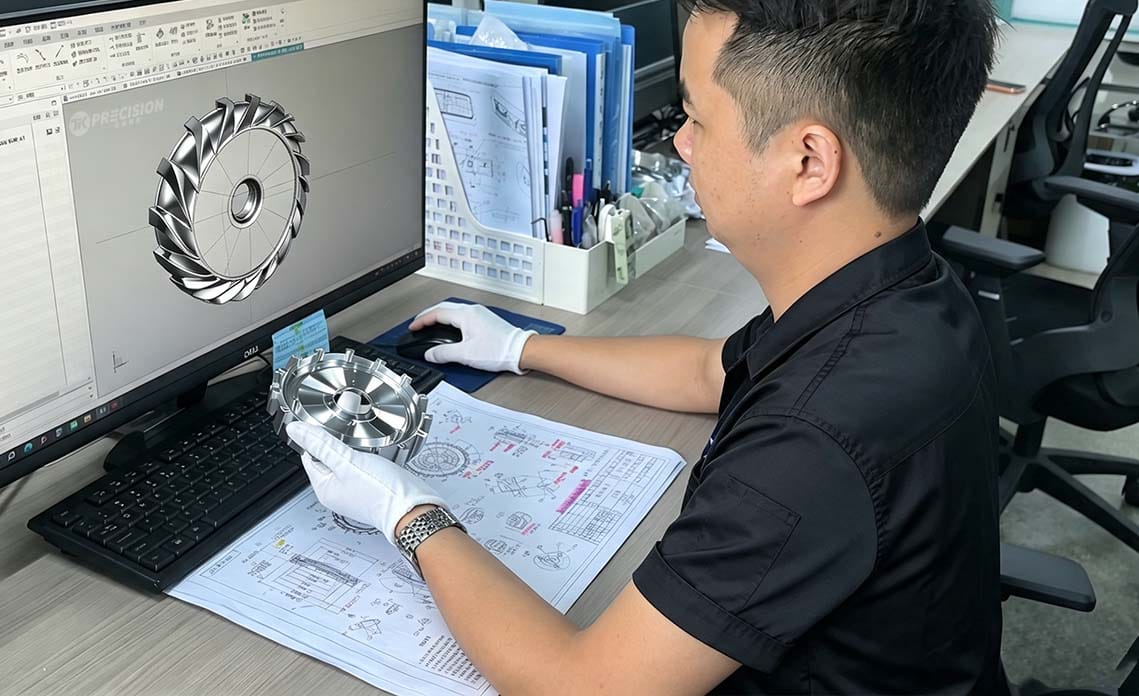
The machine hardware is only half the equation. Impeller-specific CAM modules — found in software like HyperMill, NX CAM, and Mastercam — provide specialized toolpath algorithms that general-purpose 5-axis programming cannot match. These modules understand impeller geometry natively and can automatically generate collision-free roughing, hub finishing, blade finishing, and edge profiling toolpaths with minimal user input.

Key software capabilities to look for:

  • Automatic blade and hub surface recognition
  • Collision detection with the workpiece, fixture, and adjacent blades
  • Tool holder and spindle collision avoidance
  • Machine simulation with full kinematic model
  • Toolpath optimization for constant tool engagement and chip load

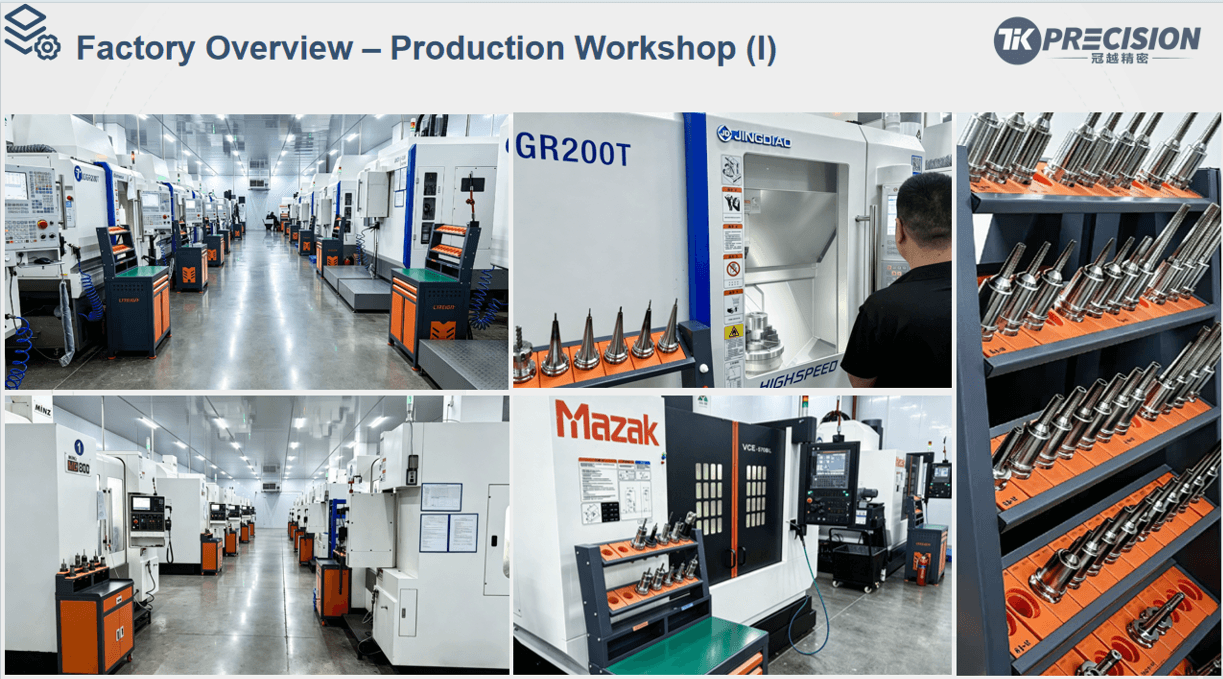
At Tik Precision, we combine advanced 5-axis CNC machines with industry-leading CAM software to produce impellers for the most demanding applications. Contact our team to discuss your next impeller project.

On This Page
Need a Manufacturing Quote?

Upload your drawings and receive DFM feedback, material recommendations, and a clear manufacturing quote.

Request a Quote
Related Articles
Energy-Power-Gas-Turbine-Gas-turbines-Steam-turbines-Combined-cycle-compressors-cnc-machining

Precision CNC Machining for Energy and Power Generation

Introduction: The Role of Precision CNC Machining in Energy and Power Generation The global energy industry—ranging from traditional thermal and nuclear power plants to

Precision CNC Machining for Marine and Shipbuilding Applications

Introduction: The Demands of Marine CNC Machining Marine engineering requires materials that can withstand the most aggressive environments on Earth. Seawater acts as a

Surface finishing services for CNC machined parts

Complete Guide to Surface Finishes for CNC Machined Parts

Introduction: Why Surface Finishing Matters for CNC Parts A raw machined component is rarely the final product. Surface finishes for CNC machined parts are

Start a New Project

Turn Your CAD Files Into Precision Parts

Share your requirements with our engineering team. We will review manufacturability, materials, tolerances and lead time before quoting.

2-Hour Quote

Fast response for complete RFQs

Free DFM Review

Engineering feedback before production

Secure CAD Files

Confidential upload and NDA support

No MOQ

Prototype to low-volume production

Need help preparing an RFQ?

info@tikprecision.com

RFQ Form

Tell Us About Your Project

This preview uses standard controls that can later be rebuilt with the Elementor Pro Form widget.