A Practical Guide to Finding the Right CNC Machining Supplier for Automotive Prototypes
If you are developing a new vehicle, EV platform, performance car, autonomous driving system, or automotive component and need custom CNC machined parts for prototype testing, finding the right manufacturing supplier can be challenging.
A prototype may only require a few parts, but those parts still need to match the engineering drawing closely enough for meaningful testing.
Depending on the application, you may need:
- CNC machined aluminum parts
- CNC machined steel components
- Stainless steel prototype parts
- Titanium components
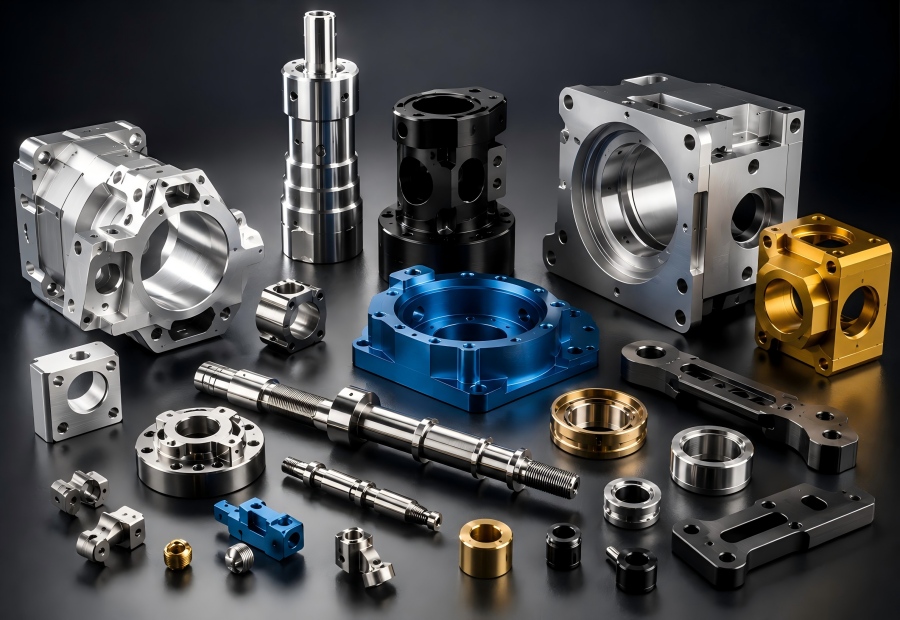
- Automotive housings
- Brackets and mounting components
- Suspension components
- Transmission and drivetrain parts
- Engine prototype components
- EV motor components
- Battery cooling components
- Sensor housings
- Automotive test fixtures
- Custom shafts and adapters
- Complex 5-axis CNC parts
So, where should you get custom CNC machined parts for car prototype testing?
The short answer is:
Choose a CNC machining supplier that has automotive prototype experience, strong engineering support, reliable dimensional inspection, and the ability to manufacture your specific material, geometry, tolerance, and quantity.
The cheapest CNC supplier is not necessarily the best choice for prototype testing.
For automotive development, accuracy, repeatability, engineering communication, lead time, and inspection documentation can be more important than the initial piece price.
Quick Answer: Where Can I Get Custom CNC Parts for a Car Prototype?
You generally have three options:
| Supplier Type | Best For | Main Advantage | Potential Limitation |
|---|---|---|---|
| Local CNC machine shop | 1–10 prototype parts | Fast communication | May have limited capacity |
| Specialized prototype CNC manufacturer | Complex automotive prototypes | Engineering + machining expertise | May cost more |
| Overseas CNC manufacturer | Prototype + low-volume production | Competitive cost and broad capabilities | Shipping and communication need management |
For simple brackets or housings, a local machine shop may be sufficient.
For complex automotive prototype components requiring tight tolerances, 5-axis machining, CMM inspection, or difficult materials, a specialized precision CNC manufacturer is usually a better option.
1. Why CNC Machining Is Widely Used for Car Prototypes
Automotive prototype development requires components that are close enough to production intent to support meaningful engineering testing.
CNC machining is particularly useful because it can produce functional metal components directly from CAD data without requiring injection molds, casting tooling, or stamping dies.
This makes CNC machining suitable for:
- Early-stage prototypes
- Engineering validation
- Functional testing
- Vehicle testing
- Design verification
- Fit and assembly testing
- Performance testing
- Low-volume pilot production
For example, an automotive engineering team may need only 2–20 prototype components before moving to the next design iteration.
CNC machining allows the engineering team to manufacture those parts without committing to expensive production tooling.
2. What Automotive Prototype Parts Can Be CNC Machined?
Almost any sufficiently machinable metal component can potentially be produced using CNC machining.
Engine and Powertrain Components
Examples include:
- Engine brackets
- Sensor mounts
- Valve components
- Adapter plates
- Transmission housings
- Shafts
- Couplings
- Test fixtures
EV Components
CNC machining is particularly useful during EV development.
Prototype components may include:
- Motor housings
- Battery cooling plates
- Inverter housings
- Mounting brackets
- Connector housings
- Heat sinks
- Cooling manifolds
- Structural components
Chassis and Suspension Components
Possible parts include:
- Suspension brackets
- Steering components
- Mounting plates
- Wheel-related components
- Test fixtures
- Structural brackets
Interior and Exterior Prototype Components
CNC machining can also produce:
- Dashboard prototypes
- Camera housings
- Sensor mounts
- Door components
- Interior mechanisms
- Custom aluminum panels
- Lighting components
3. What CNC Machining Process Should You Choose?
The right CNC process depends on the geometry.
3-Axis CNC Machining
Suitable for:
- Brackets
- Plates
- Simple housings
- Mounting components
- Flat components
For relatively simple automotive prototypes, 3-axis machining may provide the best balance of cost and capability.
4-Axis CNC Machining
Four-axis machining can be useful for components requiring additional rotational access.
Typical applications include:
- Cylindrical components
- Side features
- Housings
- Rotationally indexed components
5-Axis CNC Machining
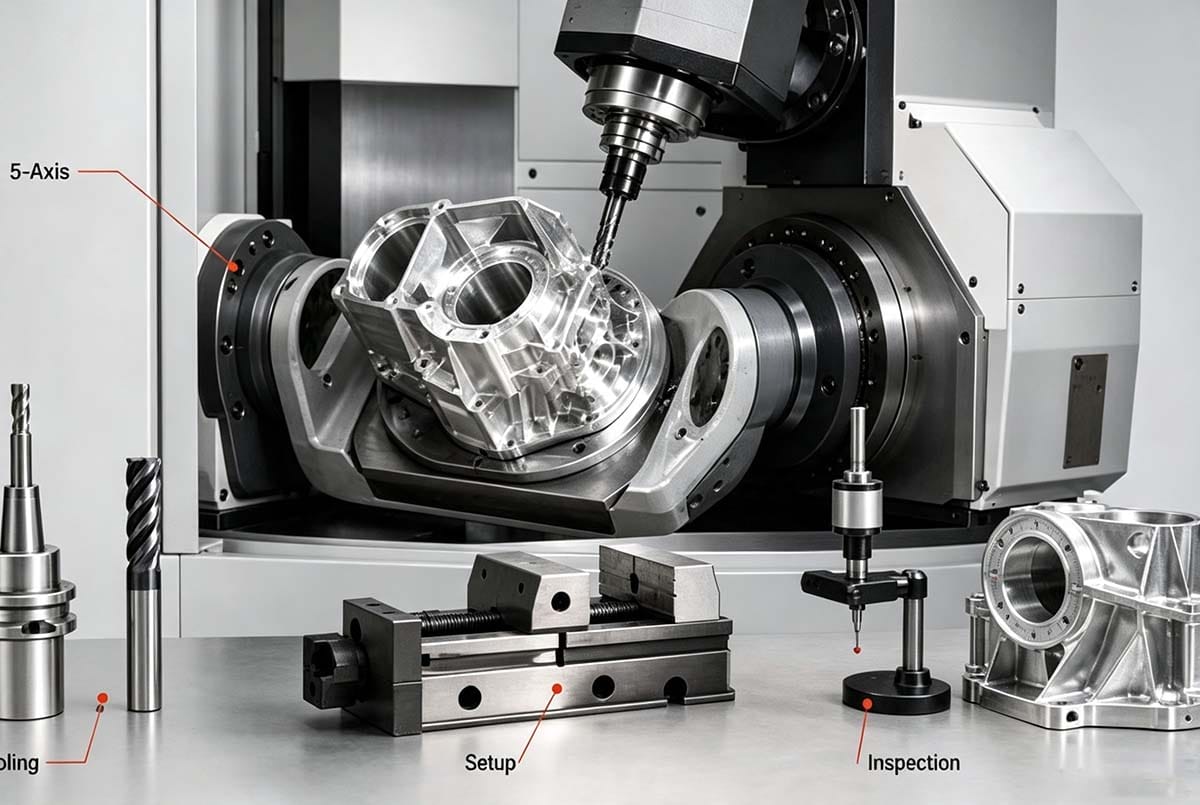
For complex automotive prototype components, 5-axis CNC machining can significantly reduce setup requirements and improve tool access.
It is particularly useful for:
- Complex housings
- Automotive performance components
- Blades
- Impellers
- Complex suspension components
- Lightweight structural parts
- Complex curved surfaces
However, 5-axis is not automatically better for every component.
If a simple bracket can be manufactured efficiently on a 3-axis machine, using a 5-axis machine may unnecessarily increase cost.
The correct question is:
What machining strategy provides the required accuracy and functionality at the lowest practical manufacturing cost?
4. What Materials Should You Consider?
Material selection depends heavily on the purpose of the prototype.
Aluminum
Popular grades include:
- 6061-T6
- 7075-T6
- 2024
Aluminum is commonly selected for automotive prototypes because it offers:
- Low density
- Good machinability
- Good strength-to-weight ratio
- Relatively low machining cost
It is often suitable for housings, brackets, mounts, prototypes, and test components.
Stainless Steel
Common grades include:
- 303
- 304
- 316
- 17-4 PH
Stainless steel may be preferred when the component requires:
- Higher strength
- Corrosion resistance
- Higher temperature capability
- Greater durability
Carbon Steel and Alloy Steel
Steel can be useful for:
- Shafts
- Fixtures
- Structural components
- High-load components
- Wear-resistant parts
The specific grade should be selected based on the engineering requirements.
Titanium
Titanium may be selected when:
- Weight reduction is important
- High strength is required
- Corrosion resistance is required
- The prototype represents a high-performance application
However, titanium machining generally requires more specialized process control than aluminum.
5. How Tight Should the Tolerances Be?
One of the biggest mistakes in prototype manufacturing is specifying extremely tight tolerances on every dimension.
For example, a prototype drawing might contain:
±0.005 mm
on a large number of dimensions simply because the designer wants the part to be “very accurate.”
This can significantly increase:
- Machining time
- Inspection cost
- Tooling requirements
- Scrap risk
- Overall prototype cost
Instead, identify the functionally critical dimensions.
For example:
| Feature | Possible Requirement |
|---|---|
| Bearing bore | Tight tolerance |
| Shaft interface | Tight tolerance |
| Mounting hole position | Controlled GD&T |
| Non-critical outer surface | Standard tolerance |
| Cosmetic surface | Surface-finish requirement |
A good CNC supplier should be able to review your drawing and explain where tighter tolerances are necessary and where they may not provide meaningful functional benefits.
6. Why DFM Review Matters for Automotive Prototypes
Before manufacturing your prototype, ask the supplier to perform a DFM — Design for Manufacturability — review.
A professional DFM review should examine:
Tool Access
Can the cutting tool reach the required surfaces?
Wall Thickness
Are thin walls likely to deform during machining?
Deep Cavities
Will long tools create vibration or deflection?
Internal Corners
Are the specified radii practical for CNC tooling?
Tolerances
Are the specified tolerances achievable for the material and geometry?
Surface Finish
Can the required finish be achieved directly through CNC machining?
Setup Strategy
How many setups will be required?
Cost Drivers
Which features are making the prototype unnecessarily expensive?
This is one of the biggest differences between a machine shop that simply follows drawings and a manufacturing partner that contributes engineering expertise.
7. What Inspection Should You Require?
For automotive prototype testing, dimensional verification should be considered part of the manufacturing process.
Depending on the part, inspection may include:
- Vernier calipers
- Micrometers
- Height gauges
- Bore gauges
- Optical measurement
- CMM inspection
- Surface roughness measurement
- Thread inspection
- GD&T verification
For complex or tight-tolerance parts, ask whether the supplier can provide a CMM dimensional report.
You should also ask:
“Which dimensions will you inspect, and can you provide actual measured values rather than simply confirming that the part passed?”
This is particularly important when the prototype will be used for engineering validation.
8. Prototype Quantity Matters
Tell the CNC supplier how many parts you need.
There is a major difference between:
“I need one prototype.”
and:
“I need 20 prototype parts for vehicle testing.”
For example:
1–5 Parts
Prioritize:
- Fast engineering review
- Rapid programming
- Flexible production
- Short lead time
10–100 Parts
Look for:
- Process repeatability
- Stable tooling
- Consistent inspection
- Production planning
100+ Parts
Consider:
- Cycle-time optimization
- Automation
- Tool-life management
- Process capability
- Production scalability
A supplier capable of making one excellent prototype may not necessarily be the best supplier for your next 500 parts.
9. How Fast Can Custom CNC Prototype Parts Be Made?
Prototype lead time depends on:
- Part complexity
- Material availability
- Quantity
- Tolerance
- Surface finish
- Inspection requirements
- Secondary processes
- Supplier capacity
A simple aluminum bracket may be produced relatively quickly.
A complex five-axis titanium component requiring:
- DFM
- Specialized tooling
- Multiple machining operations
- Heat treatment
- Surface finishing
- CMM inspection
will naturally require more time.
When requesting a quote, ask the supplier for:
Engineering review time + machining lead time + finishing time + inspection time + shipping time.
This provides a much more realistic project schedule.
10. How Much Does a Custom CNC Automotive Prototype Cost?
There is no universal price.
The main cost drivers include:
- Material
- Part size
- Machining time
- Number of setups
- Tooling
- Programming
- Tolerance
- Surface finish
- Inspection
- Quantity
- Secondary processes
For prototype projects, the cheapest quotation may not be the lowest total cost.
A supplier that delivers a failed prototype two weeks late can create far more cost than a supplier whose original quotation was 15% higher.
For automotive engineering teams, consider:
Total prototype development cost = Part cost + Engineering cost + Delay cost + Rework risk
11. What Should You Send to a CNC Supplier?
To receive an accurate quotation, send:
3D CAD File
Preferred formats include:
- STEP
- Parasolid
- IGES
- Native CAD formats where appropriate
2D Engineering Drawing
Include:
- Dimensions
- GD&T
- Material
- Surface finish
- Heat treatment
- Coating
- Critical features
Project Requirements
Also specify:
- Quantity
- Prototype stage
- Application
- Required delivery date
- Inspection requirements
- Packaging requirements
The more complete your RFQ package is, the less likely the supplier will need to make assumptions.
12. Questions to Ask Before Choosing a CNC Prototype Supplier
Before placing an order, ask:
Engineering
Can your engineering team review my CAD model before production?
Machining
Which CNC process would you recommend for this part?
Tolerance
Which dimensions do you consider critical?
Material
Have you machined this material before?
Inspection
Can you provide a dimensional inspection report?
Lead Time
What is the realistic production lead time after drawing approval?
Production
If the prototype passes testing, can you scale production?
Quality
How do you handle a non-conforming prototype?
These questions can quickly distinguish a professional manufacturing partner from a basic job shop.
13. Where Should You Get Custom CNC Parts for Car Prototype Testing?
There is no single “best” supplier for every automotive prototype.
Your choice should depend on the type of component.
Choose a Local Machine Shop When:
- The component is relatively simple
- You need very fast communication
- You require only a few parts
- Physical meetings are important
Choose a Specialized CNC Prototype Manufacturer When:
- The part is complex
- You require 5-axis machining
- Tight tolerances are involved
- CMM inspection is required
- Difficult materials are involved
- You expect multiple design iterations
Choose an Overseas CNC Manufacturer When:
- Cost competitiveness is important
- You need both prototype and production
- You can manage international logistics
- The supplier has strong engineering communication and quality systems
The best supplier is the one that matches your part complexity, quantity, tolerance, material, timeline, and production plan.
14. TikPrecision for Custom Automotive CNC Prototypes
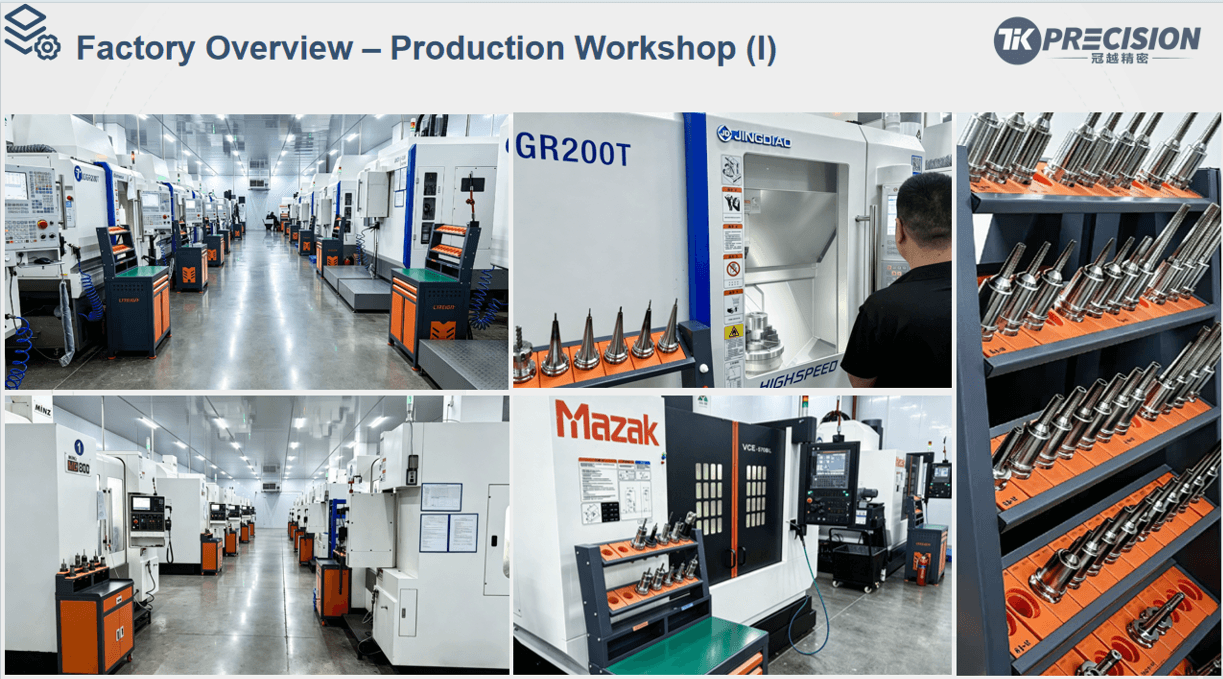
TikPrecision provides custom CNC machining for complex metal components across multiple industries, including automotive and other engineering applications.
For automotive prototype programs, the manufacturing process can be evaluated based on:
- Part geometry
- Material
- Tolerance
- Quantity
- Surface finish
- Inspection requirements
- Delivery schedule
- Production requirements
Depending on the part, manufacturing capabilities may include:
- 3-axis CNC machining
- 4-axis CNC machining
- 5-axis CNC machining
- CNC turning
- Mill-turn machining
- Precision machining
- DFM review
- Surface finishing
- CMM inspection
- Prototype manufacturing
- Low-volume production
This allows the same manufacturing partner to potentially support the project from:
Prototype → Engineering Validation → Design Revision → Low-Volume Production
rather than requiring a completely new supplier after prototype testing.
15. From Prototype to Production: Plan Ahead
One of the most important questions to ask when selecting a CNC supplier is:
“Can you support us if this prototype enters production?”
A prototype supplier should ideally be able to support future requirements such as:
- Design revisions
- Additional prototype builds
- Engineering validation
- Low-volume production
- Production optimization
- Process documentation
- Quality control
- Repeat orders
This can save significant time when a successful prototype moves toward commercialization.
Frequently Asked Questions
Where can I get custom CNC machined parts for a car prototype?
You can source automotive prototype CNC parts from local machine shops, specialized CNC prototype manufacturers, or overseas precision machining companies. For complex components, prioritize suppliers with 5-axis machining, DFM engineering, CMM inspection, and automotive prototype experience.
What is the best CNC process for automotive prototypes?
It depends on the geometry. Simple brackets and plates may only require 3-axis machining, while complex curved or multi-sided components may benefit from 5-axis CNC machining.
Can CNC machining be used for EV prototypes?
Yes. CNC machining is commonly suitable for EV prototype components such as motor housings, battery cooling components, inverter housings, sensor mounts, brackets, shafts, and test fixtures.
How many CNC prototype parts should I order?
Order enough parts to support your testing requirements. Quantities can range from one functional prototype to dozens or hundreds of components for validation and vehicle testing.
Can CNC machining achieve automotive-grade tolerances?
Yes, CNC machining can achieve tight tolerances, but the achievable tolerance depends on the material, geometry, machine, tooling, workholding, temperature control, process strategy, and inspection method.
Should I request CMM inspection?
For complex or tight-tolerance automotive prototype parts, CMM inspection can provide valuable dimensional verification. The inspection scope should be based on the critical features and engineering requirements.
Can my CNC prototype supplier also handle production?
Many CNC manufacturers can support both prototypes and low-volume production. Ask this question before selecting a supplier if you expect the component to move toward production.
Conclusion
If you are searching for:
“I need custom CNC machined parts for our car prototype testing where to get”
don’t choose a supplier based solely on price.
Instead, evaluate:
Engineering Support + CNC Capability + Material Experience + Inspection + Lead Time + Communication + Production Scalability
For a simple prototype bracket, a local machine shop may be perfectly adequate.
For a complex automotive component requiring tight tolerances, difficult materials, 5-axis machining, CMM inspection, and multiple design iterations, a specialized precision CNC manufacturer is a better choice.
The right supplier should not simply manufacture the part.
They should help you answer:
Can this part be manufactured accurately, quickly, repeatedly, and economically enough to support the next stage of vehicle development?
Need Custom CNC Parts for Your Car Prototype?
Send your 3D CAD model + 2D drawing + material + quantity + required delivery date to TikPrecision.
Our engineering team can review your component and recommend an appropriate machining strategy before production.
CTA:
Request a Quote →
Send Your Drawing →
Get a DFM Review →