Introduction
In medical device manufacturing, the performance and safety of every implant, surgical instrument, and diagnostic component depend on the quality of its precision-machined parts. Selecting a CNC turning supplier is not a routine procurement task — it’s a strategic partnership that directly affects regulatory approval, time-to-market, and ultimately patient outcomes.
As the global market for precision medical components continues to grow, manufacturers need to evaluate suppliers on far more than price and machine count. This guide walks through the capabilities that separate a truly qualified medical-grade CNC turning partner from a general machine shop — from certifications and material expertise to micro-machining tolerances and cleanroom processing.
1. Regulatory Certifications: The Non-Negotiable Baseline
Any supplier under consideration should hold ISO 13485:2016, the international standard for medical device quality management, which governs traceability, risk management, and consistent process control. For devices bound for the U.S. market, confirm FDA 21 CFR Part 820 compliance and current establishment registration. For Europe, look for CE marking under MDR 2017/745 with complete technical documentation.
The strongest suppliers go a step further, maintaining ISO 14971 risk management files for each product family and providing Device History Records (DHR) that trace every finished batch back to its original raw material lot. Don’t assume certification is enough on its own — verify that the certificate’s stated scope explicitly covers CNC turning and any secondary operations you’ll be relying on.
2. Material Expertise: Biocompatibility and Beyond
Medical components require materials with proven biocompatibility: stainless steel (316L, 17-4PH), titanium alloys (Grade 5 Ti-6Al-4V), cobalt-chromium, Nitinol, and high-performance polymers such as PEEK. A qualified supplier should be able to demonstrate:
- Certified raw material sourcing with EN 10204 3.1 or 3.2 mill certificates
- Proven experience machining difficult-to-cut alloys without compromising surface integrity
- Familiarity with material-specific post-processing — passivation for stainless steel, anodization for titanium, and similar treatments
Some specialized suppliers also machine precious metals — gold, platinum, iridium — for electrodes and connectors, a valuable niche capability worth asking about if your application requires it.
3. Advanced Equipment and Micro-Machining Capability
Medical-grade turning has moved well beyond single-spindle lathes. Leading suppliers typically invest in:
- Multi-axis Swiss-type lathes (up to 9 axes) for complex geometries completed in a single setup
- High-speed spindles (up to 60,000 RPM) capable of fine threading and mirror-like finishes (Ra < 0.2 µm) on small-diameter parts
- Mill-turn centers combining turning, milling, and drilling to minimize secondary operations and improve concentricity
As devices continue to miniaturize, micro-machining capability has become a real differentiator. Look for suppliers able to hold outside diameters below 0.5 mm, tolerances of ±2 microns, and burr-free holes as small as 0.012 inches — a level of precision essential for guidewires, catheter components, and dental abutments.
4. Cleanroom Processing and Surface Integrity
Finished medical parts must be free of oils, chips, and particulates. Reputable suppliers operate ISO Class 8 (Class 100,000) cleanrooms for final cleaning, inspection, and packaging, typically pairing ultrasonic cleaning and degreasing with barrier-film packaging to preserve cleanliness through shipment.
Surface quality matters just as much as visible cleanliness. Improper machining can leave micro-cracks or stress risers that lead to implant failure downstream — so confirm the supplier uses optimized cutting parameters and tooling specifically selected to preserve material integrity, not just to hit dimensional tolerances.
5. Validating a Supplier Before You Commit
Before moving into production, run the supplier through a structured validation process:
- Process capability (Cpk): Critical dimensions should demonstrate Cpk ≥ 1.67.
- First Article Inspection (FAI): Must be performed using the same tooling, materials, and inspection equipment planned for mass production — not a prototype setup.
- Batch traceability: Request a complete chain of records from incoming raw material through finished shipment, including machining parameters and inspection data.
- Facility audit: Where possible, visit the facility in person or review recent third-party audit reports from notified bodies.
6. Who’s Active in the Global Supplier Landscape
While many machine shops offer CNC turning, relatively few specialize in medical-grade work. Suppliers worth researching include:
| Supplier | Region | Focus |
|---|---|---|
| Part Precision | Sweden | Orthopedics, dental, spine — ISO 13485 + FDA Class 3 |
| Décovi | Switzerland | Dental and orthopedic implants — ISO 13485 since 2009 |
| POLYDEC | Switzerland | 40+ years in micro-parts, components down to 0.05 mm |
| High Tech Turning | USA | 40+ Swiss machines, ~70% of output for medical devices |
| Tik Precision | China (Dongguan/Guangdong) | 8,000 m² facility, 50+ CNC machines, medical among multiple served industries |
This list is a starting point, not a recommendation — due diligence per Section 5 still applies to each.
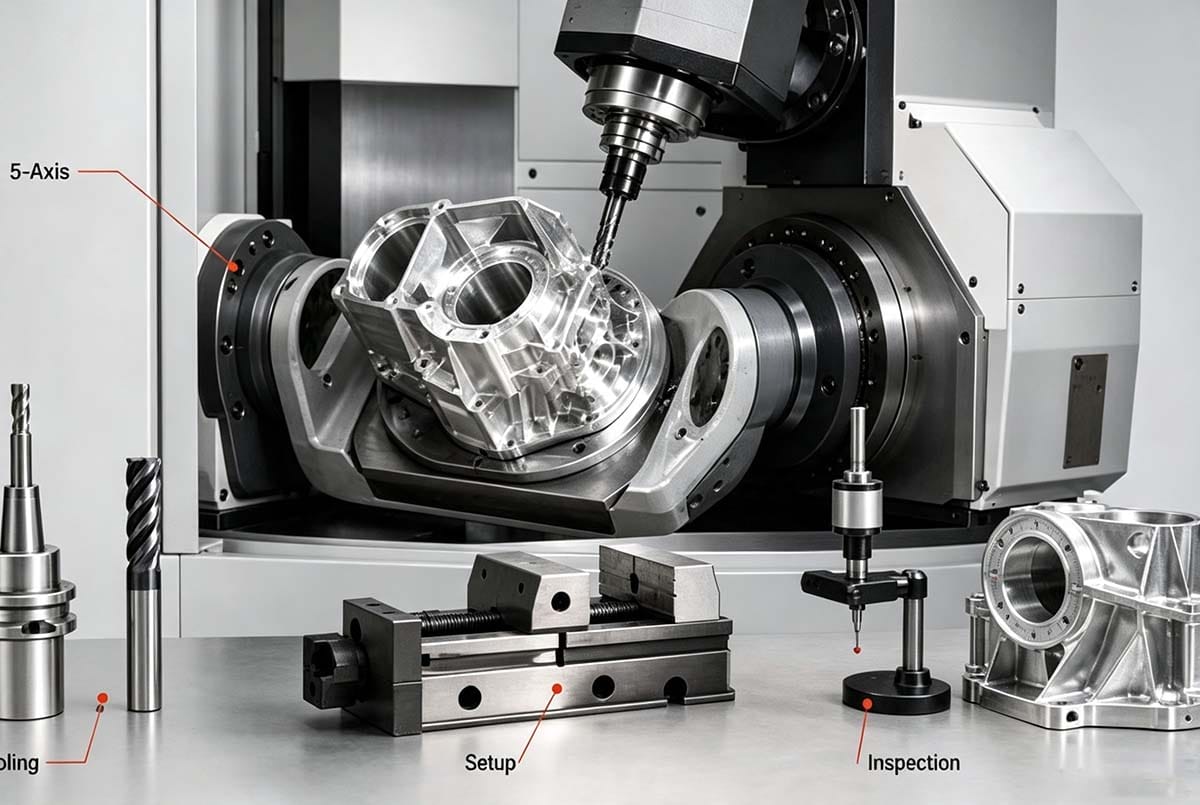
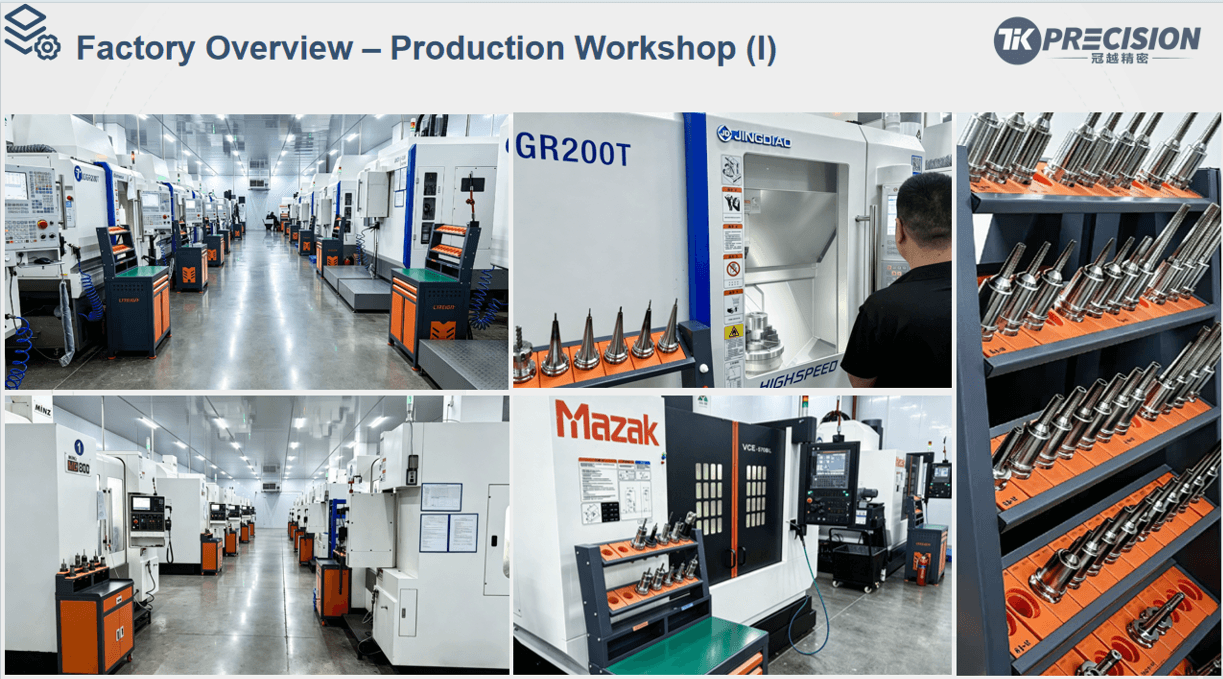
Spotlight: Tik Precision (China). <cite index=”6-1″>Founded in 2018, Tik Precision Manufacturing operates an 8,000 square-meter facility equipped with more than 50 domestic and imported CNC machines, supported by a dedicated production and quality management system.</cite> <cite index=”2-1″>The company machines high-precision parts across aerospace, marine, energy, automotive, medical, and electronics applications</cite>, offering CNC turning, milling, and 5-axis machining alongside secondary services such as <cite index=”8-1″>sheet metal fabrication, 3D printing, casting, and surface finishing, backed by DFM review and full-dimensional inspection</cite>. For buyers evaluating China-based sourcing, this breadth of in-house capability can shorten supply chains for mixed metal-and-plastic assemblies — but as with any supplier, confirm ISO 13485 certification scope and medical-specific quality documentation directly before committing production volume (see Section 5).
Conclusion
Choosing the right precision CNC turning supplier for medical device parts blends technical rigor, regulatory compliance, and long-term reliability. The right partner won’t just meet your dimensional specifications — they’ll function as an extension of your own quality system, offering material traceability, cleanroom handling, and continuous process improvement.
In an industry where a single flawed component can have life-altering consequences, “good enough” isn’t a standard worth accepting. Take the time to validate, visit, and partner with a supplier whose commitment to quality matches your own.