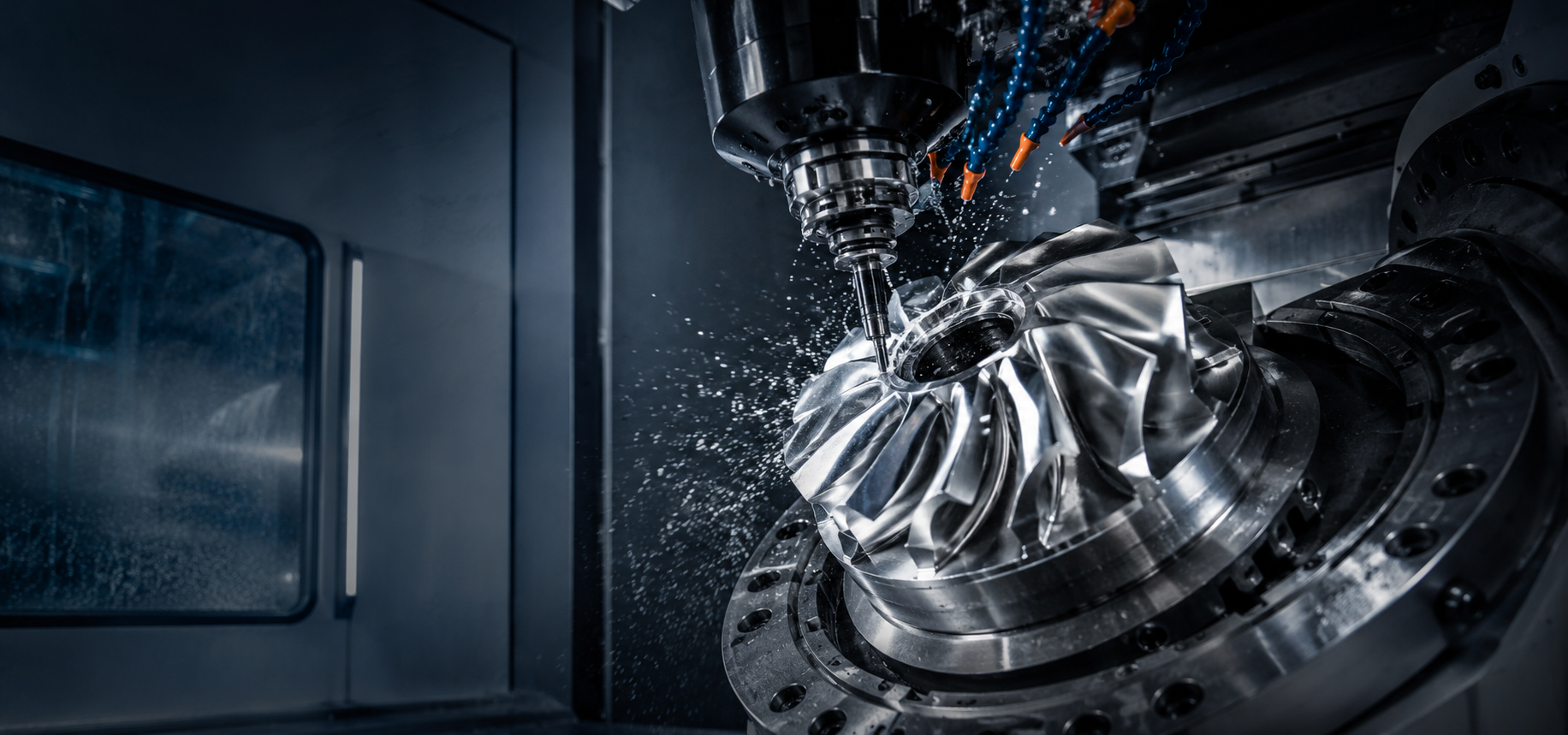
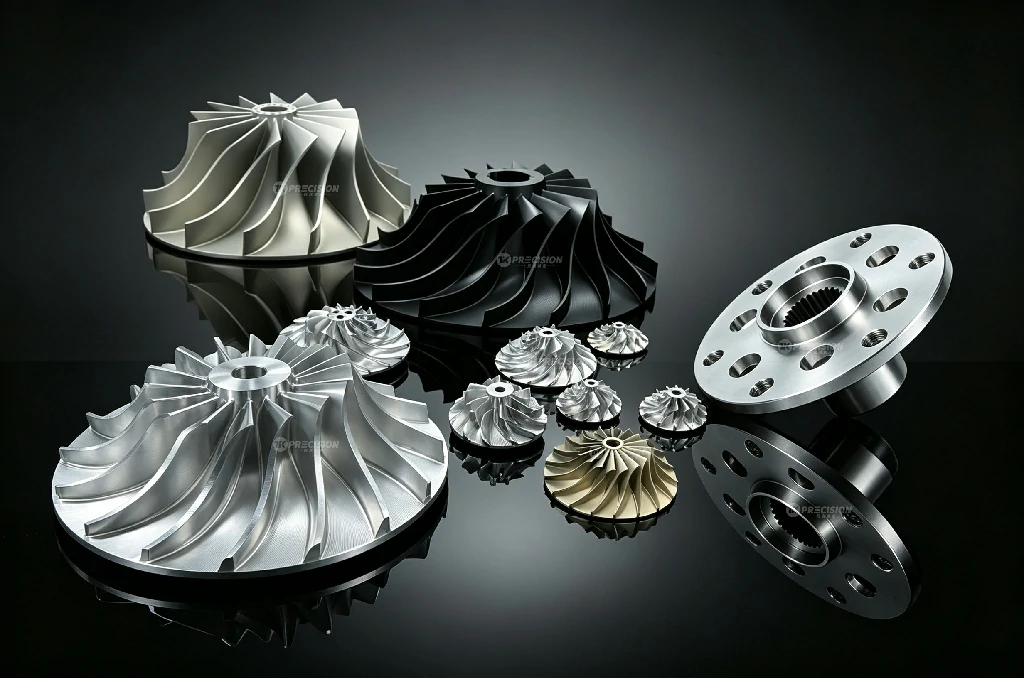
Impellers are everywhere — hidden inside pumps, compressors, turbines, and engines across nearly every industrial sector. While the fundamental function is always the same — moving fluid — the performance requirements, materials, tolerances, and regulatory standards vary enormously by industry. Understanding these differences reveals why precision CNC machining, not casting or additive manufacturing, remains the preferred production method for critical impeller applications.
Aerospace and Defense
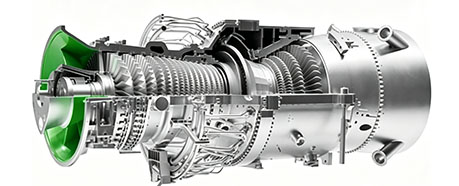
Applications: Jet engine compressor rotors, fuel pump impellers, auxiliary power unit (APU) compressors, environmental control system (ECS) fans, missile fuel turbopumps.
What makes aerospace impellers unique:
- Tolerances measured in microns: Blade profile tolerances of ±0.002 mm are typical. Surface finish requirements of Ra 0.4 µm or better on aerodynamic surfaces.
- Exotic materials: Titanium Ti-6Al-4V, Inconel 718, and Waspaloy are standard. These are among the most difficult materials to machine.
- Certification requirements: Every aerospace impeller is serialized and traceable to its raw material heat lot. Full material certifications, NDT (non-destructive testing), and First Article Inspection Reports (FAIR) per AS9102 are mandatory.
- Overspeed and fatigue testing: Many aerospace impellers must pass overspeed tests at 115-120% of maximum rated RPM and demonstrate fatigue life through cyclic spin testing.
Oil and Gas
Applications: Multistage centrifugal pump impellers, gas compressor impellers, subsea boosting pump impellers, pipeline transfer pump impellers, downhole electric submersible pump (ESP) impellers.
What makes oil & gas impellers unique:
- Size range: From tiny ESP impellers (50 mm diameter) to massive pipeline compressor impellers exceeding 1 meter in diameter.
- Corrosion and erosion resistance: Produced fluids often contain H₂S (sour service), CO₂, sand, and chlorides. Materials like duplex stainless steel, Inconel 625, and 17-4 PH stainless are common.
- NACE compliance: Impellers for sour service must meet NACE MR0175/ISO 15156 standards for sulfide stress cracking resistance — including hardness limits and specific heat treatment requirements.
- API standards: Many oil & gas impellers are manufactured to API 610 (centrifugal pumps for petroleum, petrochemical, and natural gas industries) specifications.
Automotive and Motorsport
Applications: Turbocharger compressor and turbine wheels, water pump impellers, supercharger rotors, oil pump impellers, electric vehicle coolant pump impellers.
What makes automotive impellers unique:
- Extreme RPM: Turbocharger compressor wheels in high-performance applications can exceed 200,000 RPM. At these speeds, even microgram-level imbalance is catastrophic.
- Weight-critical: Turbocharger compressor wheels are almost exclusively machined from 7075-T6 or 2618 aluminum forgings for minimum rotational inertia and fastest boost response.
- High volume potential: Unlike aerospace (tens to hundreds of units), automotive impellers can enter the thousands or tens of thousands. This shifts the manufacturing economics — the upfront cost of optimized CAM programming and custom fixturing is amortized across large production runs.
- Turbine wheels: The hot-side turbine wheel in a turbocharger is typically cast from Inconel 713C (investment casting) — but for motorsport applications where every percentage point of efficiency matters, CNC-machined titanium turbine wheels are used despite their cost.
Medical and Pharmaceutical
Applications: Blood pump impellers (VADs — Ventricular Assist Devices), heart-lung machine centrifugal pumps, pharmaceutical process pump impellers, dialysis machine pump impellers.
What makes medical impellers unique:
- Biocompatibility: Impellers that contact blood or pharmaceutical products must be machined from materials with proven biocompatibility — Ti-6Al-4V ELI, 316L stainless, or medical-grade PEEK.
- Hemocompatibility: Blood pump impellers require surface finishes that minimize hemolysis (red blood cell damage) and thrombosis (clot formation). Electropolishing to Ra ≤ 0.1 µm is common.
- Miniaturization: VAD impellers may be only 10-20 mm in diameter, with blade features measured in tenths of a millimeter. This requires micro-machining capabilities — small-diameter tools, high-speed spindles, and exceptional process control.
- ISO 13485 and FDA: Manufacturing facilities and processes must comply with medical device quality system regulations, including full traceability, validated processes, and cleanroom-appropriate handling.
Marine and Offshore
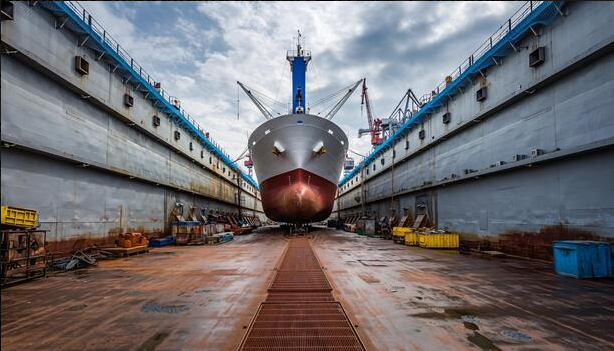
Applications: Ship ballast pump impellers, fire pump impellers, seawater cooling pump impellers, desalination plant high-pressure pump impellers, thruster impellers.
What makes marine impellers unique:
- Corrosion is the primary enemy: Seawater is an aggressive electrolyte. Impellers are typically machined from 316 stainless, duplex 2205, super duplex 2507, nickel-aluminum-bronze (NAB), or titanium — all materials with proven seawater corrosion resistance.
- Scale: Ship ballast and cooling pump impellers can exceed 2 meters in diameter. These are among the largest impellers produced by CNC machining, requiring large-format 5-axis machining centers.
- Cavitation resistance: Marine impellers, particularly on high-speed craft, experience cavitation — the formation and violent collapse of vapor bubbles that can erode even stainless steel. Materials with high cavitation-erosion resistance, such as duplex stainless and NAB, are specified.
Power Generation
Applications: Boiler feed pump impellers, condenser circulating water pump impellers, cooling tower pump impellers, geothermal brine pump impellers, nuclear reactor coolant pump impellers.
What makes power generation impellers unique:
- Reliability above all: A boiler feed pump impeller failure can shut down a 500 MW generating unit, costing hundreds of thousands of dollars per day in lost revenue. Manufacturing quality and material integrity are paramount.
- Extreme pressures: Boiler feed pumps for supercritical power plants operate at discharge pressures exceeding 300 bar (4,350 PSI). Impellers must withstand enormous hydraulic forces without fatigue failure.
- Nuclear-grade requirements: Impellers for nuclear safety-related pumps are subject to 10 CFR 50 Appendix B quality assurance, ASME Section III design codes, and often require Charpy impact testing, ultrasonic examination, and full material traceability.
Whatever industry you serve, Tik Precision brings the CNC machining expertise, quality systems, and material knowledge to produce impellers that meet your specifications. Contact our engineering team to discuss your application.