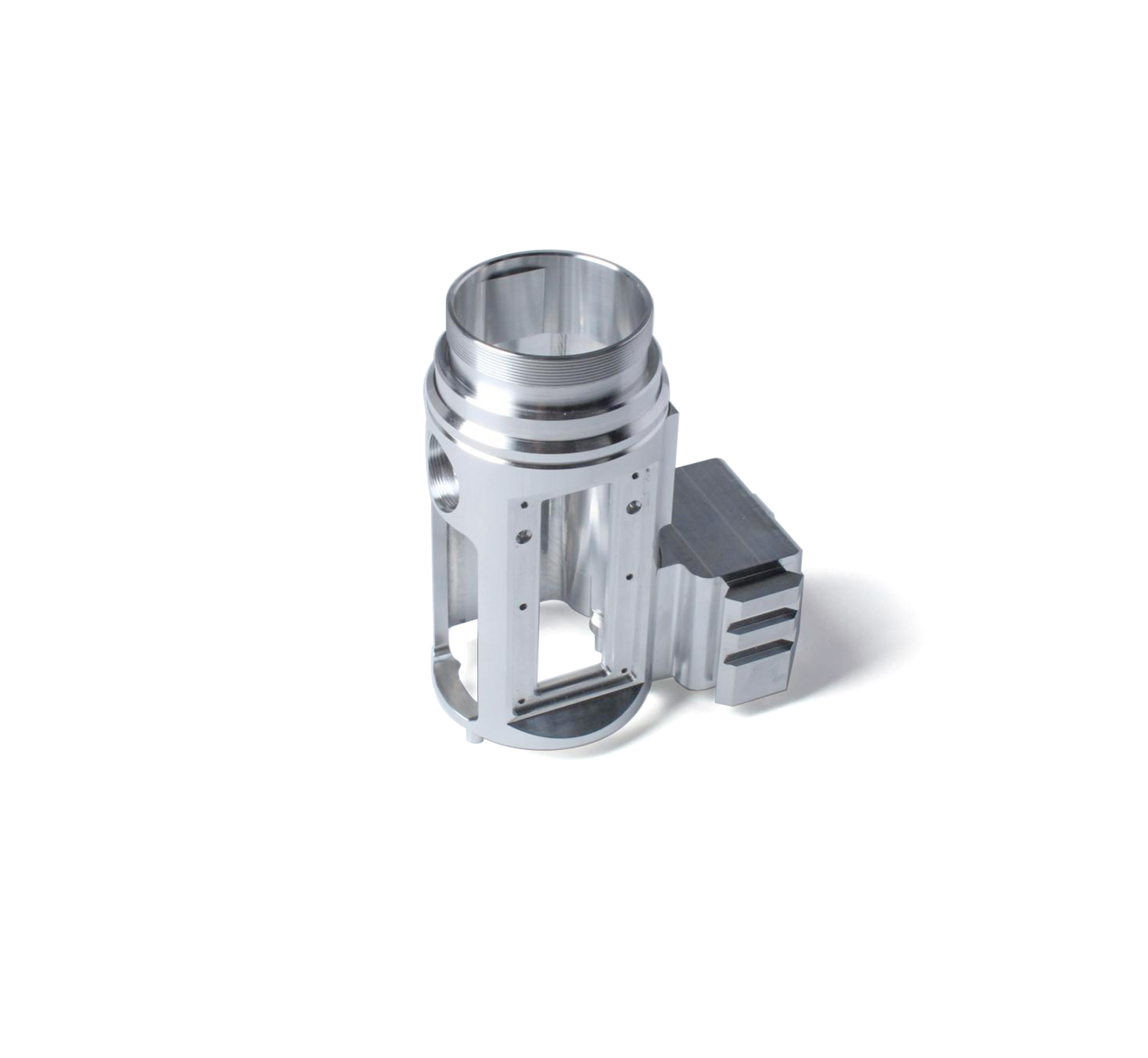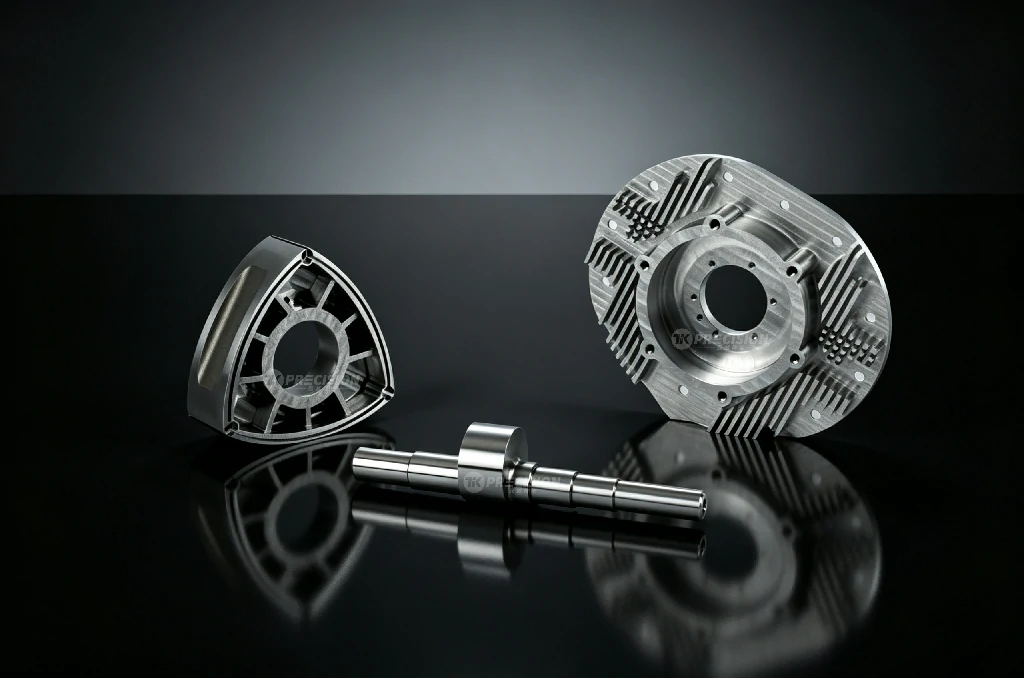

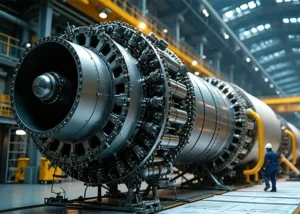
Precision CNC machining services support demanding industries such as aerospace, medical devices, semiconductors, and energy. These industries need complex parts, consistent dimensions, and documented quality. This guide explains how 5-axis CNC machining improves accuracy, how quality control reduces risk, and where advanced machining supports modern industry.
Why Precision CNC Machining Matters
Precision means more than meeting a drawing. It also means reliable performance in the field. Correct material selection, GD&T, stable processes, and careful inspection all contribute to a dependable part.
Advantages of 5-Axis CNC Machining
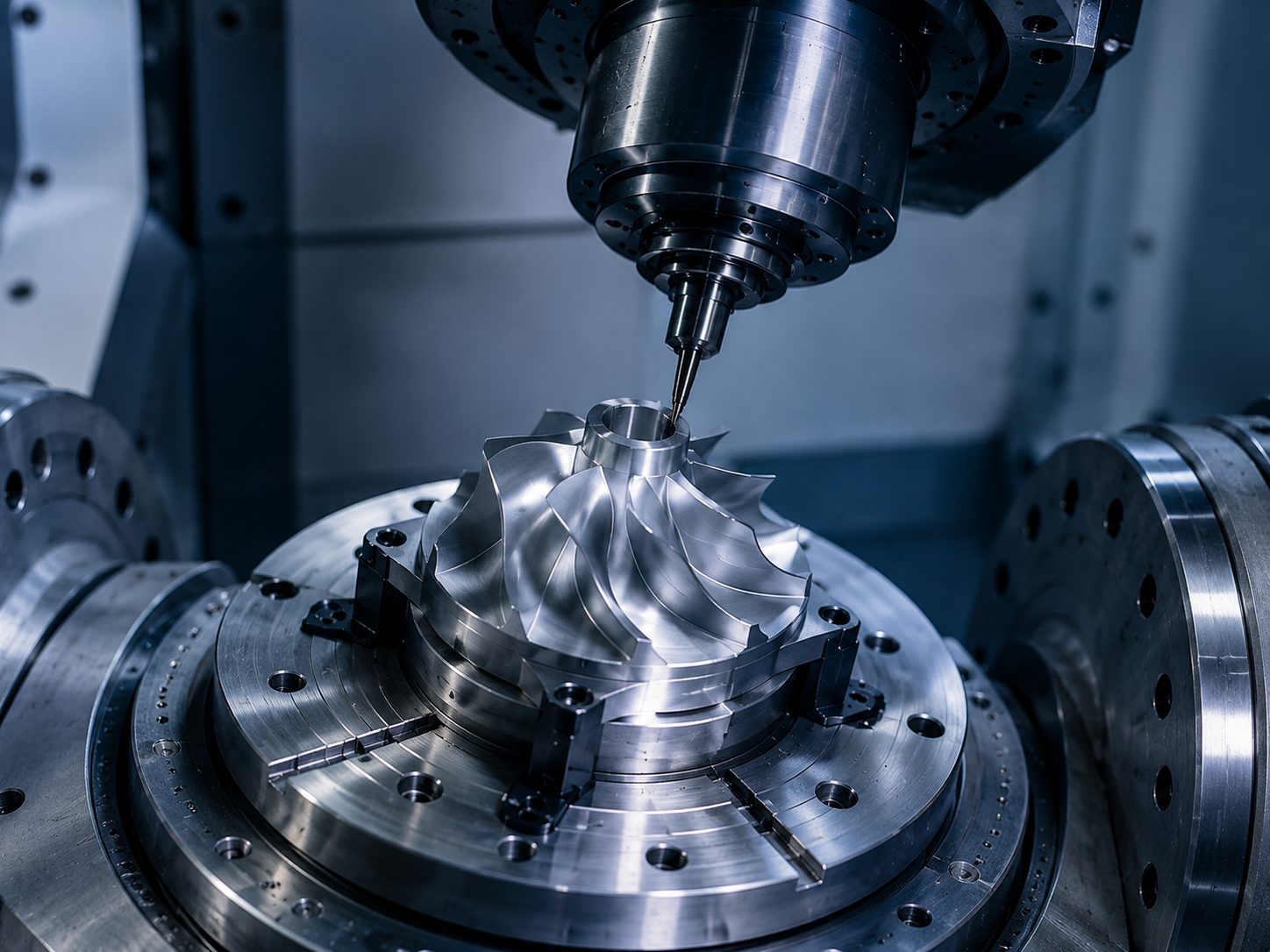
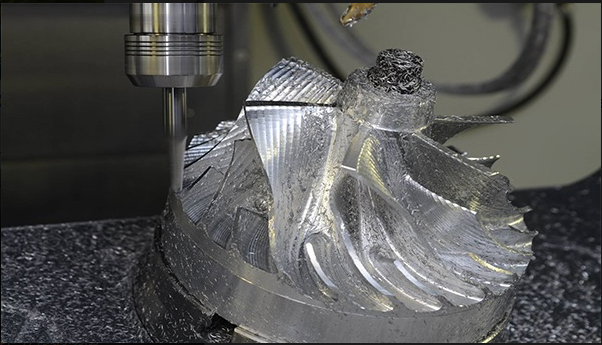
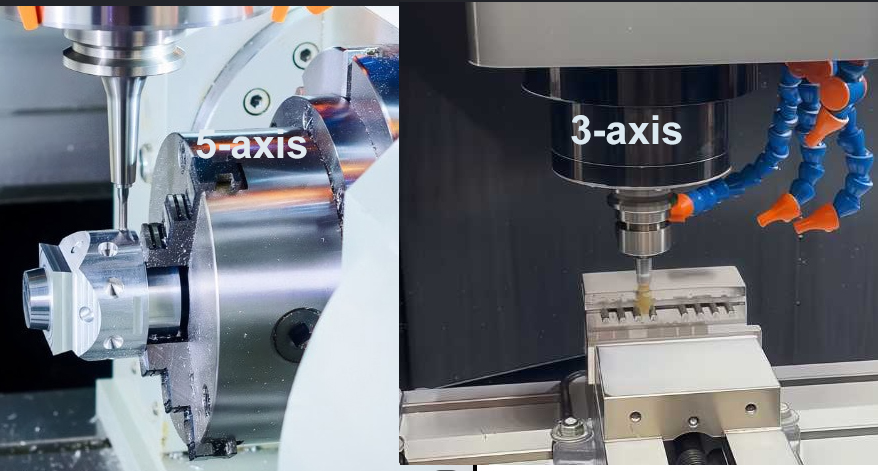
5-axis CNC machining moves the cutting tool along the X, Y, and Z axes while it rotates around two additional axes. As a result, the machine can reach complex surfaces from the best cutting angle. This approach offers three key benefits:
- Complex shapes in fewer setups: Fewer setups improve alignment and reduce the risk of handling errors.
- Better surface finish: A consistent tool angle helps produce smoother surfaces on aerospace and medical components.
- Shorter lead times: Fewer setups reduce production time and support faster delivery.
Quality Control for Precision Parts
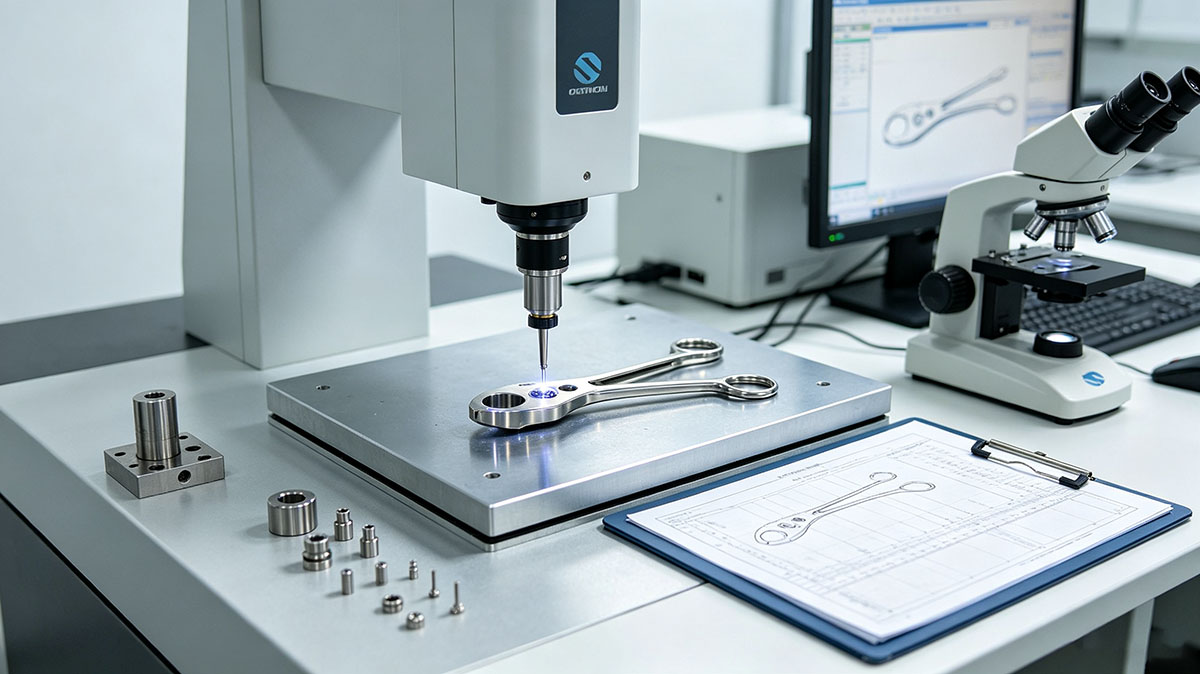
Quality control should cover the complete manufacturing process. It starts with material verification and continues through machining, finishing, and final inspection.
- Material control: Verify the material grade, certificates, and required heat treatment.
- In-process inspection: Check critical dimensions during production instead of waiting until the end.
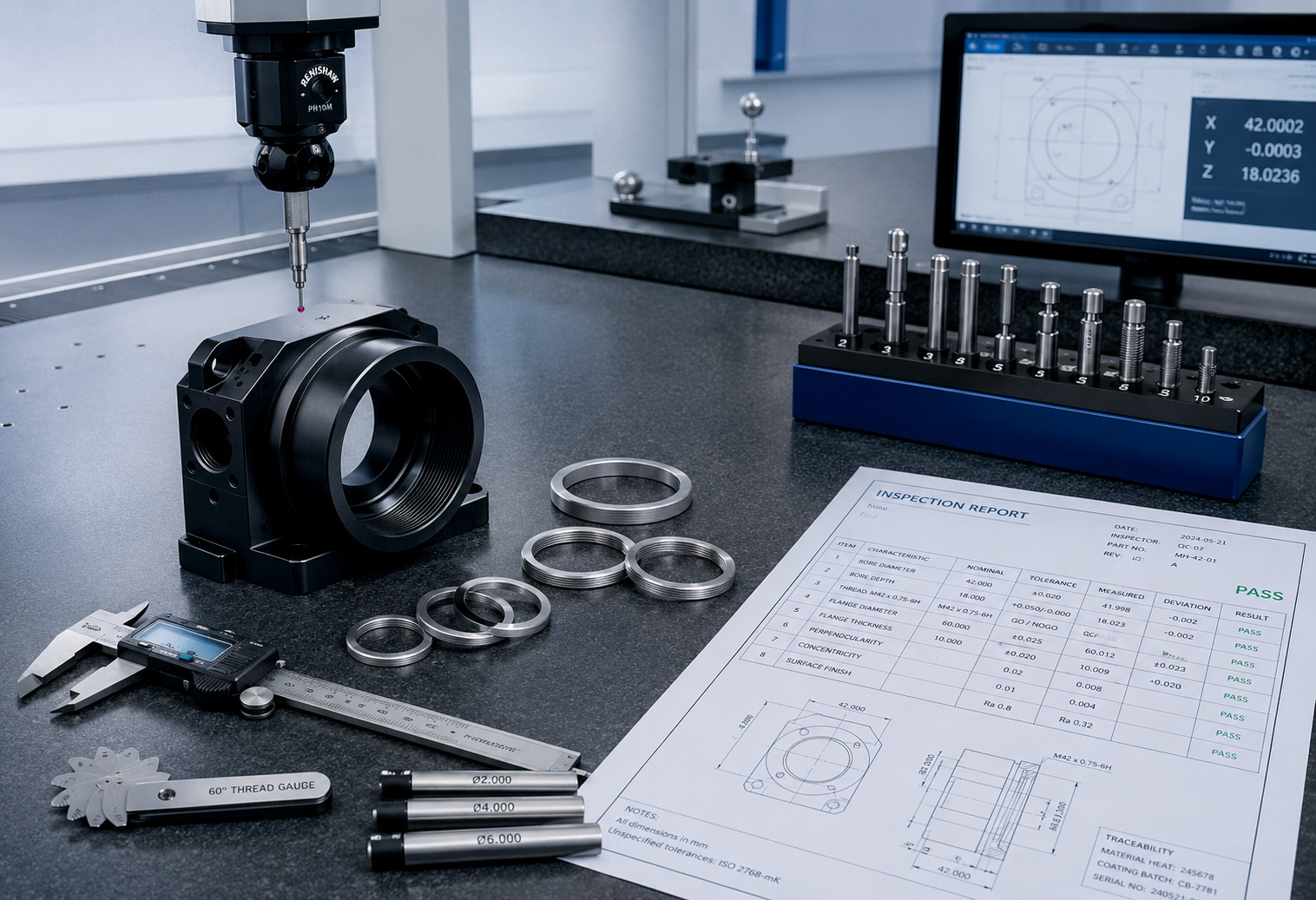
- Dimensional inspection: Use calibrated gauges and CMM inspection for critical features.
- Documentation: Record results so each part can be traced to its drawing revision and material.
These checks help identify problems early. They also provide measurable evidence that the finished part meets the design requirements.
Applications Across Modern Industry
Aerospace and Defense
Aerospace parts often combine thin walls, complex curves, lightweight alloys, and tight tolerances. 5-axis machining reduces setups and helps maintain accurate alignment on airframe, engine, and flight-control components.
Medical Devices
Medical components require clean production, repeatable dimensions, and reliable surface quality. Precision CNC machining supports surgical instruments, implants, housings, and custom medical equipment.
Semiconductor Equipment
Semiconductor equipment depends on stable dimensions, flatness, and precise interfaces. Controlled machining and inspection help maintain alignment in vacuum, motion, and wafer-handling systems.
Energy and Industrial Equipment
Energy systems use precision parts in compressors, pumps, turbines, and high-temperature assemblies. Material selection, surface treatment, and inspection are essential for long service life.
Automotive and Motorsport
Automotive and motorsport applications require lightweight parts, repeatable performance, and fast development. 5-axis machining supports prototypes and production components with complex geometry.
The Future of CNC Machining
CNC machining is becoming more connected and data-driven. New systems combine automation, process monitoring, and digital inspection to improve consistency.
Automation and Process Monitoring
Artificial intelligence and machine learning can detect tool wear, temperature changes, and process deviations. Operators can then correct problems earlier and improve production stability.
Sustainable Manufacturing
Green machining uses energy-efficient equipment, minimum quantity lubrication, and better material recovery. These methods can reduce waste while maintaining part quality.
Hybrid Manufacturing
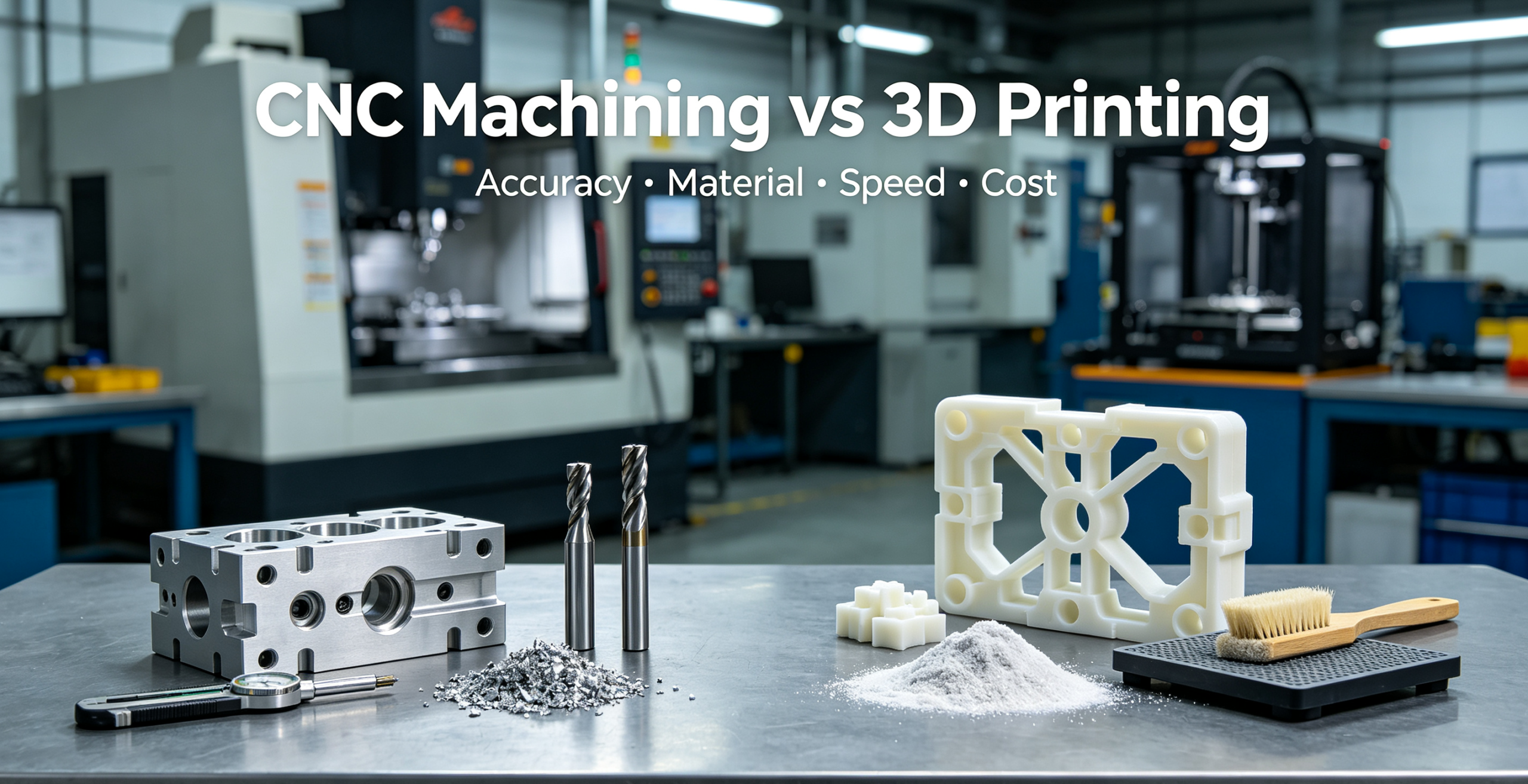
Hybrid systems combine additive manufacturing with CNC finishing. Complex internal structures can be built layer by layer, while critical mating surfaces receive precise CNC machining.
Choosing a Precision CNC Machining Partner
Look for a supplier with suitable machines, experienced engineers, calibrated inspection equipment, and clear documentation. A reliable partner should also provide DFM feedback before production and communicate any tolerance or material risks early.
Conclusion
Precision CNC machining services have developed from conventional material removal into a connected manufacturing solution. With 5-axis technology, disciplined quality control, and industry-specific experience, manufacturers can produce complex parts with greater consistency and lower risk.
Explore our Material Selection Guide for Precision CNC Machining to learn more about choosing materials for your next project.