
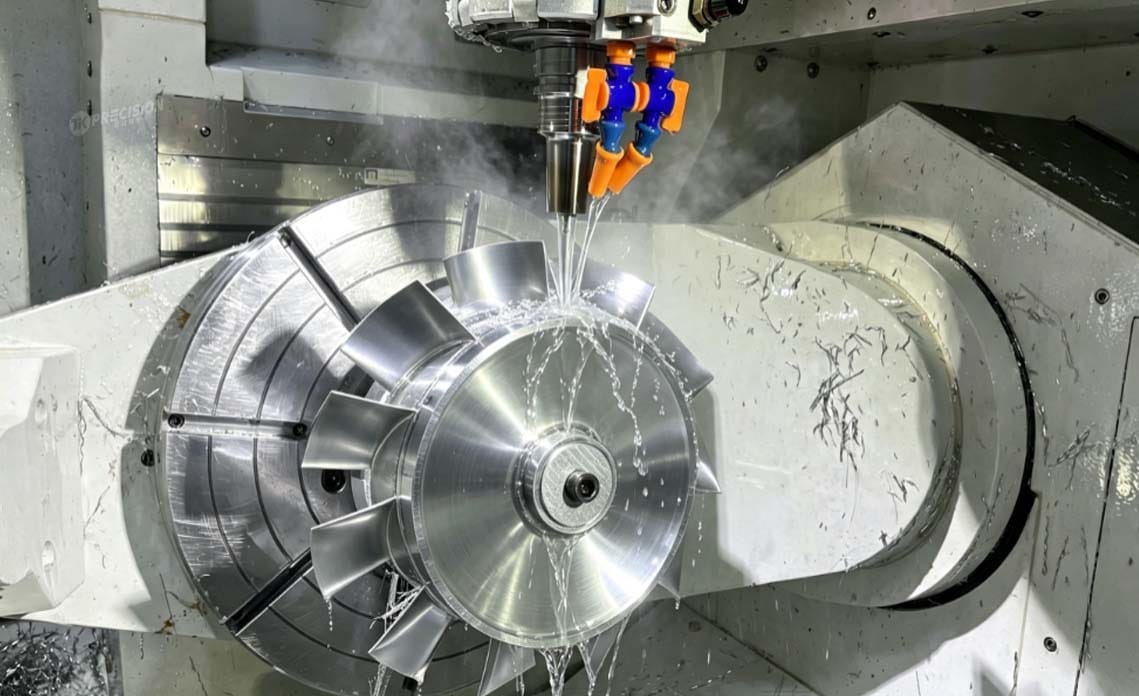
Turbo Diffuser CNC Machining: Key Challenges and Quality Controls
Turbo diffuser CNC machining requires precise control of complex aerodynamic surfaces, thin walls, and difficult-to-cut superalloys. These components are used in turbochargers, gas turbines, and aeroengines. Their vane geometry and flow channels directly affect pressure recovery, efficiency, and system performance.
This guide explains the main machining challenges, the role of 5-axis CNC technology, essential inspection methods, and the supplier capabilities buyers should verify.
Why Turbo Diffusers Are Difficult to Machine
1. Nickel-Based Superalloys
Turbo diffusers are commonly manufactured from Inconel 625, Inconel 718, Rene 41, or Hastelloy X. These materials retain strength at high temperatures, but that strength makes machining demanding.
- Low thermal conductivity: Heat remains near the cutting edge and accelerates tool wear.
- Work hardening: Rubbing or an unstable pass creates a harder surface for the next cut.
- High cutting forces: The machine, fixture, and tool holder must remain rigid throughout the operation.
2. Thin Walls and Complex Geometry
Diffuser walls may be 4.5 mm or thinner, with some sections approaching 1.5–2 mm. Cutting forces can deflect the part, while excessive clamping pressure can distort it before machining begins.
- Chatter can damage surface finish and shorten tool life.
- Tool deflection can create profile errors.
- Part deflection can cause the finished part to spring back outside tolerance.
3. Tight Dimensional Tolerances
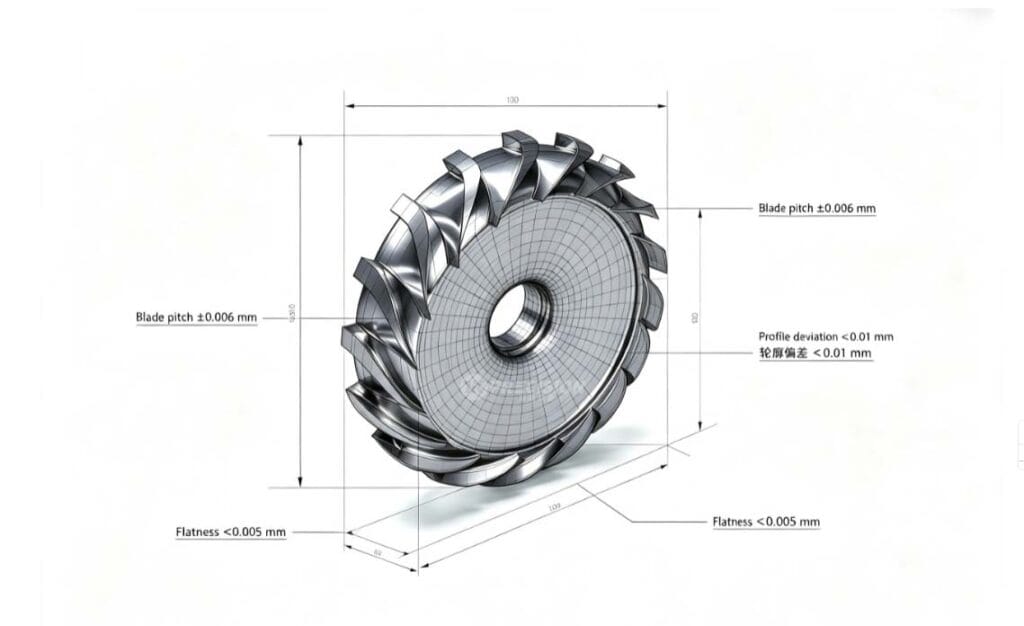
Typical requirements may include vane spacing of ±0.006 mm, sealing-face flatness below 0.005 mm, flange runout below 0.01 mm, and a blade-surface finish of Ra ≤ 0.4 μm. Actual requirements must always be confirmed against the customer drawing.
How 5-Axis CNC Machining Improves Accuracy
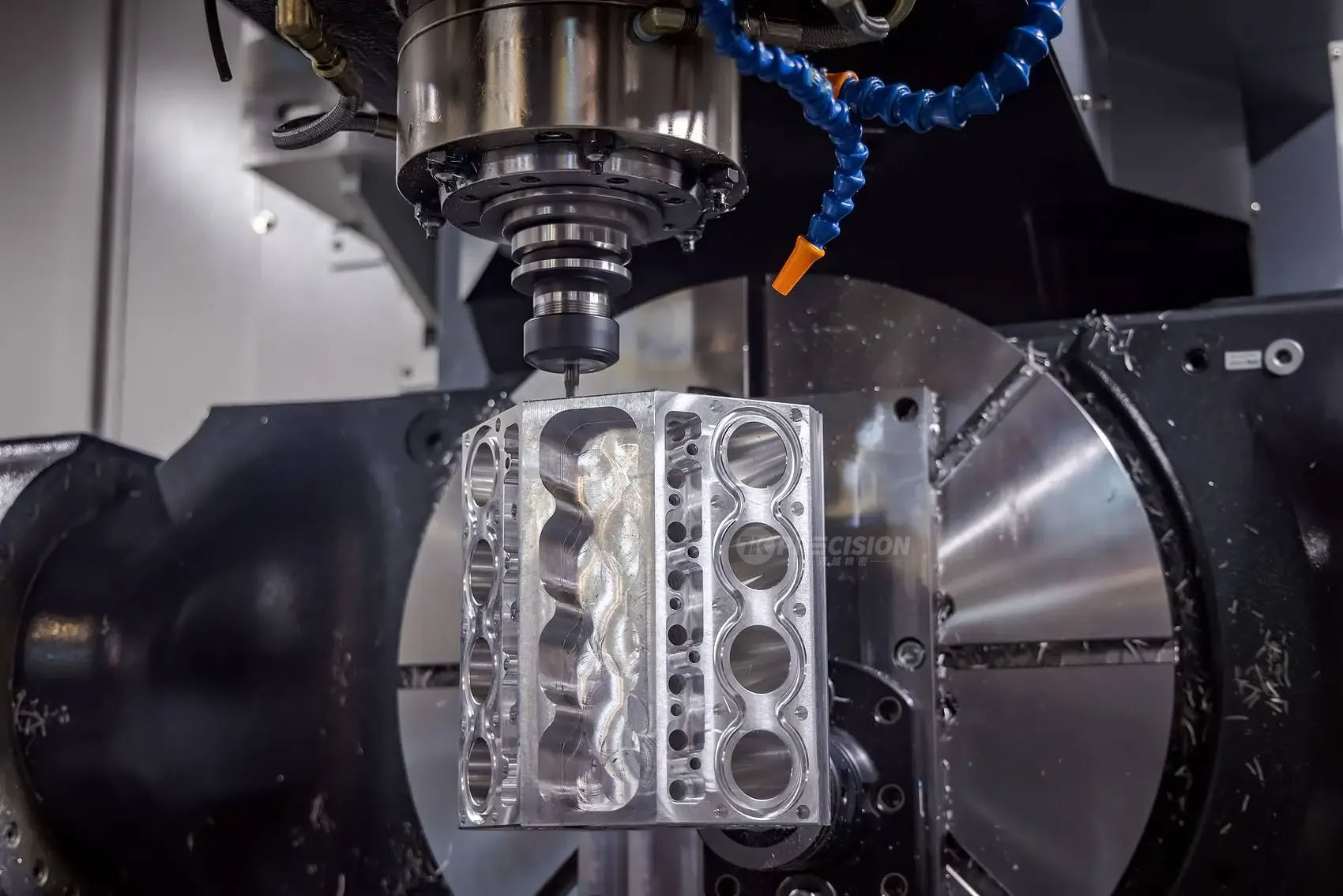
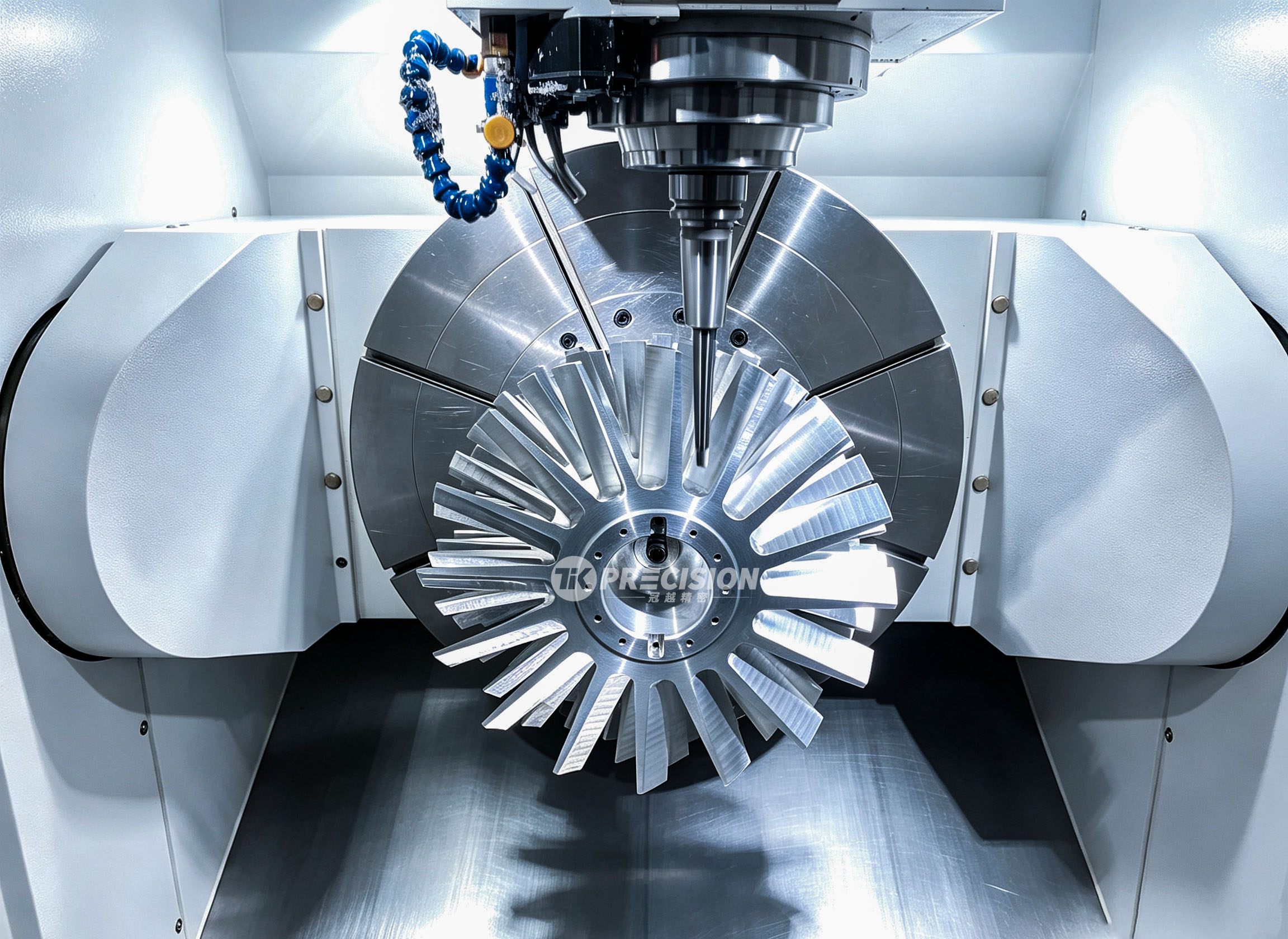
Simultaneous 5-axis CNC machining can complete complex diffuser surfaces in fewer setups. This reduces fixture-related errors and provides better access to curved flow passages, undercuts, and blade features.
- Shorter tools reduce tool deflection.
- Optimized tool angles reduce radial cutting forces.
- In-process probing supports dimensional correction.
- Toolpath simulation helps prevent gouging and overcutting.
- High-pressure coolant improves heat control.
- Stress-relief treatment between roughing and finishing can reduce distortion.
A 5-axis machine alone does not guarantee quality. The supplier must also demonstrate stable programming, suitable tooling, fixture control, thermal management, and documented process capability.
CMM Inspection for Turbo Diffusers
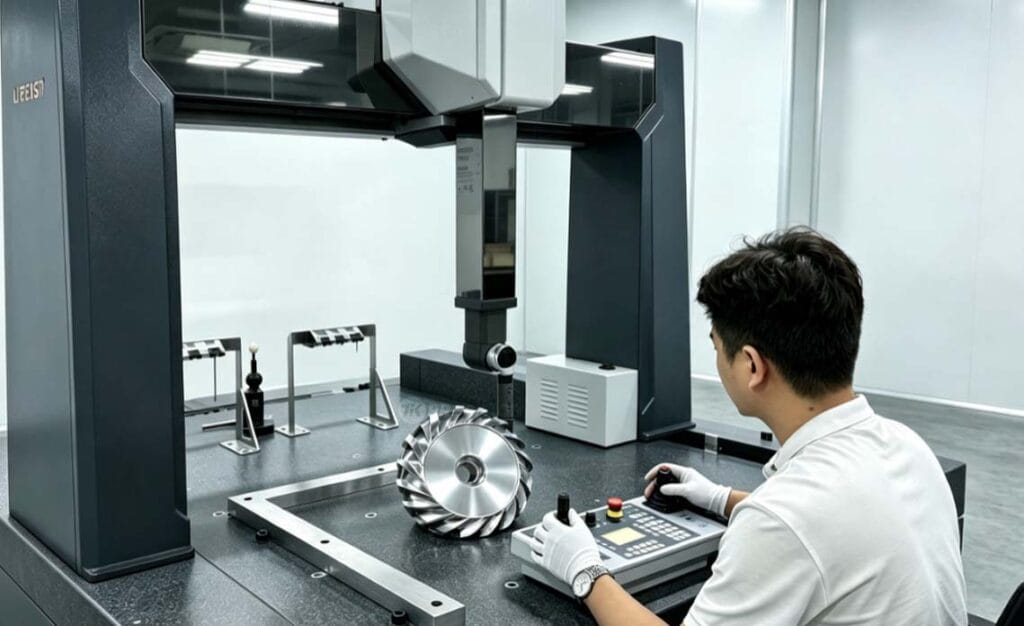
Coordinate Measuring Machine (CMM) inspection is essential for turbo diffuser CNC machining. It verifies freeform blade profiles, vane spacing, flange runout, sealing surfaces, and other GD&T requirements that hand gauges cannot measure reliably.
- First Article Inspection: The first production part is checked against the complete drawing.
- Critical-feature inspection: Vane spacing, profile tolerance, flatness, and runout are measured consistently.
- Traceable reports: Inspection results are recorded with measured values and tolerance limits.
- Material traceability: Material certificates and conformity documents are retained for the order.
- SPC monitoring: Production data helps identify trends before nonconforming parts are produced.
How to Select a Turbo Diffuser CNC Machining Supplier
Before placing an order, confirm that the supplier can support the material, geometry, tolerance, and documentation requirements of your program.
- Quality certifications: Review AS9100D, ISO 9001:2015, and any required NADCAP accreditation.
- Machine capability: Confirm true simultaneous 5-axis machining, calibration records, and repeatability data.
- Material experience: Ask for proven experience with Inconel 625, Inconel 718, or your specified alloy.
- Inspection resources: Verify in-house CMM capability, calibration traceability, and inspection planning.
- Process control: Review tooling strategies, heat-treatment coordination, nonconformance handling, and full material traceability.
Conclusion
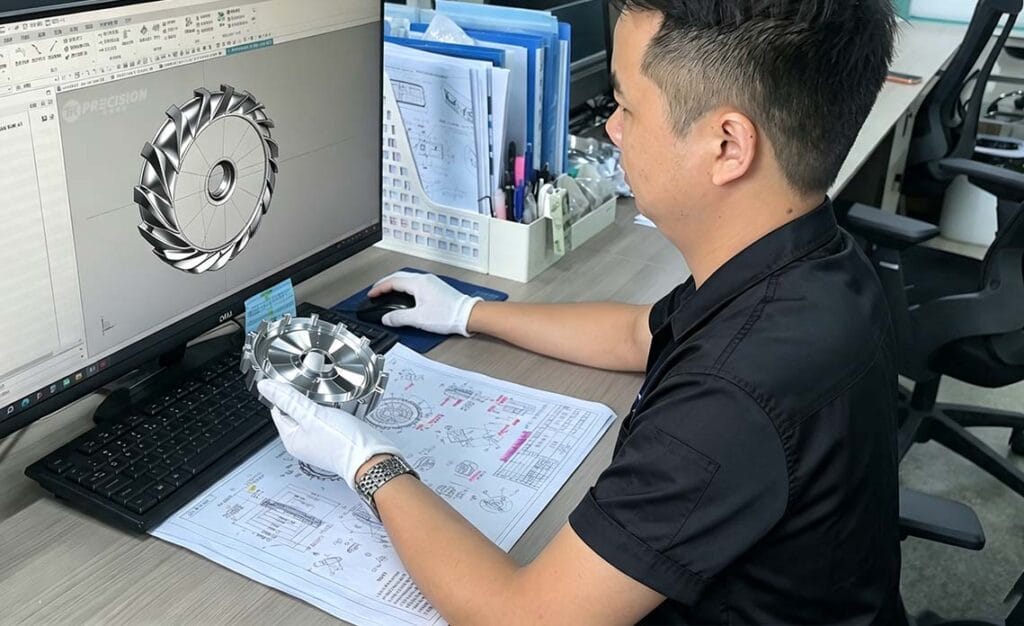
Reliable turbo diffuser CNC machining depends on more than advanced equipment. The best results come from a controlled process that combines 5-axis programming, rigid fixturing, suitable tooling, thermal management, stress relief, and complete CMM inspection.
When comparing suppliers, request evidence of relevant superalloy experience, machine capability, inspection accuracy, certifications, and traceable quality records. This approach reduces manufacturing risk and improves the consistency of complex aerospace and turbomachinery components.