
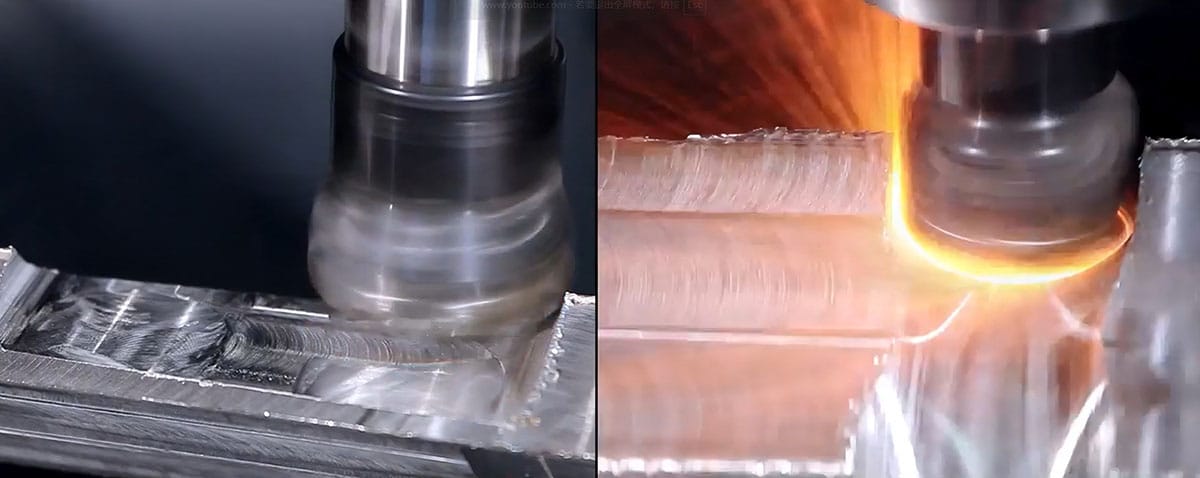
The precision and reliability required for aerospace turbine components begin with the machine tools and tooling systems used to produce them. Selecting the right equipment for blade, disk, and casing machining is a foundational decision. This choice directly influences achievable tolerances, production efficiency, and long-term process stability. At Tik Precision, we combine precision CNC machining services with the latest technology to meet these standards.
Machining Challenges in Aerospace Turbines
Manufacturing turbine components involves overcoming significant technical hurdles. These challenges require specialized equipment and expertise:
- Work Hardening: Nickel-based superalloys harden instantly at the cut surface. This requires precise feed rates to stay beneath the hardened layer.
- Thin-Wall Distortion: Airfoils and casings often feature thin-wall geometries. These are prone to vibration and deformation under cutting forces.
- Extreme Thermal Loads: Low thermal conductivity in exotic alloys concentrates heat at the tool tip. This risks surface integrity and accelerates wear.
Material Selection and Machinability
Choosing the right material is a balance between engine performance and manufacturing feasibility. Understanding how to machine exotic alloys is essential for success:
- Inconel 718 and 625: These are preferred for hot-section components due to exceptional creep resistance.
- Titanium Alloys (Ti-6Al-4V): As the standard for compressor sections, they offer high strength-to-weight ratios.
- Single-Crystal Superalloys: These are used for high-pressure turbine blades to maximize thermal fatigue life.
Equipment Considerations for Blade and Vane Machining
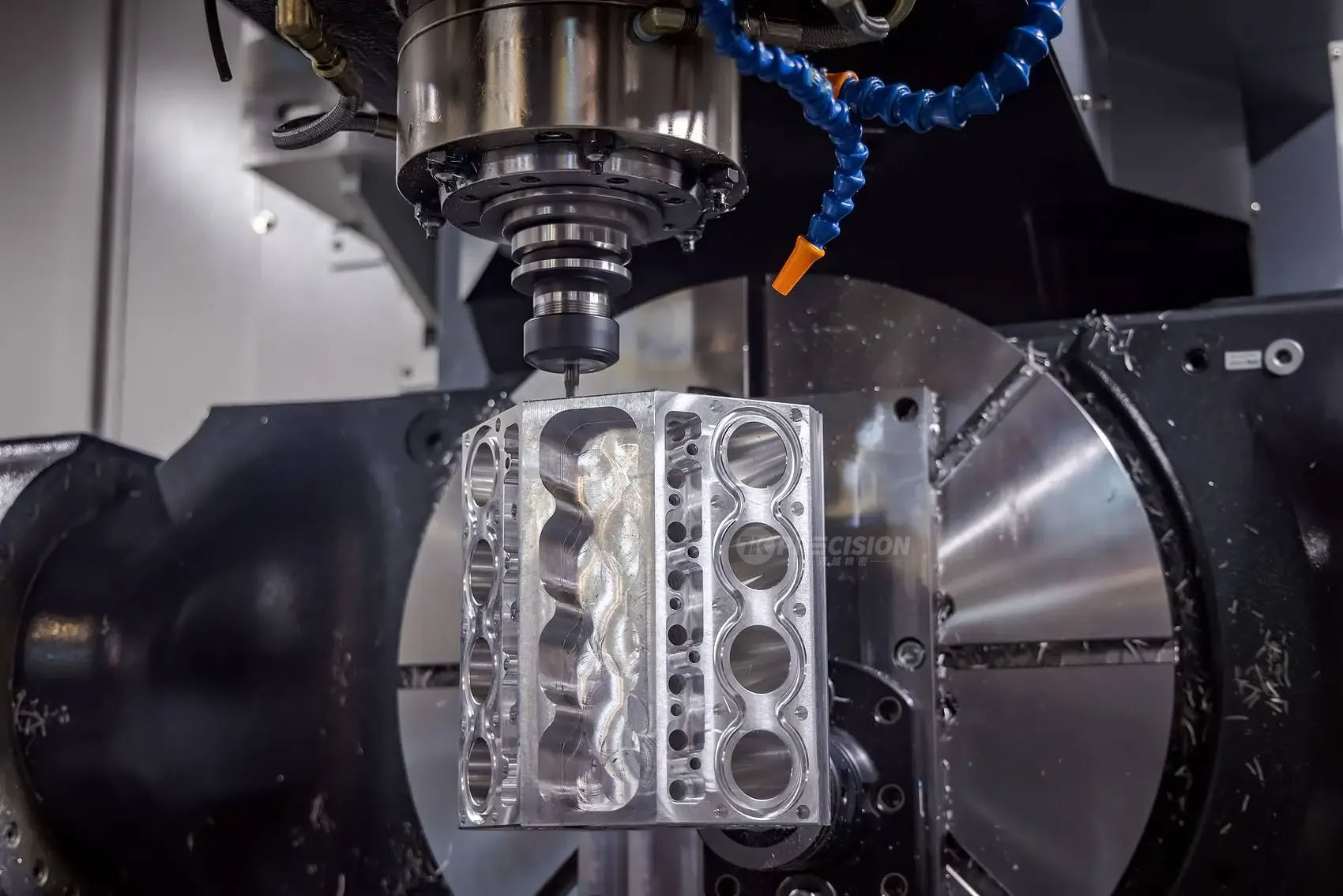
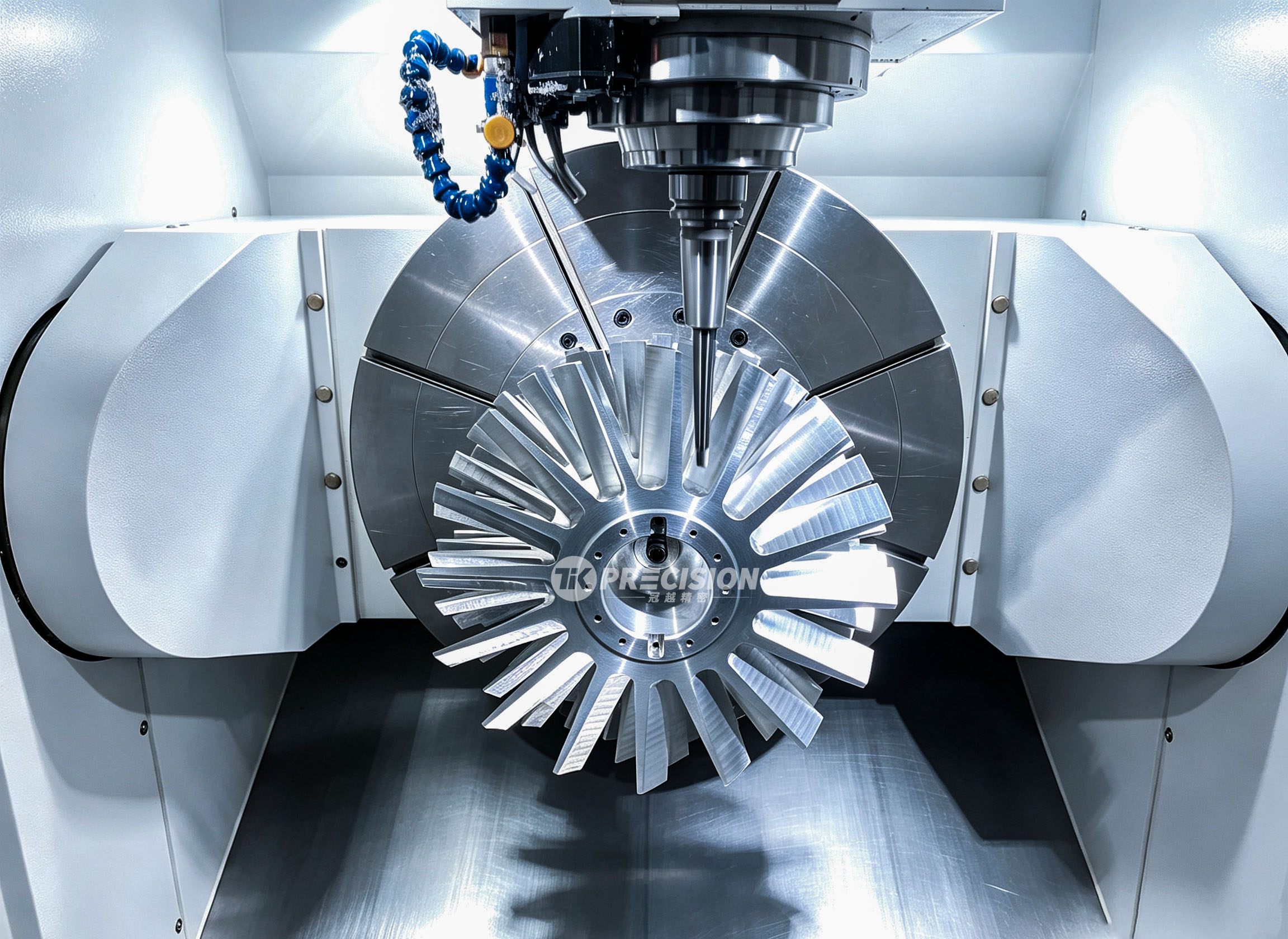
To maintain accuracy, we utilize advanced hardware. Our team often relies on 5-axis CNC machining for complex geometries:
- Simultaneous Five-Axis Capability: This is essential for maintaining optimal tool orientation across twisted airfoil surfaces.
- High Machine Rigidity: Robust equipment helps maintain accuracy over long production runs despite substantial cutting forces.
- Integrated In-Process Probing: This technology supports real-time measurement and closed-loop compensation.
Tolerance Control and Surface Finishing
Aerospace standards demand sub-micron precision. We achieve this through rigorous aerospace CNC machining practices:
- Precision Grinding and Honing: These processes are used for critical mating surfaces with tight tolerances.
- Surface Integrity Management: Controlled finishing introduces beneficial compressive residual stresses to extend fatigue life.
DFM: Design for Manufacturability Strategies
Optimizing designs for the machine shop reduces costs and lead times. Following a DFM checklist is a key part of our workflow:
- Tool Access Optimization: We design geometries that allow tools to reach all surfaces without complex setups.
- Standardized Radii: Minimizing tool changes by unifying internal corner radii across the part design saves time.
Frequently Asked Questions
Why is 5-axis machining required for blades?
It allows the tool to remain perpendicular to complex, twisted surfaces. This ensures a superior surface finish and dimensional accuracy.
How do you handle material work hardening?
We use rigid setups and sharp specialized tooling. We also ensure the depth of cut always stays below the previously hardened layer.
Conclusion
Thoughtful equipment selection forms the foundation for aerospace quality. Tik Precision aligns investment with product complexity to deliver consistent, certifiable results. For more information, explore our guide on aerospace turbine blade machining.