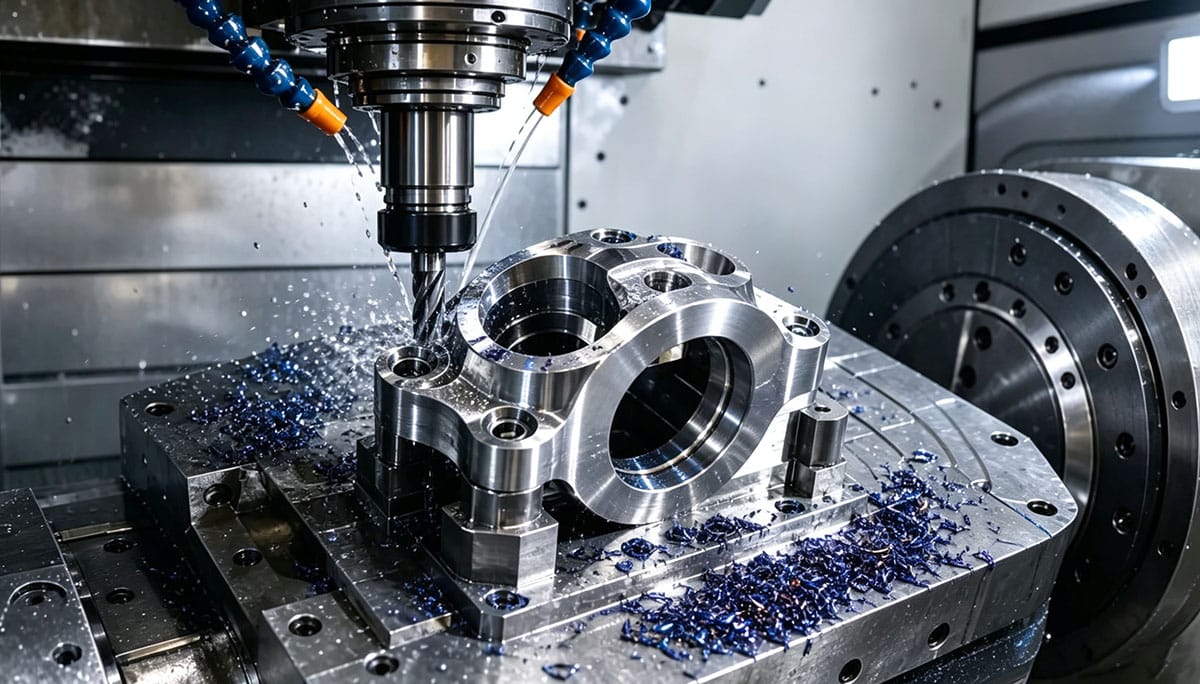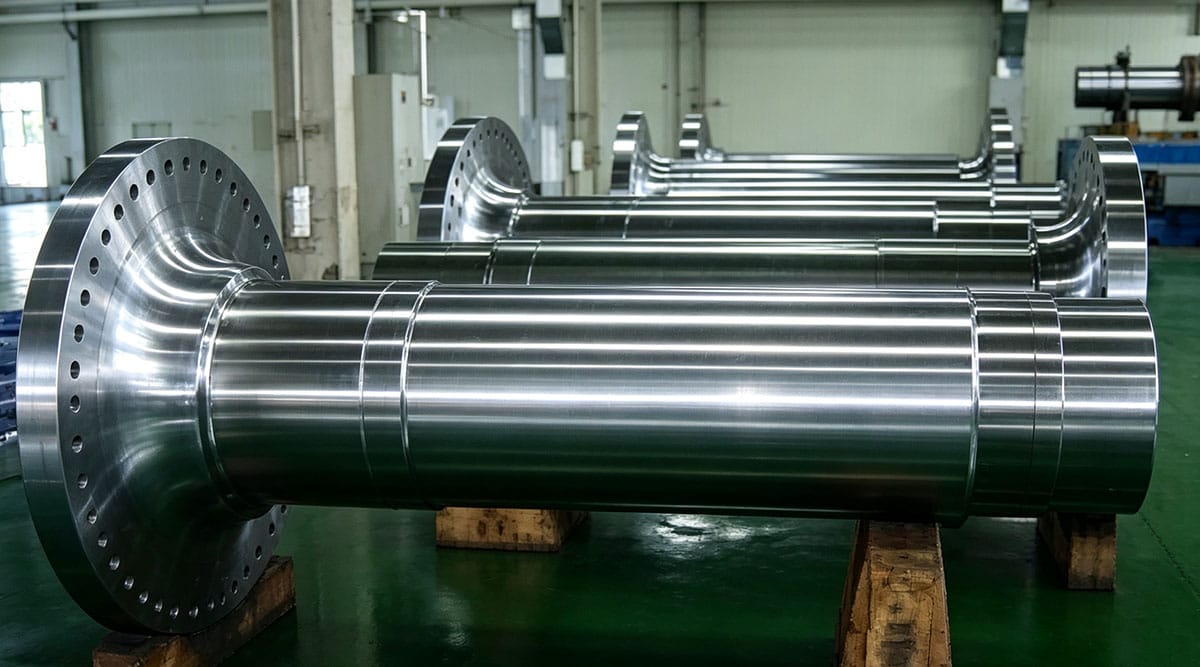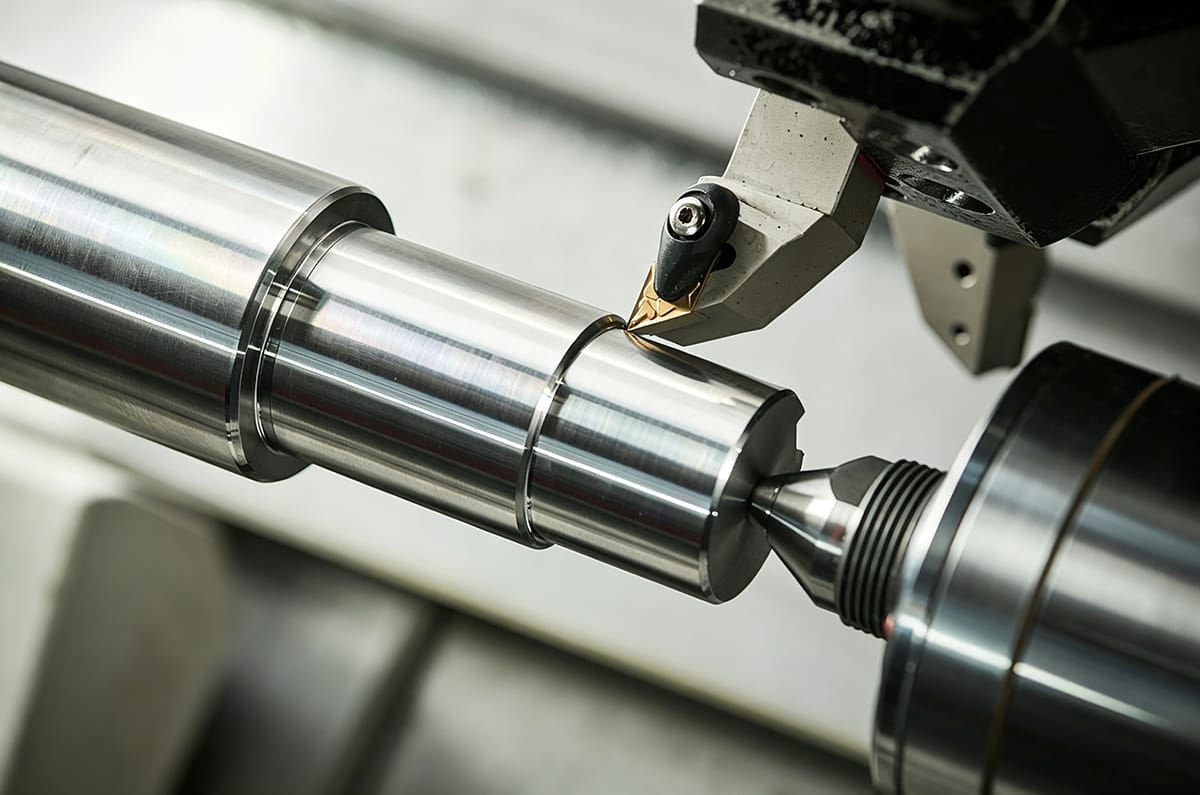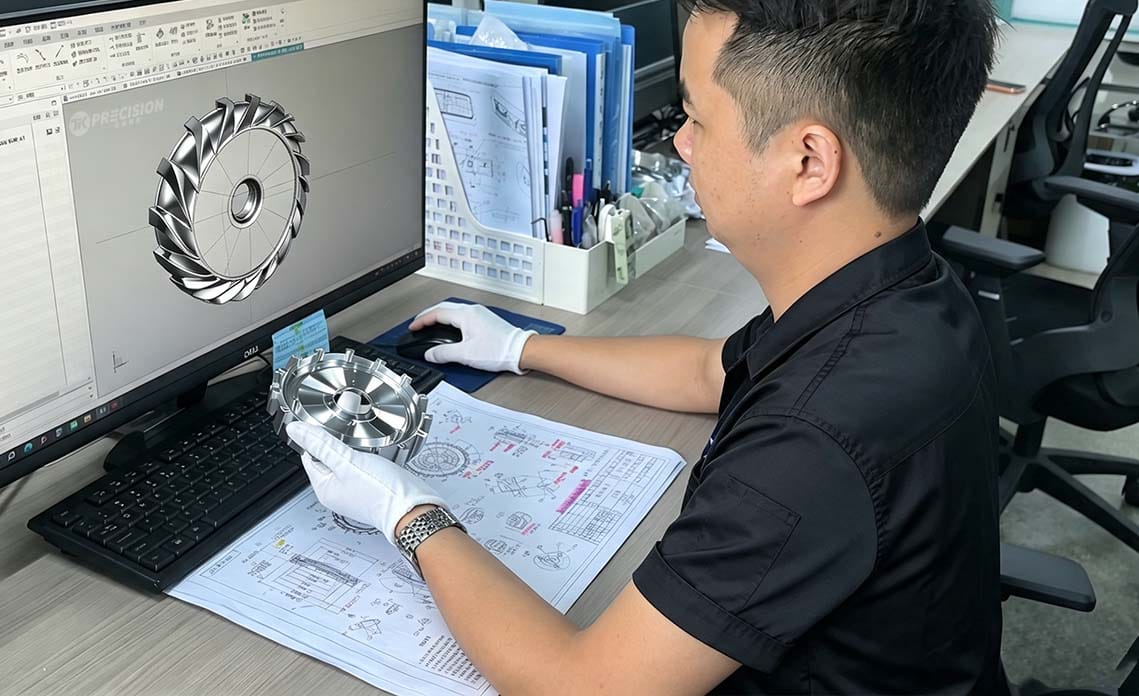

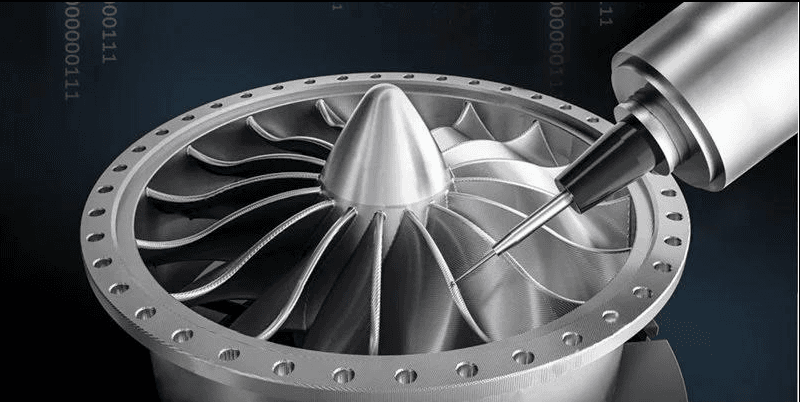
Aerospace components carry higher stakes than most other industries — failure isn’t just costly, it can be catastrophic. That reality shapes nearly every decision in aerospace CNC machining, from material traceability to inspection depth.
Common Aerospace Materials
- Titanium alloys (Ti-6Al-4V): High strength-to-weight ratio, excellent fatigue and corrosion resistance, standard for structural and engine components. Learn more about titanium CNC machining challenges.
- Aluminum alloys (7075, 2024): Widely used for airframe brackets, panels, and structural parts where weight savings are critical. See our guide to aluminum alloys.
- Superalloys (Inconel 718, Haynes 25): Used for turbine and exhaust components that must withstand extreme temperatures and creep stress.
Typical Applications
- Turbine blades and impellers
- Structural brackets and mounting hardware
- Manifolds and fluid system components
- Landing gear parts
Tolerance and Precision Requirements
Aerospace parts frequently require tolerances tighter than general industrial standards — often in the ±0.01mm to ±0.005mm range for critical mating features. Understanding CNC machining tolerances is essential for consistent quality.
Material Traceability
Aerospace buyers typically require full material traceability, including material certificates (MTC/MTR) and process records for any heat treatment or surface finishing performed.
Inspection Requirements
Aerospace parts commonly require more extensive inspection than standard commercial parts:
- First Article Inspection (FAI): Full dimensional verification of the first part produced.
- CMM inspection: Coordinate measuring machine verification.
- Surface finish verification: Roughness measurement to confirm compliance.
Common Aerospace Machining Challenges
- Titanium’s poor thermal conductivity causes heat to concentrate at the cutting edge.
- Thin-wall structural parts are prone to deformation.
- Tight tolerance stack-ups demand rigorous process control.
Why Prototype Validation Matters
Given the cost of tooling, validating a design through prototype machining before production run helps confirm fit and function.
FAQ
What tolerances are typical for aerospace CNC parts? Critical features often require ±0.002mm to ±0.02mm.
Is CNC machining better than 3D printing for aerospace? It depends on the application; check our comparison of CNC machining vs 3D printing.
Working on an aerospace component? Share your drawing for an engineering review.