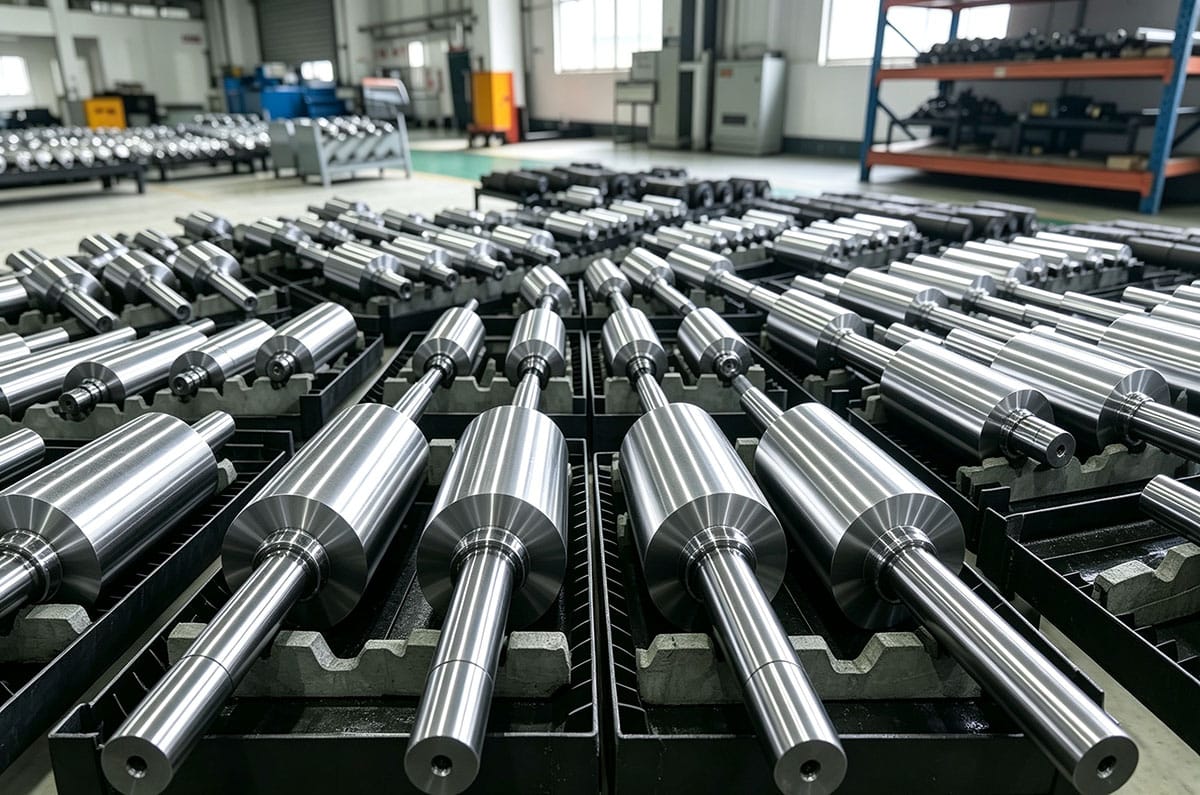

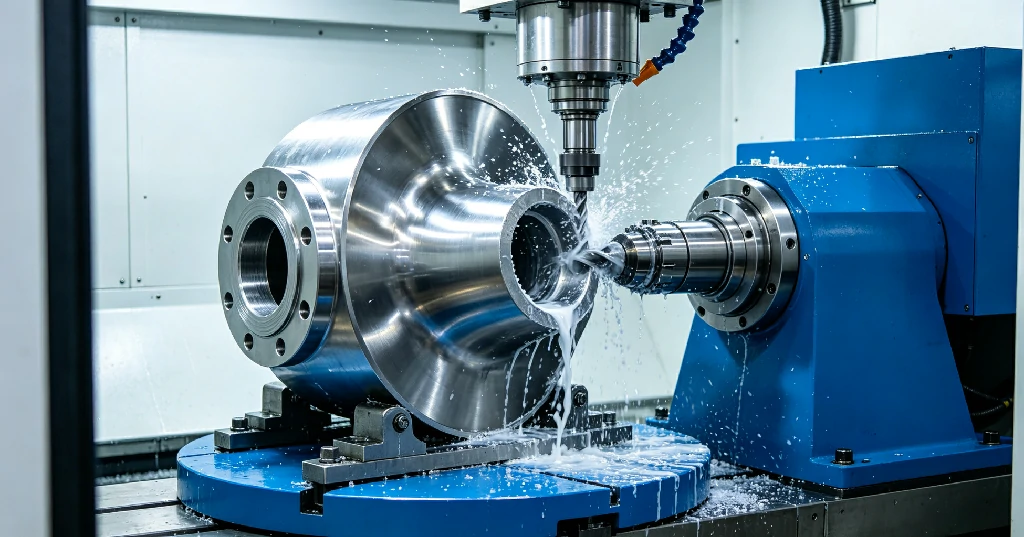
Blowers are used across many industrial applications, including wastewater treatment, power generation, HVAC systems, mining, industrial ventilation, and gas handling equipment. These systems rely on accurately manufactured components to maintain stable airflow, pressure, efficiency, and reliable operation.
For complex or tight-tolerance blower components, CNC machining provides the dimensional accuracy and repeatability required for critical parts such as impellers, volutes, shafts, bearing housings, guide vanes, end plates, and flanges.
TikPrecision provides custom CNC machining for blower parts and precision industrial components, manufactured from customer drawings, CAD models, and technical specifications.
Types of Industrial Blowers
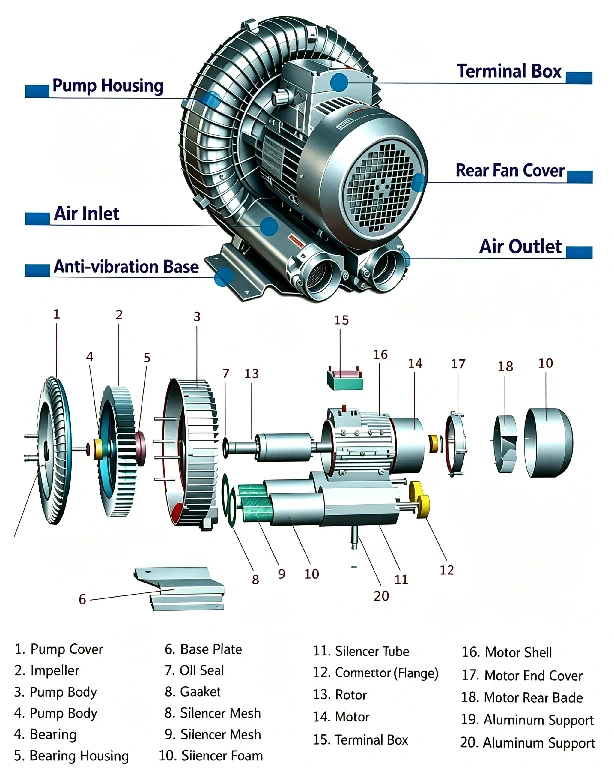
Blowers can be classified according to their operating principles, airflow direction, and pressure range. Different blower designs require different component geometries and manufacturing processes.
Positive Displacement Blowers
Positive displacement blowers move a defined volume of gas during each operating cycle.
Roots blowers use two rotating lobes to move gas from the inlet to the outlet. They are commonly used where continuous and relatively stable airflow is required.
Reciprocating blowers use piston movement to compress and transfer gas.
Rotary blowers, including screw-type designs, use rotating components to move and compress gas.
Centrifugal Blowers
A centrifugal blower draws gas into the impeller in an axial direction and discharges it radially outward through centrifugal force.
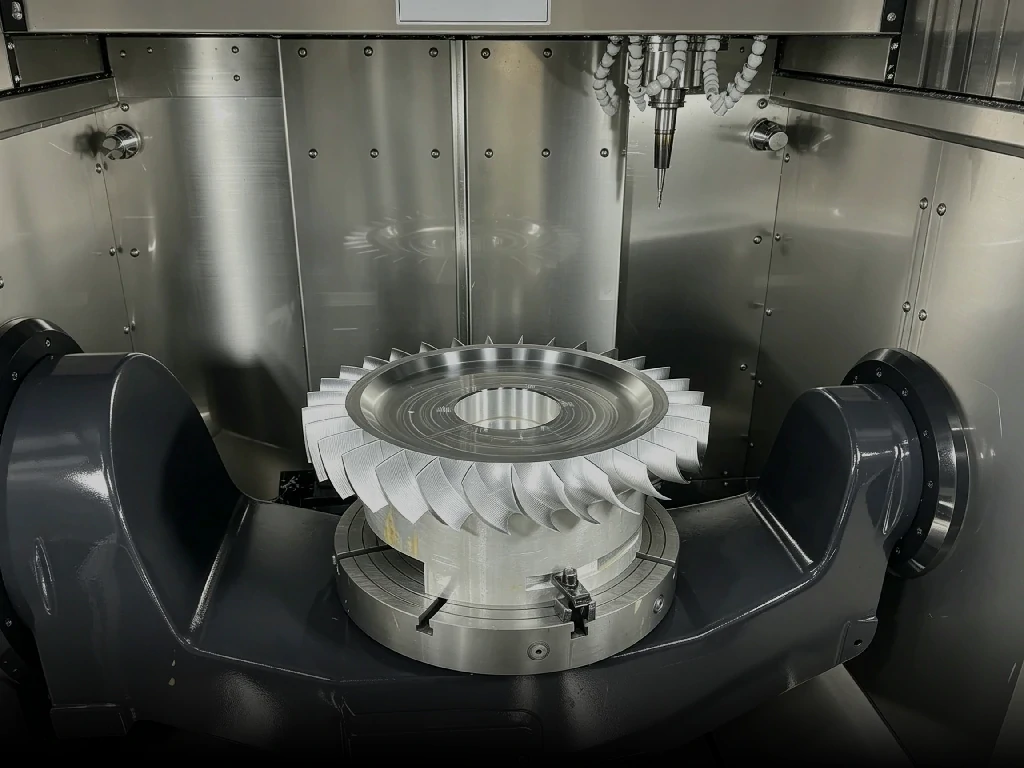
The impeller geometry has a direct effect on airflow, pressure, efficiency, and operating characteristics. As a result, blower impeller machining requires careful control of blade geometry, dimensional accuracy, surface finish, and, where applicable, dynamic balance.
Axial Blowers
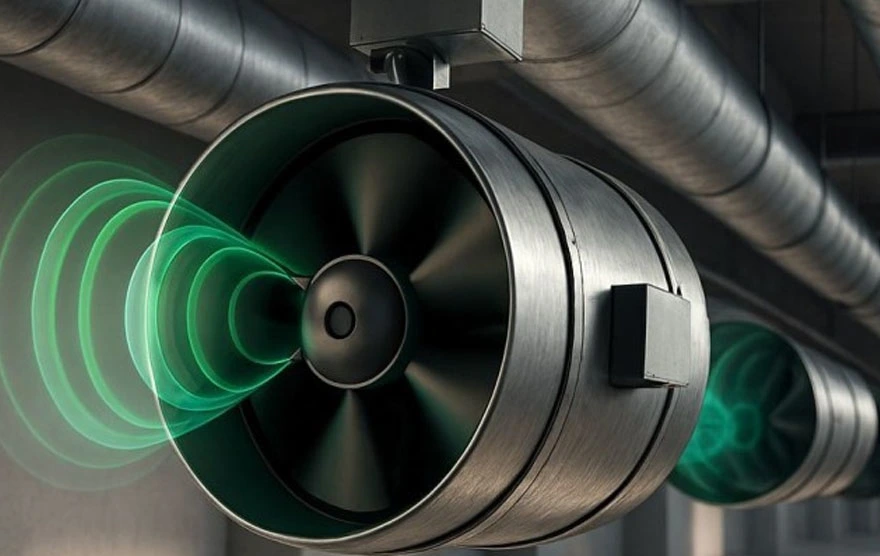
Axial blowers move air primarily along the shaft axis. They are commonly used in applications requiring high airflow at relatively low pressure.
Axial Blowers
Mixed-flow blowers combine characteristics of centrifugal and axial designs. Gas moves through the impeller with both axial and radial components.
The complex geometry of mixed-flow components can make CNC machining a practical manufacturing solution, particularly for prototypes, replacement components, and custom production parts.
CNC Machining Blower Parts
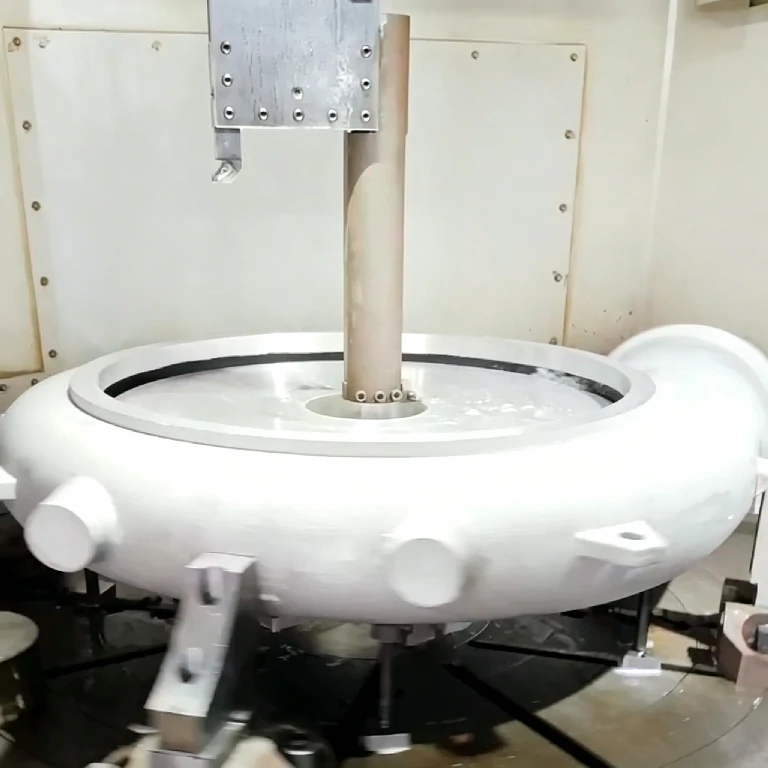
A blower consists of multiple components, many of which can be manufactured or finish-machined using CNC equipment.
The most common CNC machined blower parts include impellers, shafts, bearing housings, volutes, guide vanes, end plates, flanges, and other custom components.
- Blower Impellers
The impeller is one of the most important components in a blower.
Its blade geometry and overall profile directly affect airflow, pressure, efficiency, and operating stability. Because blower impellers can contain complex three-dimensional surfaces, conventional machining methods may not provide the flexibility required for certain designs.
CNC blower impeller machining can be used for:
Centrifugal blower impellers
Axial-flow impellers
Mixed-flow impellers
Custom impellers
Multi-blade impellers
Prototype impellers
Low-volume production parts
OEM replacement components
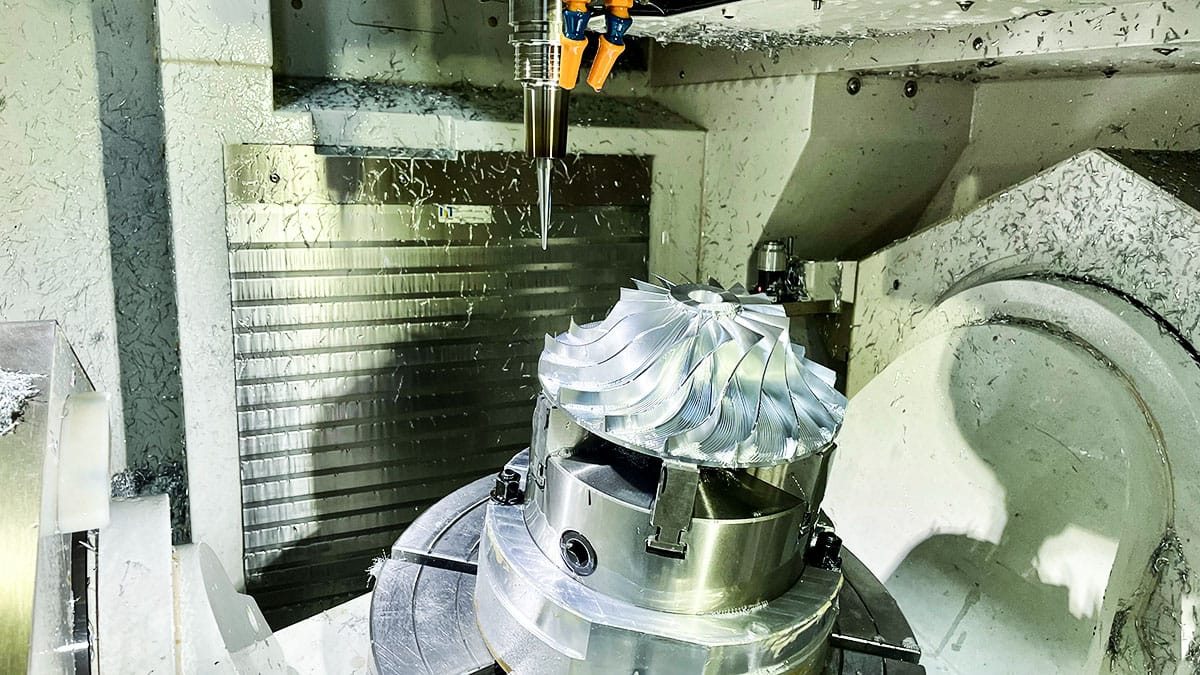
For complex blade profiles, 5-axis CNC machining provides greater tool access and allows the cutting tool to approach multiple surfaces from different orientations.
Depending on the application, machined impellers may also require dynamic balancing after machining.
- Blower Shafts
The shaft transfers rotational power from the drive system to the impeller.
Blower shafts may require:
Tight dimensional tolerances
Good straightness
Accurate bearing diameters
Concentric features
Precise keyways
Controlled surface finish
Accurate sealing surfaces
CNC turning can produce the main shaft geometry, while grinding or additional finishing operations may be used for critical bearing or sealing surfaces.
- Bearing Housings
The bearing housing supports the blower shaft and bearings while maintaining their position relative to the rotating assembly.
Critical features may include bearing bores, mounting holes, bore concentricity, positional tolerances, and flat mounting surfaces.
CNC milling, boring, drilling, and other precision machining operations can be used to achieve these requirements.
- Blower Volutes
The volute collects and directs air or gas discharged from a centrifugal impeller.
Because the internal profile is often curved and spiral-shaped, blower volute machining can be more demanding than conventional milling.
Depending on the design, machining may include:
Rough machining
Semi-finishing
Surface finishing
Profile machining
Boring
Drilling
Tapping
For complex curved surfaces, multi-axis or 5-axis CNC machining can provide greater flexibility and reduce the number of setups.
- Guide Vanes
Guide vanes control and redirect airflow inside the blower.
The vane angle, position, and profile can affect the aerodynamic characteristics of the blower. CNC machining provides repeatable control over these features and is suitable for both prototype and production components.
- End Plates
End plates close the blower assembly and interface with components such as the impeller, shaft, housing, and bearing system.
Depending on the design, they may require accurately machined:
Bores
Mounting holes
Counterbores
Sealing surfaces
Threaded holes
Flat surfaces
- Blower Flanges
Flanges connect the blower to piping, ducting, or other equipment.
Typical machining requirements include accurate bolt-hole patterns, flatness, thickness, and dimensional consistency.
CNC milling and drilling can produce the required connection features with repeatable accuracy.
- Sealing Features
Proper sealing helps prevent unwanted gas leakage during operation.
While seals themselves may be made from rubber, polymer, or other non-metallic materials, their mounting grooves and retaining features may require precision CNC machining.
Accurate sealing surfaces and grooves are particularly important when tight leakage control is required.
Blower Housing Machining
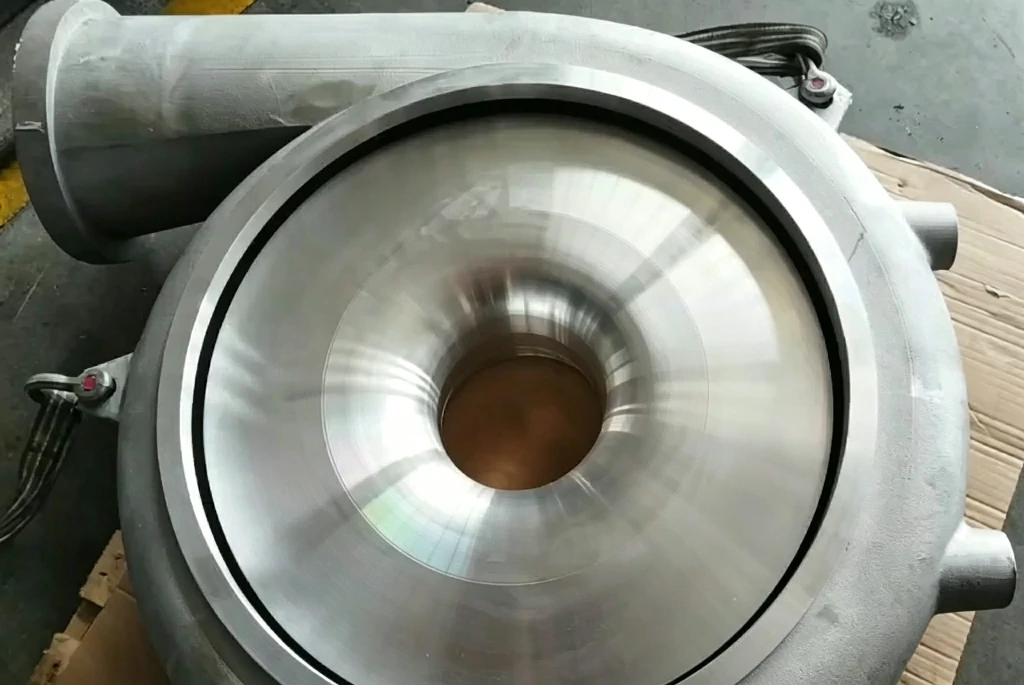
The blower housing, casing, or volute forms the main structural enclosure around the internal components.
Common housing materials include cast iron, carbon steel, stainless steel, and aluminum alloys.
Cast iron and steel are often selected for larger industrial blower housings because of their strength and durability. Aluminum alloys may be used where lower weight and good thermal conductivity are important.
However, the dimensional accuracy of an as-cast component may not be sufficient for critical mounting or sealing interfaces.
This is where CNC blower housing machining becomes important.
Critical areas such as mounting surfaces, bearing bores, sealing surfaces, bolt holes, and component interfaces can be CNC machined after casting or fabrication to achieve the required dimensions and tolerances.
Why Is Blower Volute Machining Challenging?
Among different custom blower components, the volute can be one of the more challenging parts to manufacture.
Complex Internal Geometry
A centrifugal blower volute normally contains a curved or spiral internal profile rather than simple planar surfaces.
Accurately reproducing this geometry requires appropriate CAM programming, toolpath control, and machine capability.
Tight Dimensional Requirements
The internal profile needs to remain within the specified design geometry.
Significant deviations can affect airflow characteristics, clearances, efficiency, and overall operating performance.
Large Component Size
Industrial blower volutes can be large and heavy.
Large components require suitable machine capacity, stable workholding, and careful control of deformation during machining.
Material Considerations
Cast iron, steel, stainless steel, and aluminum alloys have different machining characteristics.
Tool selection, cutting parameters, cooling, and machining strategies need to be adjusted according to the material and component geometry.
Multiple Machining Operations
A typical volute machining process may include roughing, semi-finishing, finishing, drilling, boring, and tapping.
The optimal process depends on the part geometry, material, tolerance requirements, production volume, and available CAD/CAM data.
5-Axis CNC Machining for Complex Blower Components
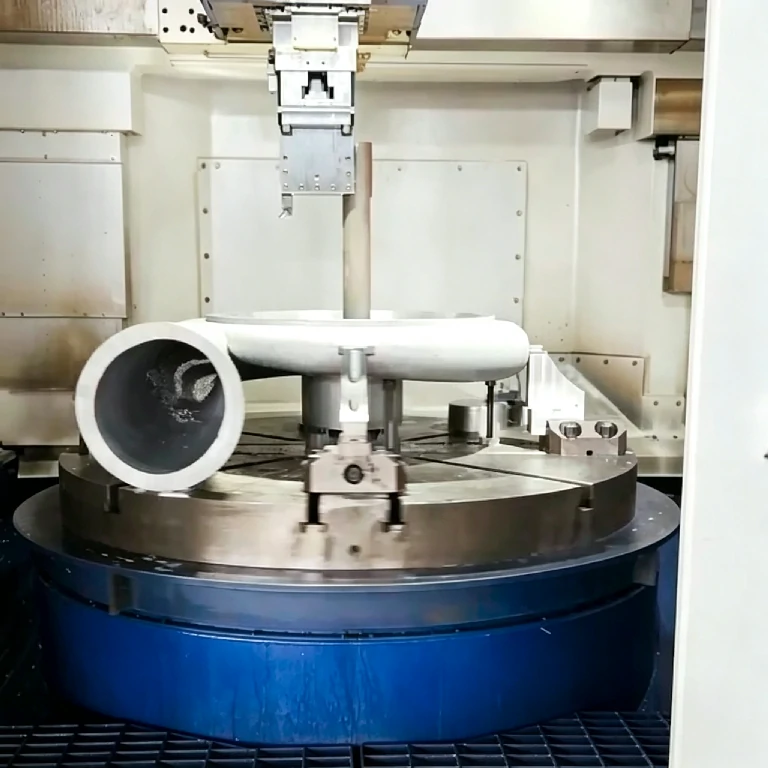
For blower components with complex three-dimensional surfaces, 5-axis CNC machining can provide greater flexibility than conventional 3-axis machining.
A 5-axis machine can control the position and orientation of the cutting tool, allowing better access to curved surfaces and complex blade geometries.
This can be useful for:
Blower impellers
Complex blades
Guide vanes
Mixed-flow components
Curved volutes
Custom aerodynamic components
However, not every blower component requires 5-axis machining.
For simpler parts, 3-axis or 4-axis CNC machining may provide the required accuracy while keeping manufacturing costs under control.
The machining strategy should therefore be selected according to the part geometry, material, tolerances, production volume, and functional requirements.
Inspection of CNC Machined Blower Parts
Precision machining does not end when the CNC machine stops.
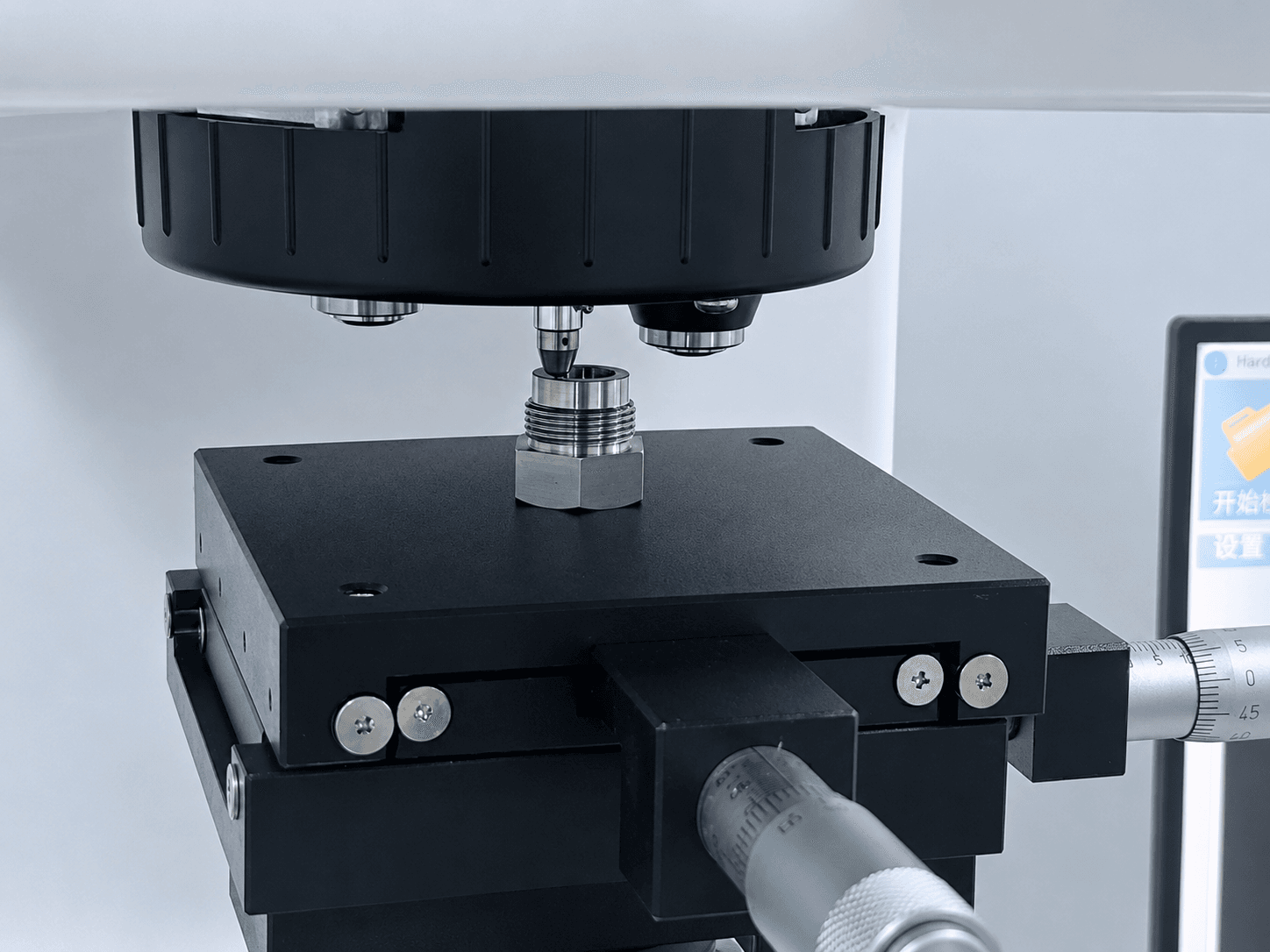
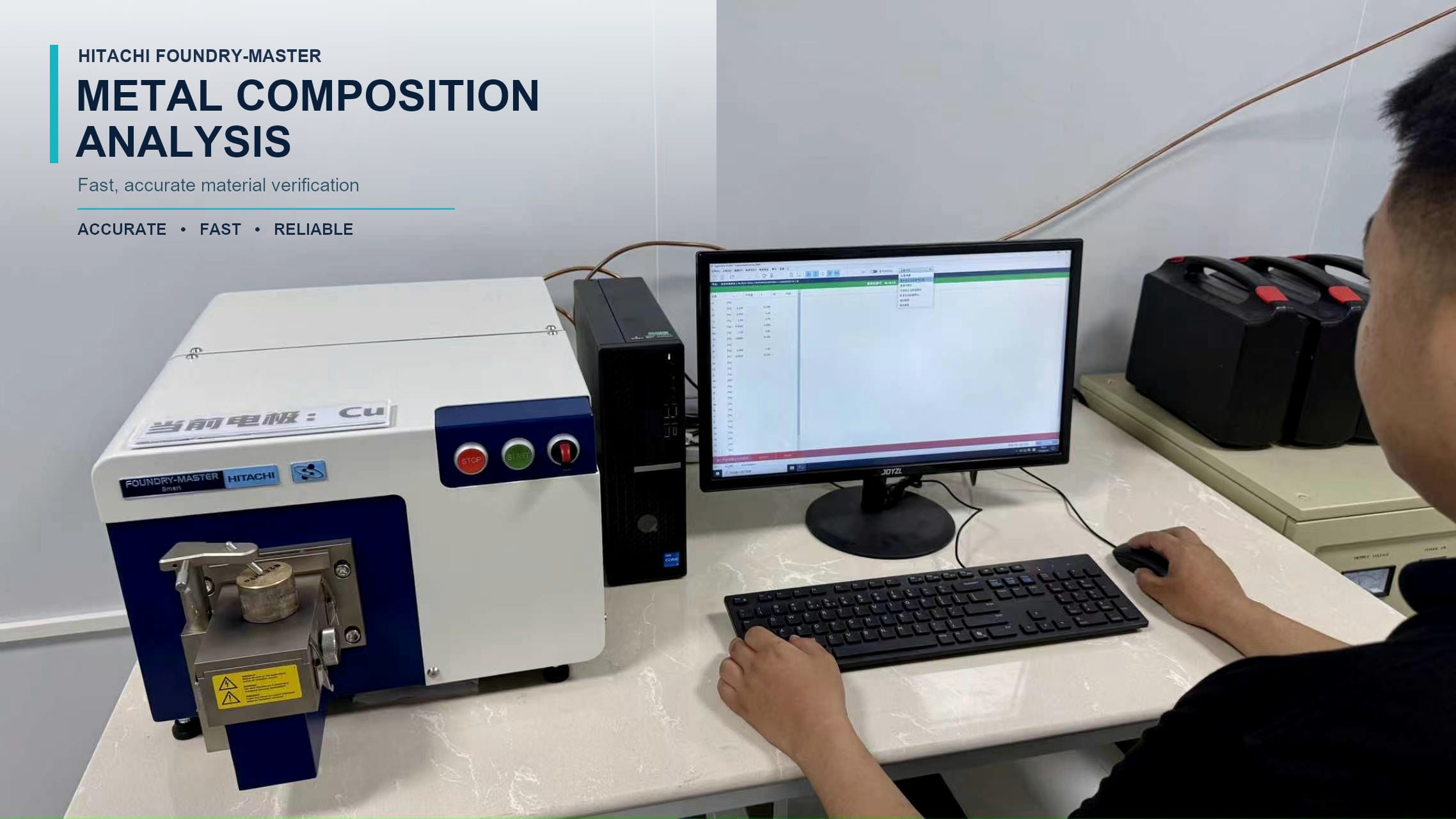
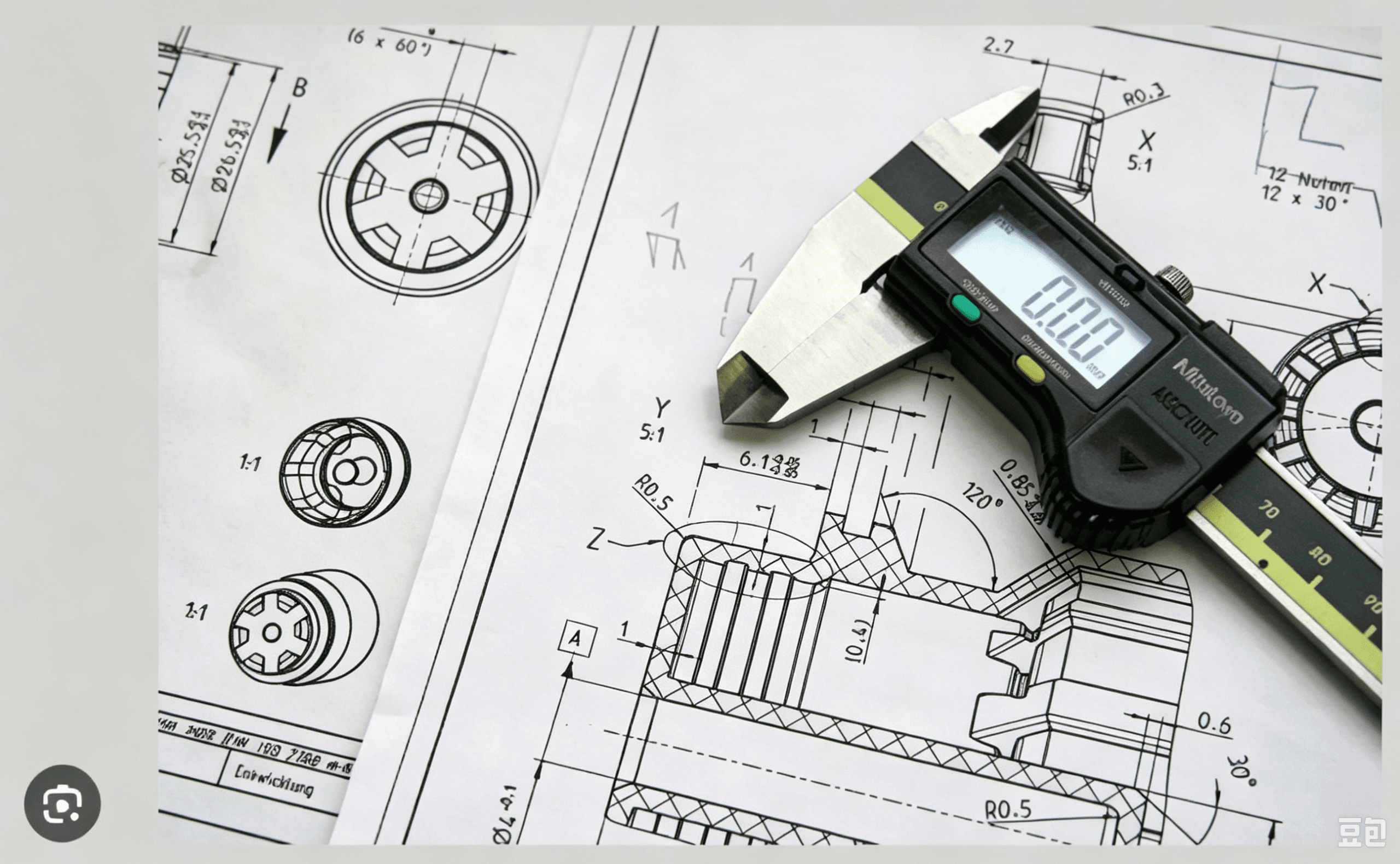
Critical blower components may require dimensional inspection to verify that the finished part conforms to the engineering drawing or CAD model.
Depending on the component and tolerance requirements, inspection may include:
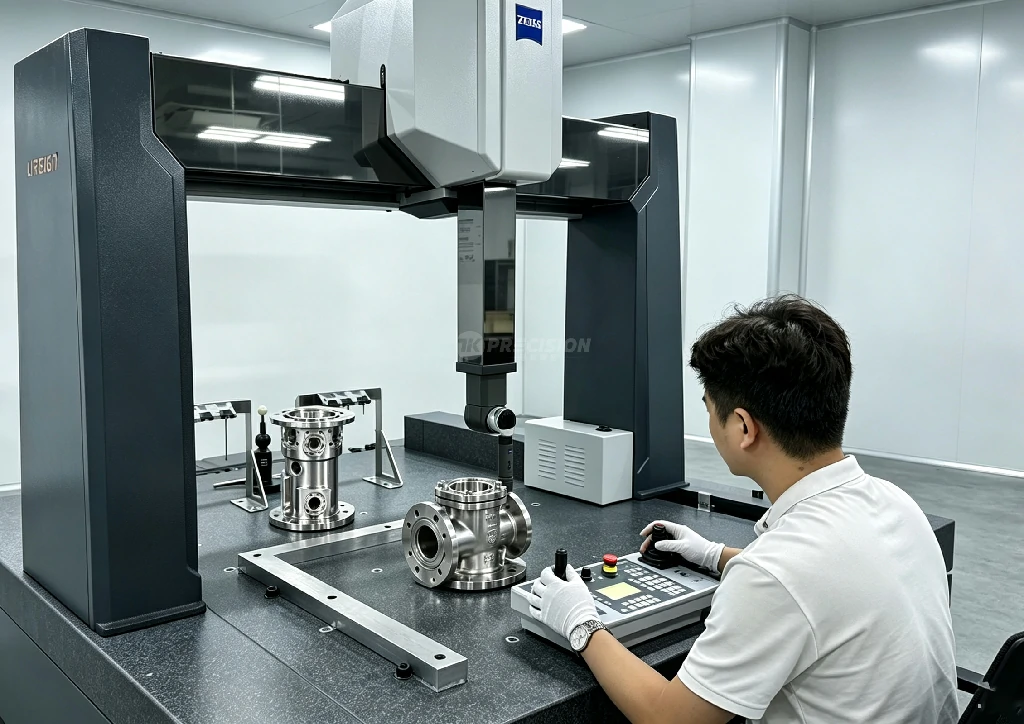
CMM inspection
Dimensional measurement
Bore measurement
Flatness inspection
Concentricity inspection
Profile measurement
Positional tolerance inspection
Surface roughness measurement
For complex components such as impellers and volutes, CMM inspection can help verify critical geometric features against the specified requirements.
Inspection requirements can be defined before production so that the appropriate measurement method and quality documentation are prepared in advance.
Custom CNC Blower Components for OEM Applications
Not every blower component is available as an off-the-shelf replacement.
OEMs, equipment manufacturers, engineering companies, and maintenance teams may need custom blower components based on an existing drawing, modified design, or replacement part.
Typical requirements include:
Custom dimensions
Special materials
Tight tolerances
Complex geometries
Prototype quantities
Small-batch production
Production quantities
Replacement components
Reverse-engineered components
A CNC machining supplier can manufacture these parts from customer CAD files, engineering drawings, or technical specifications.
For replacement parts, providing an existing drawing or accurate CAD model can help the manufacturer evaluate the machining process, material, tolerances, and inspection requirements before production.
CNC Machining for Blower Parts and Other Industrial Components
Blower components are only one category of precision-machined industrial parts.
The same CNC machining capabilities can be applied to components used in many other industries, including industrial equipment, energy, automotive, aerospace, fluid handling, medical equipment, and automation.
Depending on the component, manufacturing may involve:
3-axis CNC machining
4-axis CNC machining
5-axis CNC machining
CNC turning
Milling
Drilling
Boring
Tapping
Precision finishing
CMM inspection
This allows a precision machining supplier to support different component geometries and production requirements without limiting its manufacturing capabilities to a single industry.
Choosing a CNC Machining Supplier for Blower Parts
When selecting a supplier for CNC machining blower parts, it is important to consider more than the number of machines available.
A capable supplier should be able to review the complete manufacturing requirements, including:
CAD files and engineering drawings
DFM requirements
Material specifications
Dimensional tolerances
Surface finish requirements
CNC machining processes
Inspection requirements
Surface finishing when required
Dynamic balancing for applicable rotating components
Prototype and production requirements
For complex blower components, experience with curved surfaces, rotating parts, tight tolerances, and precision inspection can help reduce manufacturing problems before production begins.
Custom Blower Parts Machined to Your Drawing
TikPrecision provides custom CNC machining for blower parts and precision industrial components.
We manufacture components based on customer drawings, CAD models, specifications, and project requirements.
Typical CNC machined blower components include:
Blower impellers
Blower shafts
Volutes
Blower housings
Bearing housings
Guide vanes
End plates
Flanges
Custom rotating components
Other precision-machined blower parts
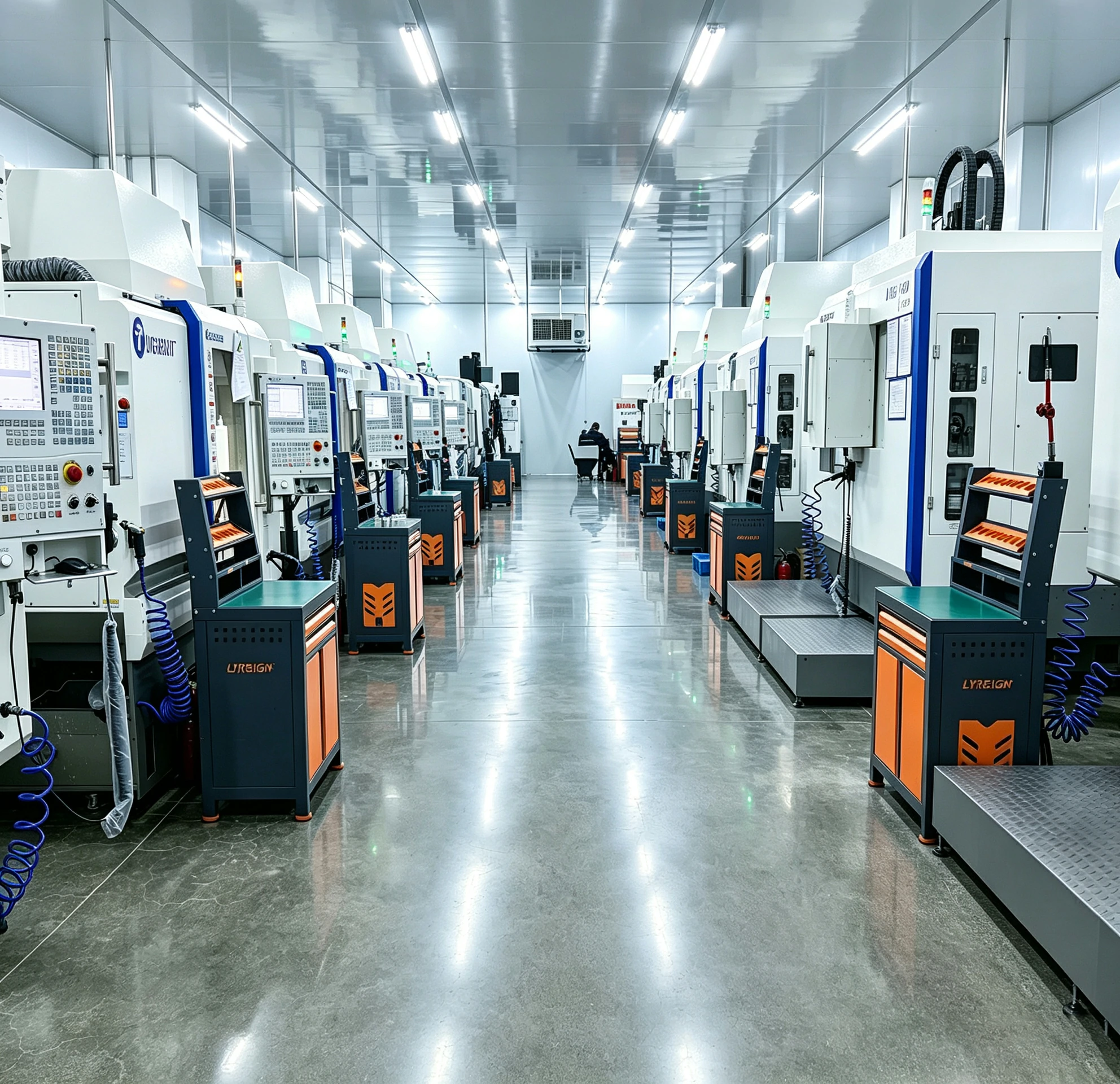
Our machining capabilities include CNC milling, CNC turning, multi-axis machining, drilling, boring, tapping, finishing, and dimensional inspection.
Whether you need a prototype, replacement component, small production run, or repeat OEM production, our team can review your drawings and manufacturing requirements before production.
Need a Custom Blower Part?
Send Your Drawing to TikPrecision for a manufacturing review.
Request a DFM Review to identify potential machining and design issues before production.
Request a Quote for your custom CNC blower components.
Frequently Asked Questions
Yes. CNC machining can be used to manufacture a wide range of blower impellers, including complex multi-blade and three-dimensional designs. The appropriate machining method depends on the impeller geometry, material, tolerance, and production requirements.
Yes. Blower volutes can be CNC machined, particularly when critical internal profiles, mounting surfaces, bores, or other features require tighter dimensional control. Complex geometries may benefit from multi-axis or 5-axis CNC machining.
Depending on the component, manufacturers may use 3-axis, 4-axis, or 5-axis CNC machining centers, as well as CNC lathes. The machine selection depends on the part geometry, material, tolerance, and production volume.
Common materials include aluminum alloys, carbon steel, stainless steel, cast iron, and other engineering materials. The material should be selected according to the blower’s operating conditions and engineering requirements.
Yes. Custom blower components can be manufactured from engineering drawings, CAD models, or technical specifications. A drawing allows the manufacturer to review dimensions, tolerances, materials, surface finish, and inspection requirements before production.
Yes. Depending on the design and operating speed, rotating blower components such as impellers may require dynamic balancing after machining. The required balancing grade and acceptance criteria should be specified according to the application.
No. Blower components are one application within precision CNC machining. TikPrecision also manufactures custom precision components for a wide range of industrial applications based on customer drawings and specifications.